

Chile
Context

Material
References
KM: #Click to copy to clipboard134
Numista: #35379
Value
Bullion value: $32.43
Obverse
Description:
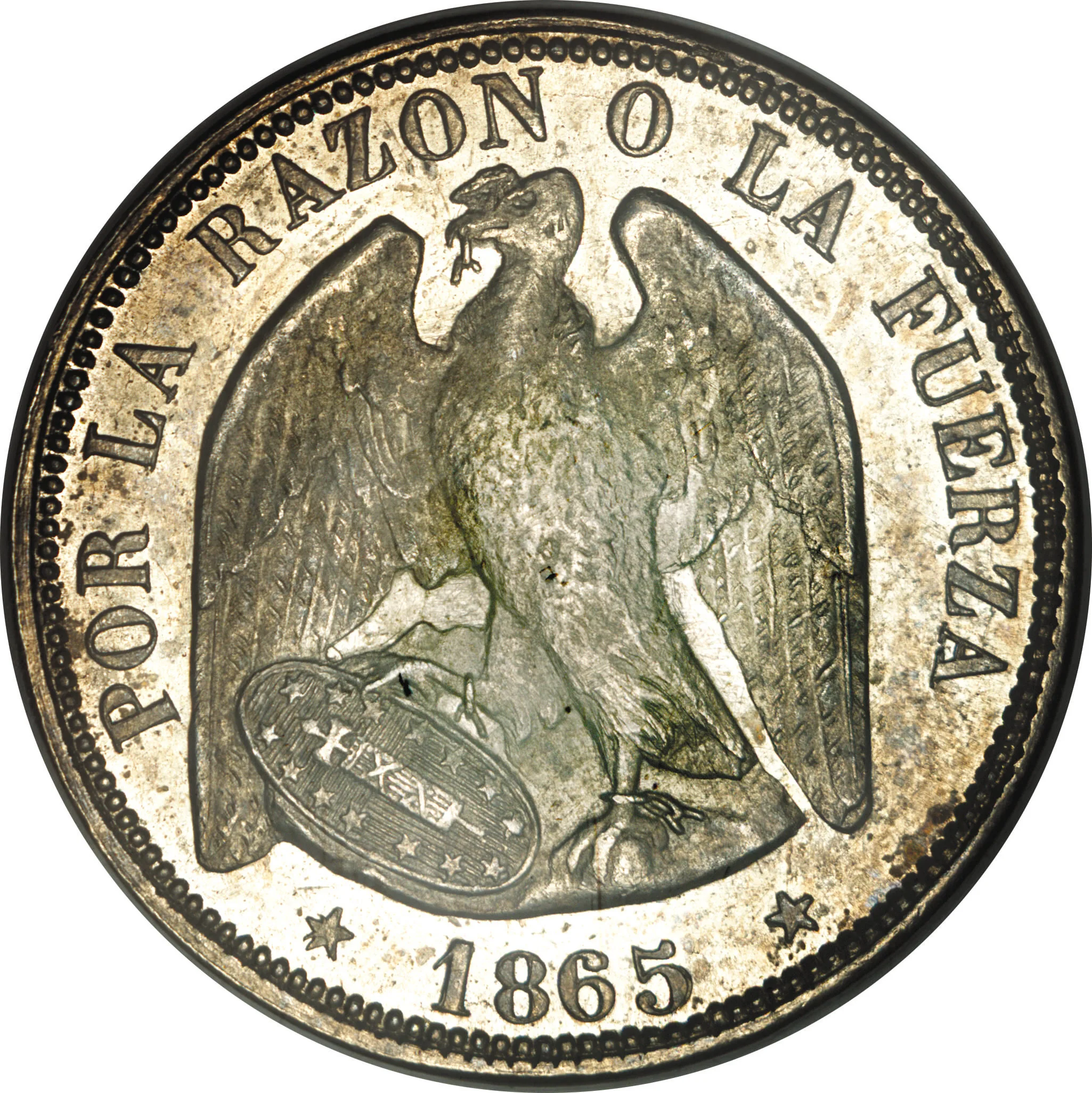
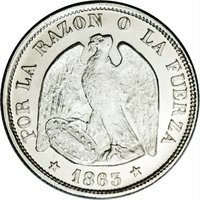
Andean Condor with outstretched wings and shield.
Inscription:
POR LA RAZON O LA FUERZA
* 1865 *
* 1865 *
Script: Latin
Reverse
Edge
Mints
| Name | Mark |
|---|---|
| Casa de Moneda de Chile | (So) |
Mintings
| Year | Mint Mark | Mintage | Quality | Collection |
|---|---|---|---|---|
| 1862 | So | — | ||
| 1863 | So | 80,000 | ||
| 1864 | So | 68,000 | ||
| 1865 | So | 287,000 | ||
| 1866 | So | 200,000 | ||
| 1867 | So | 47,000 |
Historical background
In 1862, Chile's currency situation was characterized by a complex and often chaotic system of multiple, concurrently circulating coins. The official currency was the peso, subdivided into 8 reales, but the reality was a marketplace flooded with a mix of domestic and foreign specie. Alongside Chilean-minted gold escudos and silver pesos, Spanish colonial coins, Bolivian and Peruvian silver, and even French francs circulated widely, their values fluctuating based on metal content and public trust. This lack of uniformity created significant challenges for commerce, as merchants and citizens constantly had to assess and negotiate the worth of disparate coins, hindering economic efficiency and stability.
The root of this disorder lay in the chronic shortage of official, state-issued coinage. The government's mint could not produce enough specie to meet the demands of a growing economy, particularly following the agricultural and mining booms of the mid-19th century. This scarcity was exacerbated by the export of high-value gold coins, which were often shipped abroad in exchange for imported goods, leaving behind a less reliable mix of silver and copper. Consequently, the economy relied heavily on this ad hoc system of foreign and older coins, with no central authority effectively regulating their value or exchange rates.
Recognizing the pressing need for reform, the Chilean government was already laying the groundwork for a fundamental change. The 1860s were a transitional period leading up to the pivotal Currency Law of 1865. This law would demonetize foreign coinage and establish a new, decimal-based national system centered on the peso de plata (silver peso) and the condor gold coin, adopting the centavo as a subdivision. Therefore, the situation in 1862 is best understood as the final chapter of an outdated colonial-era monetary system, with the state poised to impose order through a unified, national currency.
The root of this disorder lay in the chronic shortage of official, state-issued coinage. The government's mint could not produce enough specie to meet the demands of a growing economy, particularly following the agricultural and mining booms of the mid-19th century. This scarcity was exacerbated by the export of high-value gold coins, which were often shipped abroad in exchange for imported goods, leaving behind a less reliable mix of silver and copper. Consequently, the economy relied heavily on this ad hoc system of foreign and older coins, with no central authority effectively regulating their value or exchange rates.
Recognizing the pressing need for reform, the Chilean government was already laying the groundwork for a fundamental change. The 1860s were a transitional period leading up to the pivotal Currency Law of 1865. This law would demonetize foreign coinage and establish a new, decimal-based national system centered on the peso de plata (silver peso) and the condor gold coin, adopting the centavo as a subdivision. Therefore, the situation in 1862 is best understood as the final chapter of an outdated colonial-era monetary system, with the state poised to impose order through a unified, national currency.
💎 Extremely Rare