Log In
Sign Up
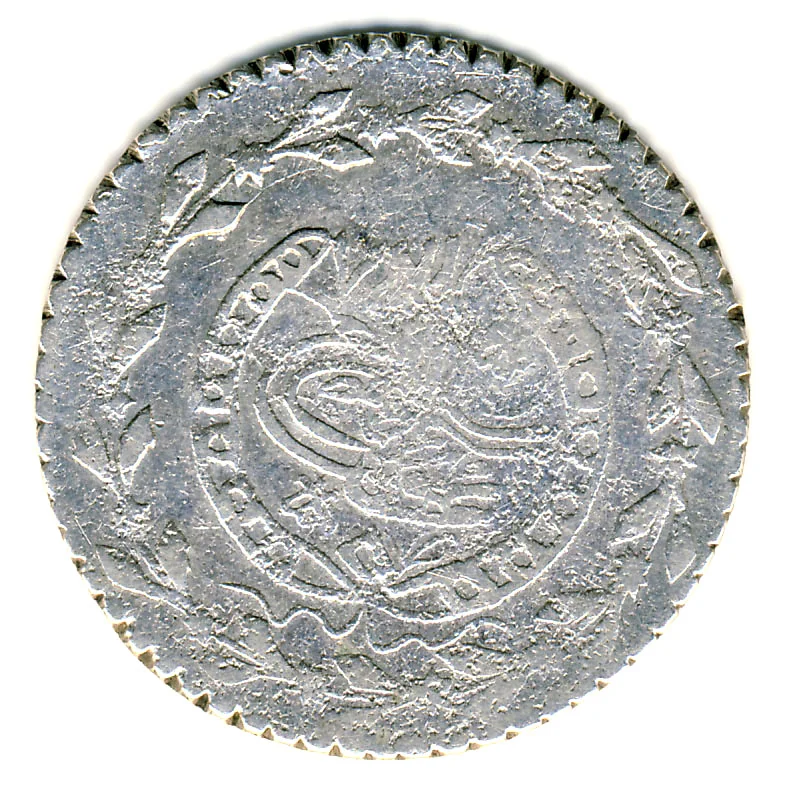
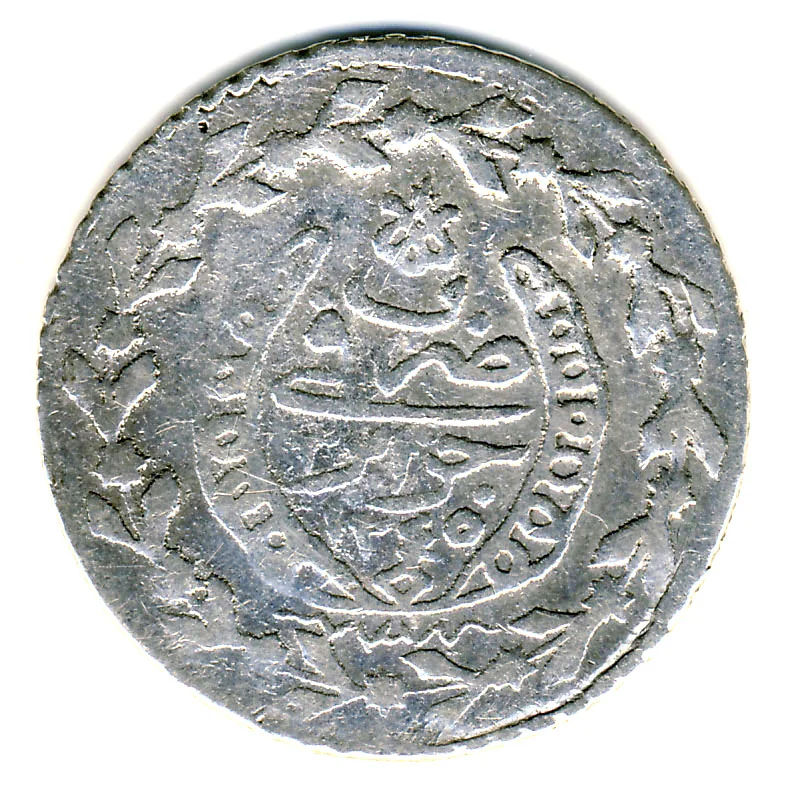
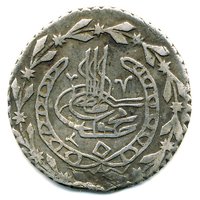
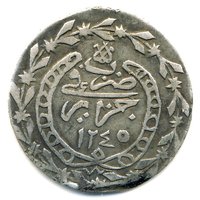
doublezon
⅓ budju
– Algiers
Add to wishlist
Standard circulation coins
Series:
1830 Regency of Algiers circulation coins
Algeria
Context
Year:
1830
Islamic (Hijri)
Year::
1245
Country:
Algeria
Issuer:
Algiers
Period:
Regency
Ruler:
Mahmud II
Currency:
Budju
(1517—1848)
Demonetized
: Yes
Material
Diameter:
25 mm
Weight:
3.2 g
Silver Weight::
3.20 g
Shape:
Round
Composition:
Silver
Magnetic:
No
Alignment:
Medal alignment
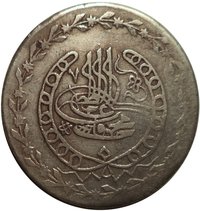
OBVERSE ↑
⟳
flip
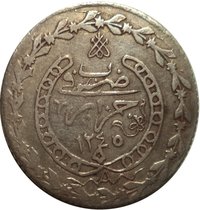
REVERSE ↑
References
KM:
#
Click to copy to clipboard
78
Numista:
#35357
Value
Bullion value:
$8.18
Obverse
Description:
Mahmoud I (r. 1808–1839)
Script:
Arabic
Reverse
Script:
Arabic
Edge
Milled
Mintings
Year
Mint Mark
Mintage
Quality
Collection
1830
—
—
+
Series:
1830 Regency of Algiers circulation coins
1 kharub
1830-1837
⅙ budju
1830
⅓ budju
1830
1 budju
1830
Navigation
Standard circulation coins of Algiers
Previous
⅙ budju
1830
Next
1 budju
1830
💎
Extremely Rare