

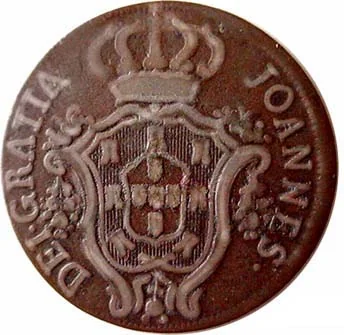
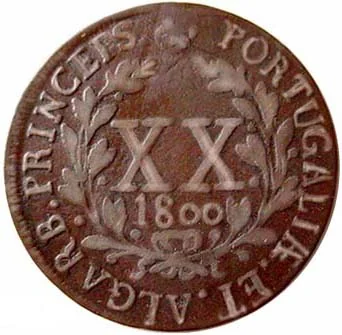
20 réis – Portugal
Add to wishlist
Standard circulation coins
Series: PRINCEPS
Portugal
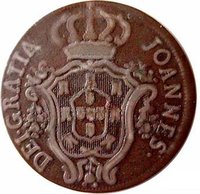
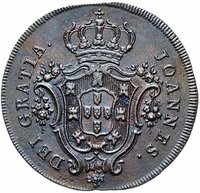
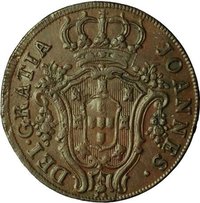
Obverse
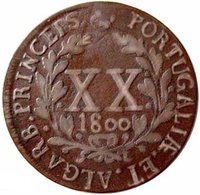
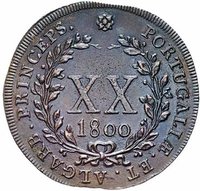
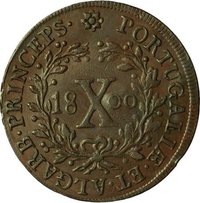
Reverse
Edge
Plain
Mints
| Name | Mark |
|---|---|
| Imprensa Nacional - Casa da Moeda | — |
Mintings
| Year | Mint Mark | Mintage | Quality | Collection |
|---|---|---|---|---|
| 1800 | — | — |
Historical background
In 1800, Portugal's currency situation was complex and deeply influenced by its colonial empire and economic dependence on Britain. The standard unit was the Portuguese real (plural: réis), a currency of immense historical lineage but facing significant strain. The economy was fundamentally tied to gold, primarily from the Brazilian colony, which theoretically backed the currency. However, much of this wealth flowed out to pay for manufactured goods and to service debts, particularly to Britain, following the 1703 Methuen Treaty. This drain of specie (gold and silver coin) created chronic shortages of hard currency within Portugal itself, leading to a reliance on a confusing mix of domestic and foreign coins in daily circulation.
The monetary system was itself archaic and cumbersome, based on a system of milréis (1,000 réis) and conto de réis (1,000,000 réis). Transactions often required elaborate calculations due to the low unit value of the real. More critically, the state's finances were precarious. The costs of maintaining the court, the administration of a global empire, and the aftermath of the 1755 Lisbon earthquake had led to repeated debasements of the coinage. This meant the actual metal content of coins was often reduced, eroding public confidence and contributing to inflationary pressures. The circulation was a patchwork of older, full-weight coins, newer debased issues, and a plethora of foreign currency, especially Spanish and Brazilian coins.
This fragile financial state existed on the brink of profound upheaval. Within just seven years, in 1807, the French invasion under Napoleon would force the Portuguese royal family and court to flee to Brazil, triggering a massive transfer of the kingdom's treasury. This event would sever the direct colonial gold supply and plunge Portugal into the Peninsular War, leading to further monetary chaos, British financial control, and ultimately setting the stage for the complete restructuring of the Portuguese currency system in the 1830s with the introduction of the real-based escudo. Thus, the year 1800 represents the final chapter of an old monetary order, soon to be shattered by war and political crisis.
The monetary system was itself archaic and cumbersome, based on a system of milréis (1,000 réis) and conto de réis (1,000,000 réis). Transactions often required elaborate calculations due to the low unit value of the real. More critically, the state's finances were precarious. The costs of maintaining the court, the administration of a global empire, and the aftermath of the 1755 Lisbon earthquake had led to repeated debasements of the coinage. This meant the actual metal content of coins was often reduced, eroding public confidence and contributing to inflationary pressures. The circulation was a patchwork of older, full-weight coins, newer debased issues, and a plethora of foreign currency, especially Spanish and Brazilian coins.
This fragile financial state existed on the brink of profound upheaval. Within just seven years, in 1807, the French invasion under Napoleon would force the Portuguese royal family and court to flee to Brazil, triggering a massive transfer of the kingdom's treasury. This event would sever the direct colonial gold supply and plunge Portugal into the Peninsular War, leading to further monetary chaos, British financial control, and ultimately setting the stage for the complete restructuring of the Portuguese currency system in the 1830s with the introduction of the real-based escudo. Thus, the year 1800 represents the final chapter of an old monetary order, soon to be shattered by war and political crisis.
✨ Legendary