

1 Crown – Gibraltar
Non-circulating coins
Commemoration: 1992 Summer Olympics, Barcelona
Series: 1992 Summer Olympics, Barcelona
United Kingdom
Context
Material
References
KM: #Click to copy to clipboard68a
Numista: #352979
Value
Bullion value: $74.00
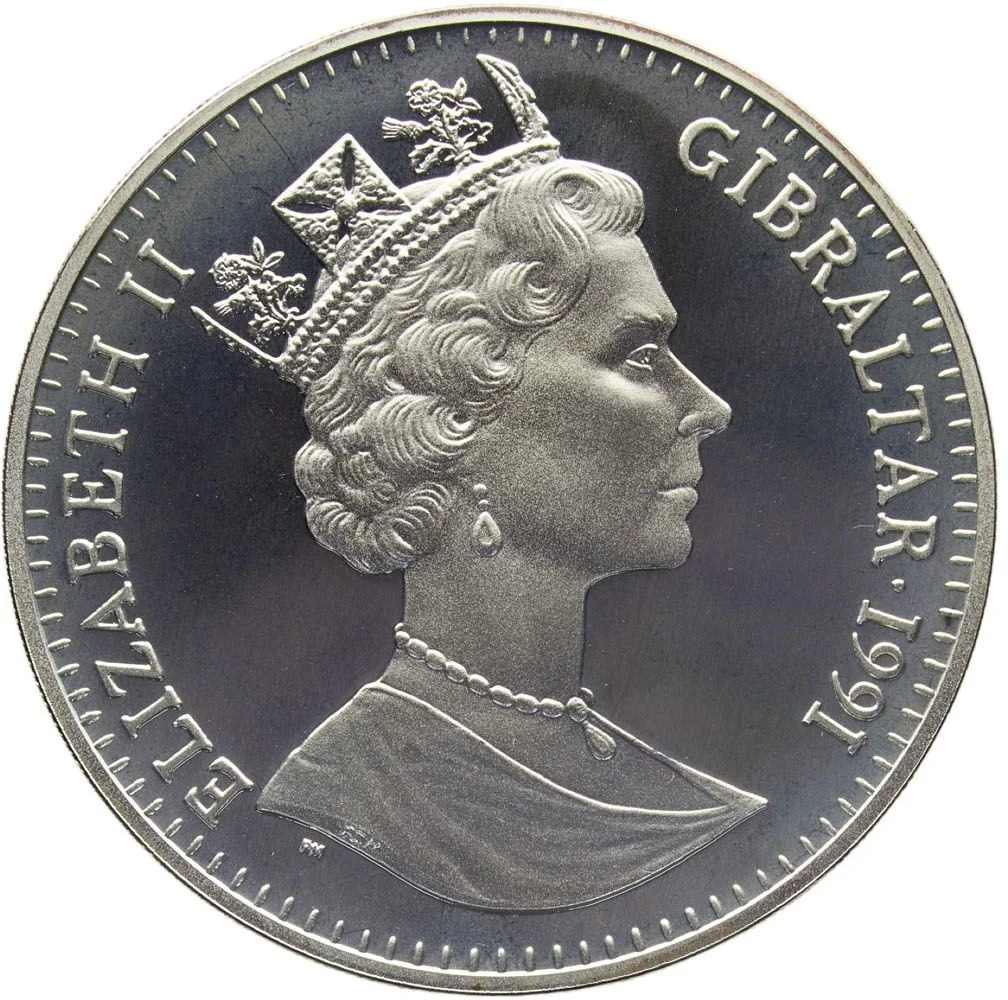
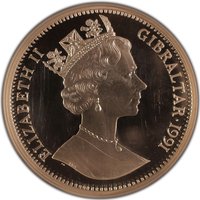
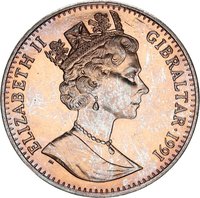
Obverse
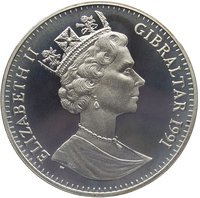
Description:
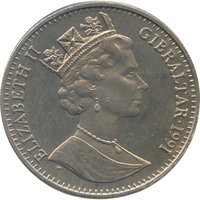
Crowned head facing right.
Inscription:
ELIZABETH II
GIBRALTAR 1991
GIBRALTAR 1991
Script: Latin
Engraver: Raphael David Maklouf
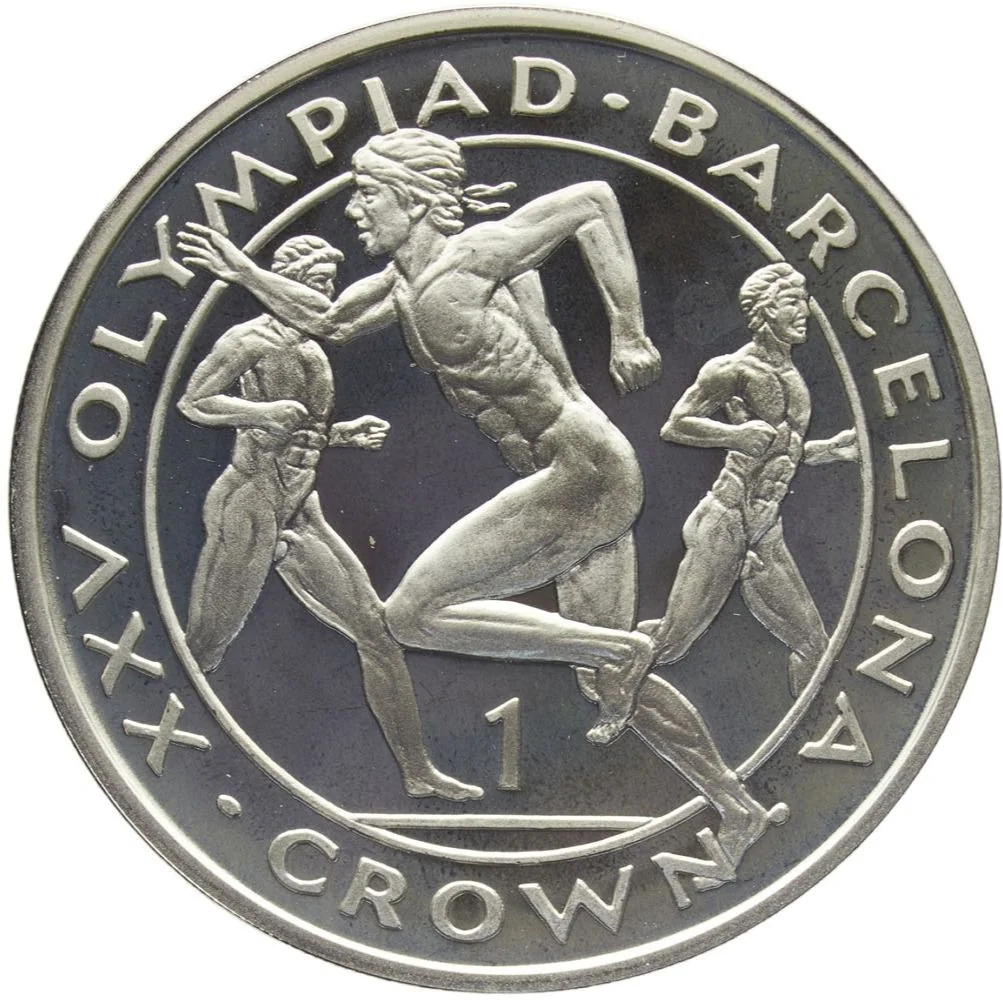
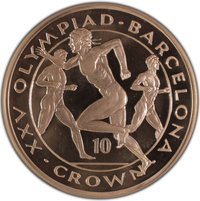
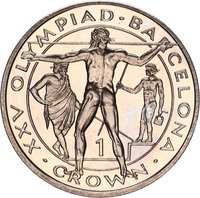
Reverse
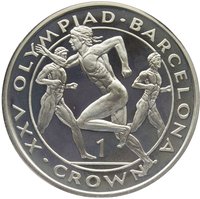
Description:
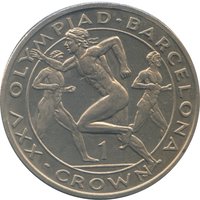
Three marathon runners, inspired by a 333 BC amphora.
Inscription:
OLYMPIAD BARCELONA
1
CROWN
1
CROWN
Script: Latin
Edge
Reeded
Categories
| Sport> Summer Olympic Games |
| Sport> Athletics |
Mints
| Name | Mark |
|---|---|
| Pobjoy Mint | (PM) |
Mintings
| Year | Mint Mark | Mintage | Quality | Collection |
|---|---|---|---|---|
| 1991 | — | — | Proof |
Historical background
In 1991, Gibraltar's currency situation was defined by its unique political status as a British Overseas Territory and its practical economic integration with neighbouring Spain. The legal tender was, and remains, the Gibraltar pound (GIP), issued by the Government of Gibraltar and pegged at par with the British pound sterling (GBP). Sterling notes and coins also circulated freely and were accepted interchangeably with local currency, reflecting the territory's constitutional link to the United Kingdom.
However, the reality on the ground was one of effective de facto dual circulation. Due to the high volume of cross-border traffic from Spain, the Spanish peseta was widely accepted, and often preferred, by many retail businesses, especially those in the main tourist areas. This was a pragmatic response to the needs of the thousands of Spanish workers and tourists who formed the backbone of the local economy. Consequently, Gibraltar functioned with a multi-currency environment where prices were frequently quoted in both GIP/sterling and pesetas.
This period fell within the broader context of the European Community's moves towards Economic and Monetary Union (EMU), a process the UK (and by extension Gibraltar) had joined but from which it would later opt out of the single currency. While the peseta was a daily fact of life, the legal and formal monetary anchor remained steadfastly tied to sterling. The situation highlighted Gibraltar's hybrid identity: politically and monetarily British, but economically and geographically intertwined with the Iberian Peninsula.
However, the reality on the ground was one of effective de facto dual circulation. Due to the high volume of cross-border traffic from Spain, the Spanish peseta was widely accepted, and often preferred, by many retail businesses, especially those in the main tourist areas. This was a pragmatic response to the needs of the thousands of Spanish workers and tourists who formed the backbone of the local economy. Consequently, Gibraltar functioned with a multi-currency environment where prices were frequently quoted in both GIP/sterling and pesetas.
This period fell within the broader context of the European Community's moves towards Economic and Monetary Union (EMU), a process the UK (and by extension Gibraltar) had joined but from which it would later opt out of the single currency. While the peseta was a daily fact of life, the legal and formal monetary anchor remained steadfastly tied to sterling. The situation highlighted Gibraltar's hybrid identity: politically and monetarily British, but economically and geographically intertwined with the Iberian Peninsula.
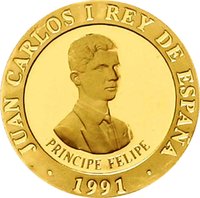
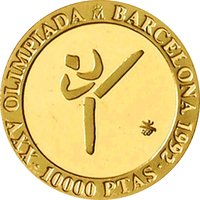
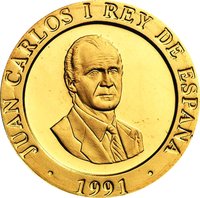
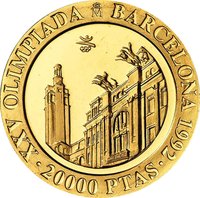
Series: 1992 Summer Olympics, Barcelona
💎 Extremely Rare