

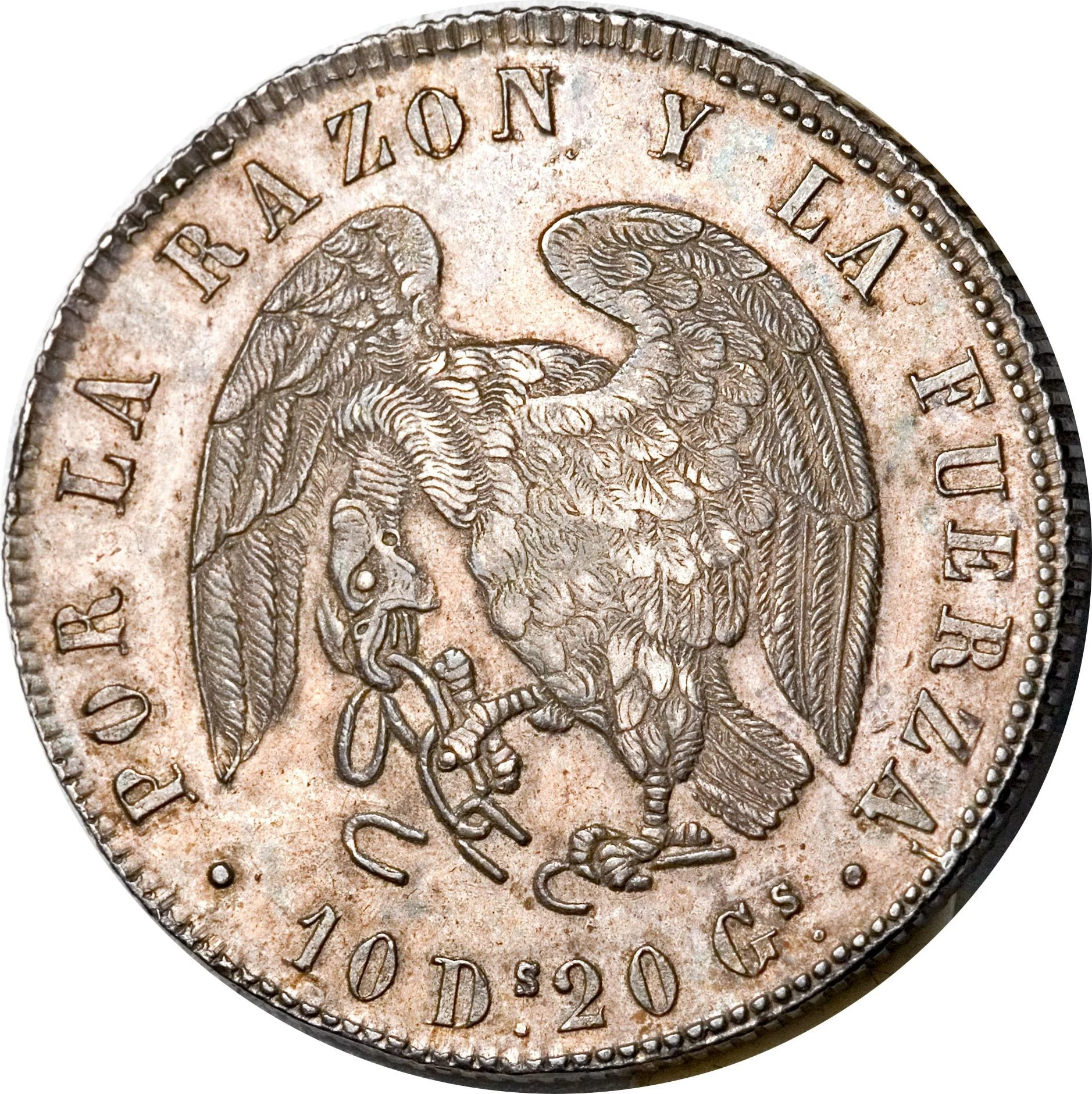
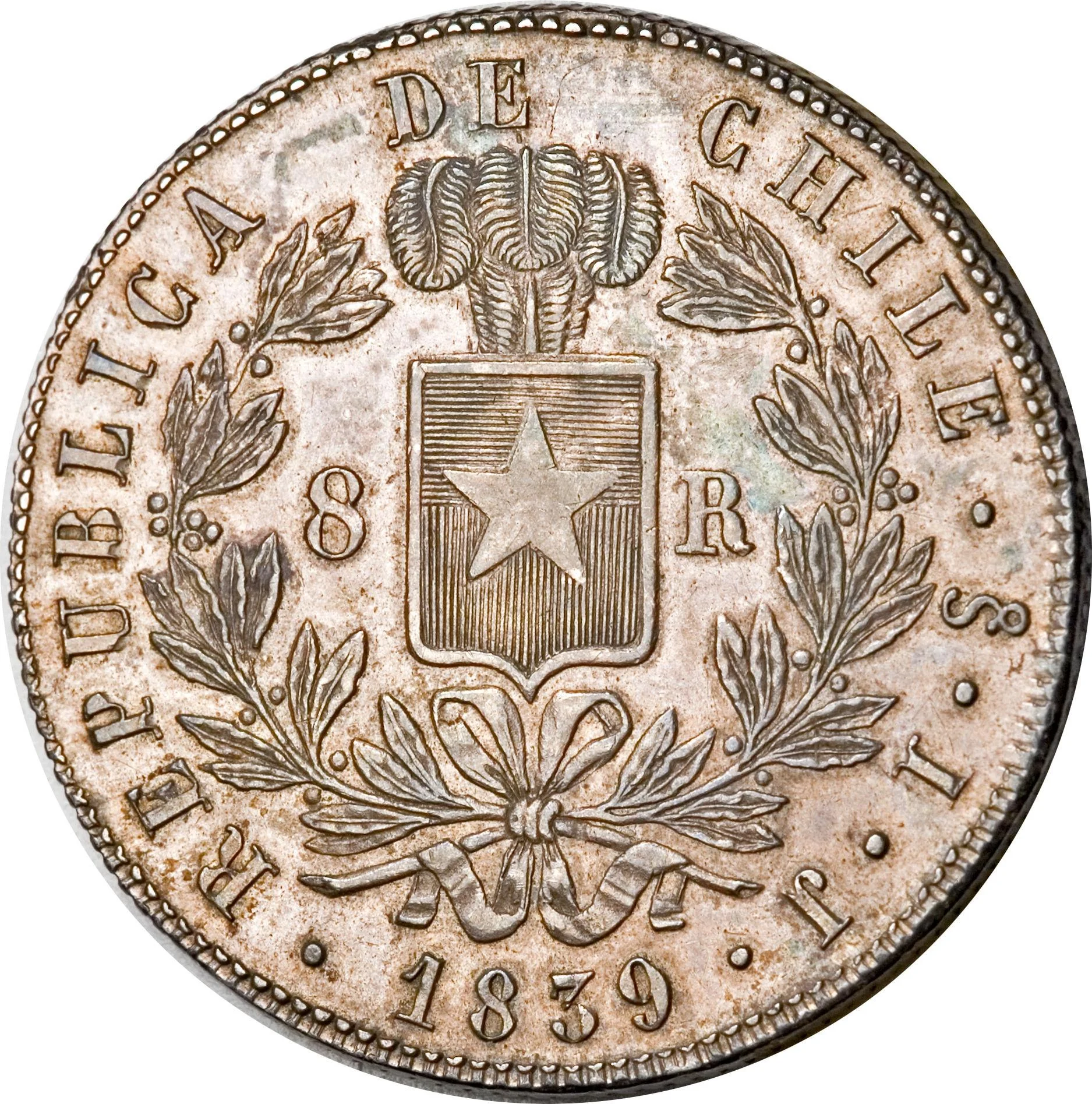
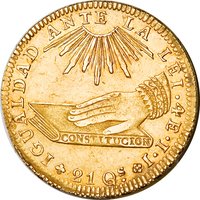
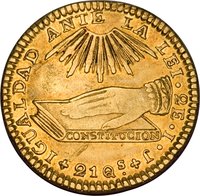
Obverse
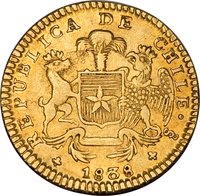
Reverse
Edge
Mints
| Name | Mark |
|---|---|
| Casa de Moneda de Chile | (So) |
Mintings
| Year | Mint Mark | Mintage | Quality | Collection |
|---|---|---|---|---|
| 1837 | So | 5,404 | ||
| 1839 | So | 205,000 | ||
| 1840 | So | 4,556 | ||
| 1848 | So | — | ||
| 1849 | So | — |
Historical background
In 1837, Chile's currency situation was characterized by significant instability and a complex mix of circulating mediums, a direct legacy of the independence wars and early nation-building. The state treasury was depleted, and the country lacked a unified, state-issued currency. Instead, the economy operated on a chaotic system that included cut and worn Spanish colonial coins, a limited number of foreign coins (especially from Peru and Bolivia), and a substantial volume of privately issued paper money, known as vales. These vales, issued by merchants, mining companies, and even some municipalities, were promises to pay in metal but were often discounted heavily and their value varied wildly based on the issuer's credibility, leading to widespread confusion and fraud.
The core of the problem was a severe shortage of precious metals for minting official coinage, which undermined public confidence in any paper substitutes. Attempts to establish order, such as the 1834 law that created the peso as the national unit and authorized foreign silver coins to circulate, had limited success. The government itself, under the conservative administration of President Joaquín Prieto and his powerful Minister Diego Portales, contributed to the instability by issuing its own treasury notes (billetes fiscales) to finance its operations, including the ongoing war against the Peru-Bolivia Confederation (1836-1839). This wartime spending further inflated the money supply without metallic backing, deepening the distrust in paper instruments.
Consequently, Chile in 1837 was a nation with a monetary system in transition, caught between a desired silver standard and the practical reality of fiduciary emissions. The lack of a strong central bank or any effective regulatory authority meant the currency market was fragmented and speculative. This environment hindered commerce and investment, posing a fundamental challenge to the economic consolidation that the Portalian state sought to achieve. The pressing need for a uniform and trustworthy currency would ultimately lead to major reforms in the following decades, culminating in the creation of the private Banco de Chile in 1855 and later the establishment of a formal gold standard.
The core of the problem was a severe shortage of precious metals for minting official coinage, which undermined public confidence in any paper substitutes. Attempts to establish order, such as the 1834 law that created the peso as the national unit and authorized foreign silver coins to circulate, had limited success. The government itself, under the conservative administration of President Joaquín Prieto and his powerful Minister Diego Portales, contributed to the instability by issuing its own treasury notes (billetes fiscales) to finance its operations, including the ongoing war against the Peru-Bolivia Confederation (1836-1839). This wartime spending further inflated the money supply without metallic backing, deepening the distrust in paper instruments.
Consequently, Chile in 1837 was a nation with a monetary system in transition, caught between a desired silver standard and the practical reality of fiduciary emissions. The lack of a strong central bank or any effective regulatory authority meant the currency market was fragmented and speculative. This environment hindered commerce and investment, posing a fundamental challenge to the economic consolidation that the Portalian state sought to achieve. The pressing need for a uniform and trustworthy currency would ultimately lead to major reforms in the following decades, culminating in the creation of the private Banco de Chile in 1855 and later the establishment of a formal gold standard.
💎 Extremely Rare