

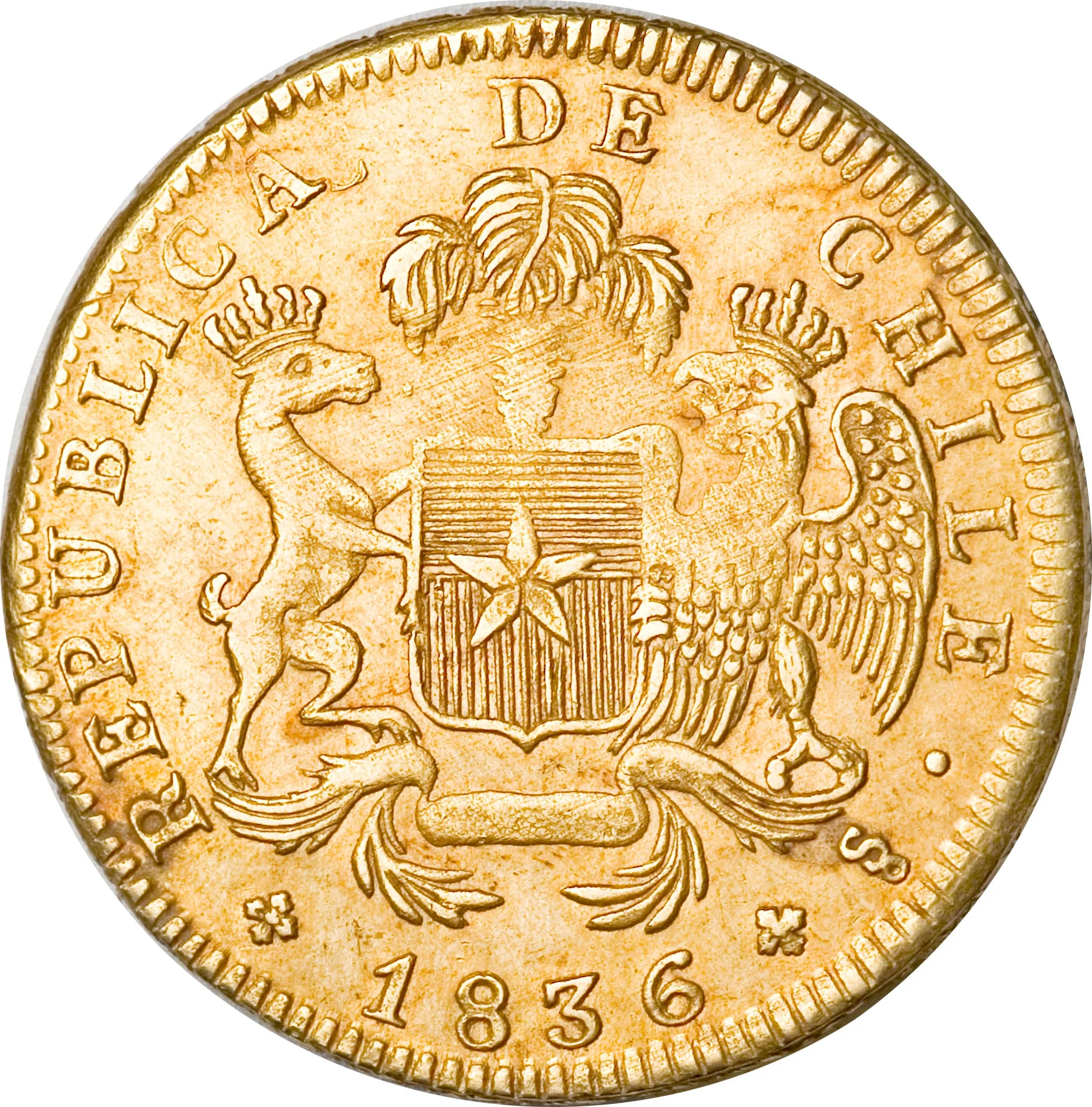
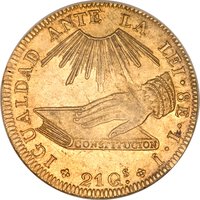
Obverse
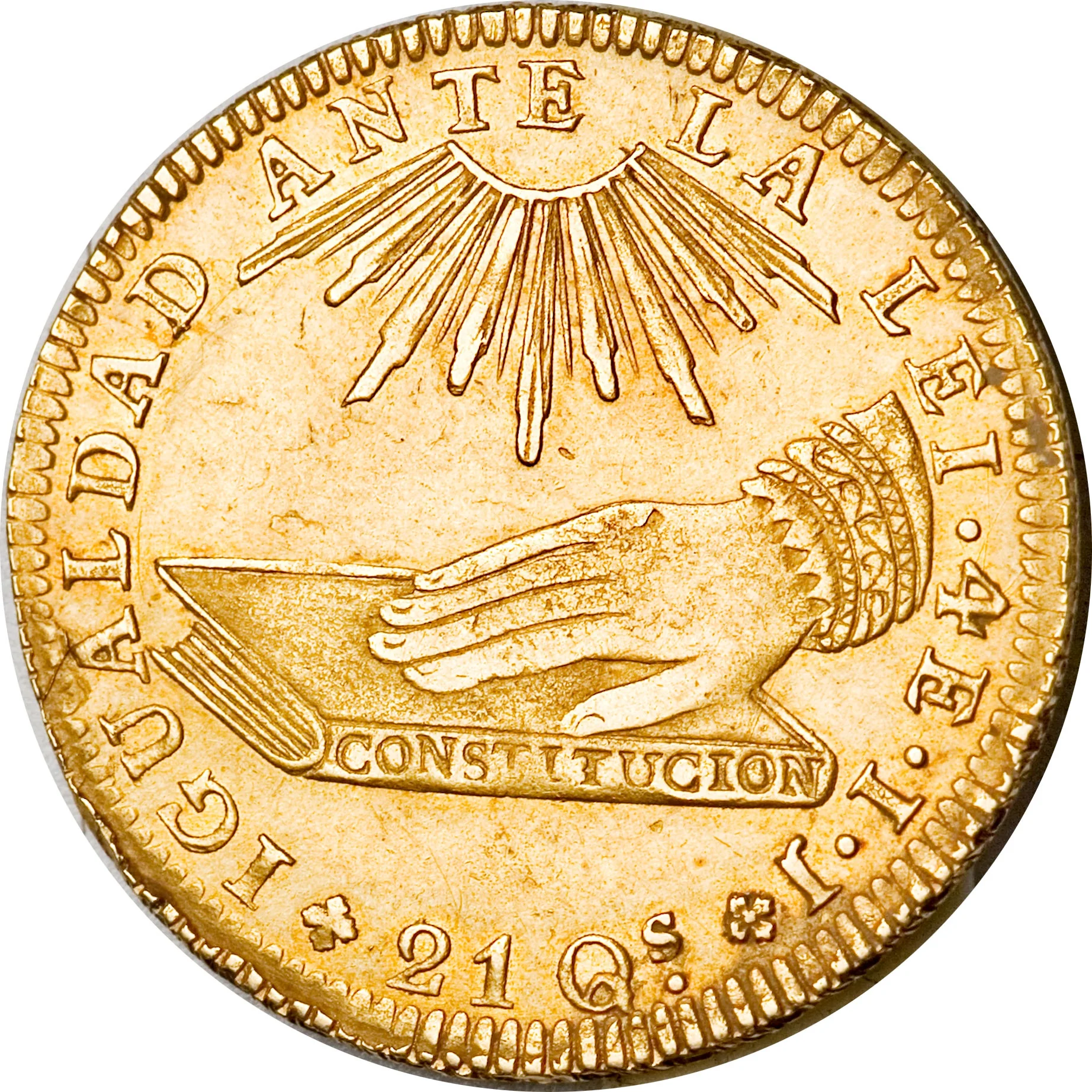
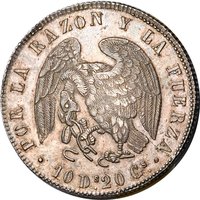
Reverse
Description:
Swearing on the Constitution.
Inscription:
IGUALDAD ANTE LA LEI · 4E · I · J
* 21 Qs *
CONSTITUCION
* 21 Qs *
CONSTITUCION
Script: Latin
Edge
Mints
| Name | Mark |
|---|---|
| Casa de Moneda de Chile | (So) |
Mintings
| Year | Mint Mark | Mintage | Quality | Collection |
|---|---|---|---|---|
| 1836 | So | 1,389 | ||
| 1837 | So | 321 |
Historical background
In 1836, Chile’s currency situation was characterized by significant disorder and a lack of unified monetary system. Following independence, the country was flooded with a chaotic mix of coins from the colonial era, other Latin American nations, and European powers. The most common unit of account was the peso, but its value in actual coinage was inconsistent, as it circulated alongside Peruvian pesos, Bolivian bolivianos, and Spanish colonial reales. This proliferation of foreign and debased coins, many with varying silver content, created a complex and unreliable medium for commerce, hindering both domestic trade and government fiscal operations.
The administration of President Joaquín Prieto and his influential Finance Minister, Manuel Rengifo, recognized this monetary anarchy as a major obstacle to economic stability and growth. Their primary response was the Coinage Law of 1835, which took practical effect in the period around 1836. This law was a decisive step toward creating a national currency, authorizing the minting of Chile’s own gold condores and silver pesos at a fixed standard of fineness. It aimed to drive foreign and substandard coins out of circulation by establishing a clear, state-backed monetary standard.
Despite this foundational legislation, the currency situation in 1836 remained in a state of transition. The new national coins were beginning to enter circulation, but the older, heterogeneous mix of money still dominated daily transactions. The success of the reform hinged on the government's ability to consistently mint sufficient quantities of the new currency and enforce its use, a process that would take years to fully accomplish. Thus, 1836 represents a pivotal moment—the point at which Chile moved decisively from post-colonial monetary chaos toward the establishment of a stable, sovereign currency system under the principles of portalismo (state-led economic development).
The administration of President Joaquín Prieto and his influential Finance Minister, Manuel Rengifo, recognized this monetary anarchy as a major obstacle to economic stability and growth. Their primary response was the Coinage Law of 1835, which took practical effect in the period around 1836. This law was a decisive step toward creating a national currency, authorizing the minting of Chile’s own gold condores and silver pesos at a fixed standard of fineness. It aimed to drive foreign and substandard coins out of circulation by establishing a clear, state-backed monetary standard.
Despite this foundational legislation, the currency situation in 1836 remained in a state of transition. The new national coins were beginning to enter circulation, but the older, heterogeneous mix of money still dominated daily transactions. The success of the reform hinged on the government's ability to consistently mint sufficient quantities of the new currency and enforce its use, a process that would take years to fully accomplish. Thus, 1836 represents a pivotal moment—the point at which Chile moved decisively from post-colonial monetary chaos toward the establishment of a stable, sovereign currency system under the principles of portalismo (state-led economic development).
✨ Legendary