

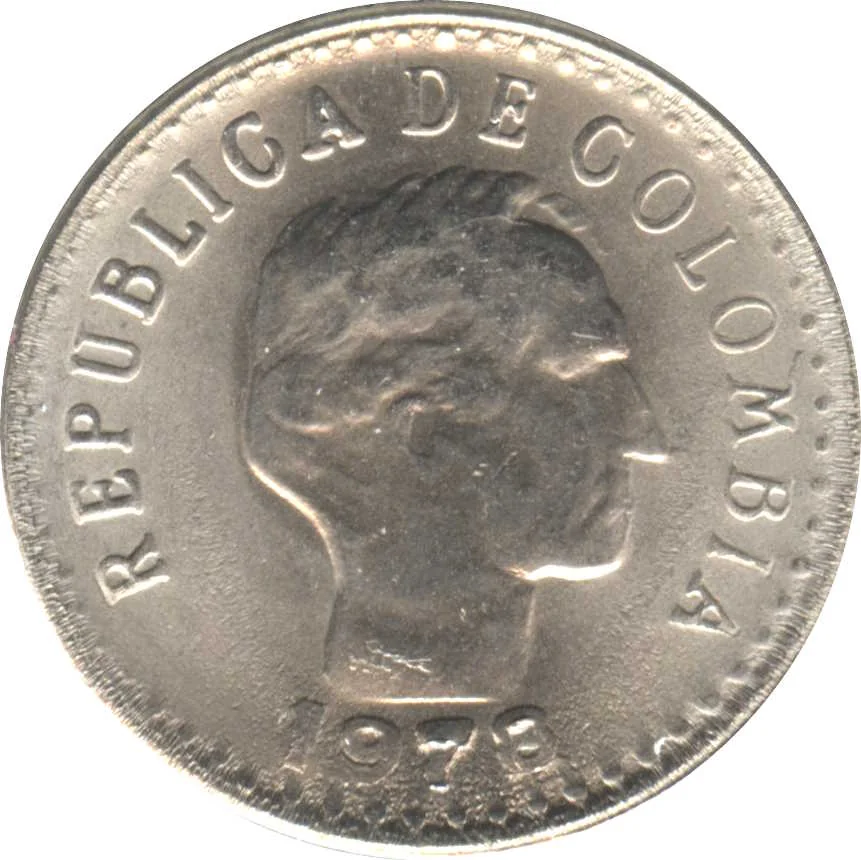
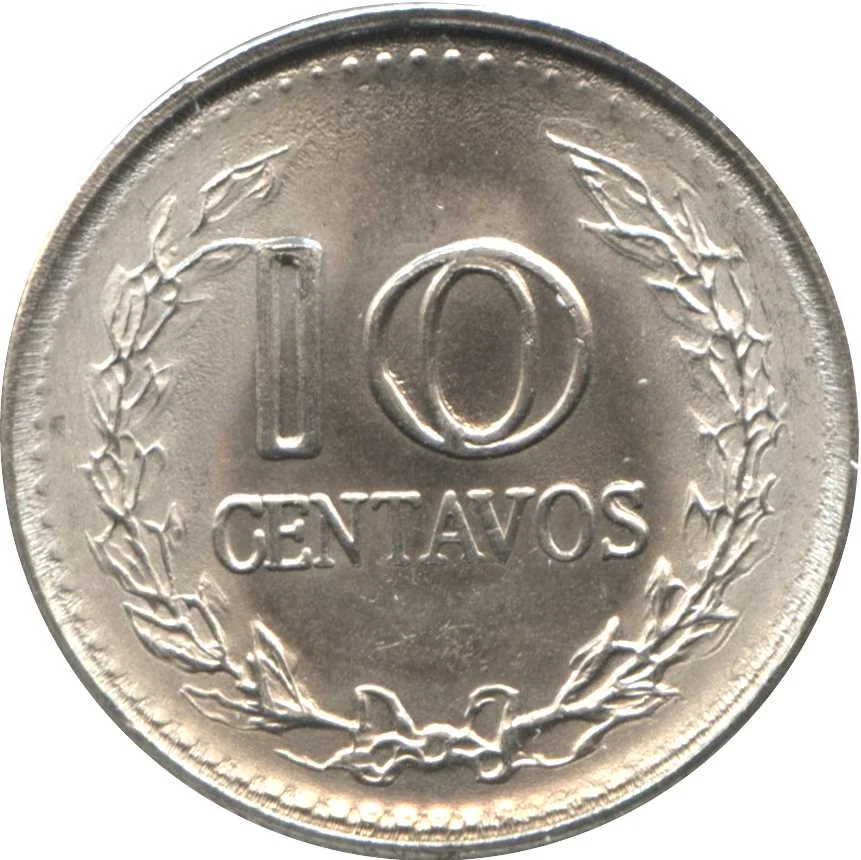
10 Centavos – Colombia
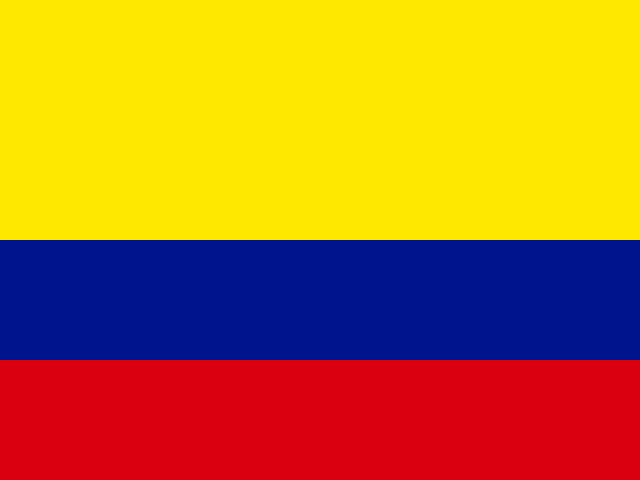
Colombia
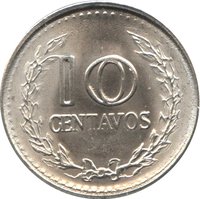
Obverse
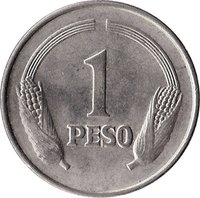
Reverse
Edge
Reeded
Categories
| Person> Military leader |
| Person> Politician |
| Symbol> Wreath |
Mints
| Name | Mark |
|---|---|
| Bogota Mint | — |
Mintings
| Year | Mint Mark | Mintage | Quality | Collection |
|---|---|---|---|---|
| 1972 | — | 58,000,000 | ||
| 1973 | — | 46,549,000 | ||
| 1974 | — | 49,740,000 | ||
| 1975 | — | 46,037,000 | ||
| 1976 | — | 46,084,000 | ||
| 1977 | — | 8,127,000 | ||
| 1978 | — | 116,010,000 |
Historical background
In 1972, Colombia's currency situation was characterized by a system of fixed, but adjustable, exchange rates managed under the Bretton Woods framework. The Colombian peso was pegged to the United States dollar at a rate of 18.50 pesos per dollar, a parity that had been established in 1967 following a significant devaluation. This regime was administered by the Banco de la República (the central bank), which maintained strict capital controls and intervened in the foreign exchange market to defend the peg. The primary goal was to provide stability for international trade and investment, which was crucial for an economy heavily dependent on exports of coffee, petroleum, and emerging manufactured goods.
However, this stability was under persistent pressure. Colombia faced chronic inflation, which averaged around 13% annually in the early 1970s, eroding the peso's real value and creating an overvaluation against the dollar. This overvaluation hurt the competitiveness of non-traditional exports and encouraged imports, leading to periodic balance of payments deficits. The situation was further complicated by the global monetary turmoil of the era, including the Nixon Shock of 1971, which ended the direct convertibility of the US dollar to gold and forced realignments of major currencies, thereby increasing uncertainty for managed pegs like Colombia's.
Consequently, 1972 existed in a tense calm before a necessary adjustment. While the fixed rate provided a nominal anchor, economic policymakers were engaged in a delicate balancing act, using reserves to support the currency while implementing gradual fiscal and monetary tightening to control inflation. The underlying imbalances meant that the system was inherently fragile, setting the stage for the more flexible exchange rate mechanisms that would be adopted later in the decade as the pressures from inflation and global financial shifts became unsustainable.
However, this stability was under persistent pressure. Colombia faced chronic inflation, which averaged around 13% annually in the early 1970s, eroding the peso's real value and creating an overvaluation against the dollar. This overvaluation hurt the competitiveness of non-traditional exports and encouraged imports, leading to periodic balance of payments deficits. The situation was further complicated by the global monetary turmoil of the era, including the Nixon Shock of 1971, which ended the direct convertibility of the US dollar to gold and forced realignments of major currencies, thereby increasing uncertainty for managed pegs like Colombia's.
Consequently, 1972 existed in a tense calm before a necessary adjustment. While the fixed rate provided a nominal anchor, economic policymakers were engaged in a delicate balancing act, using reserves to support the currency while implementing gradual fiscal and monetary tightening to control inflation. The underlying imbalances meant that the system was inherently fragile, setting the stage for the more flexible exchange rate mechanisms that would be adopted later in the decade as the pressures from inflation and global financial shifts became unsustainable.
🌱 Very Common