

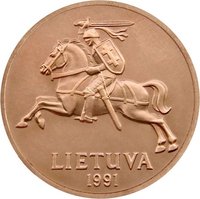
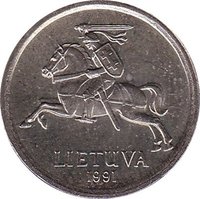
Obverse
Description:
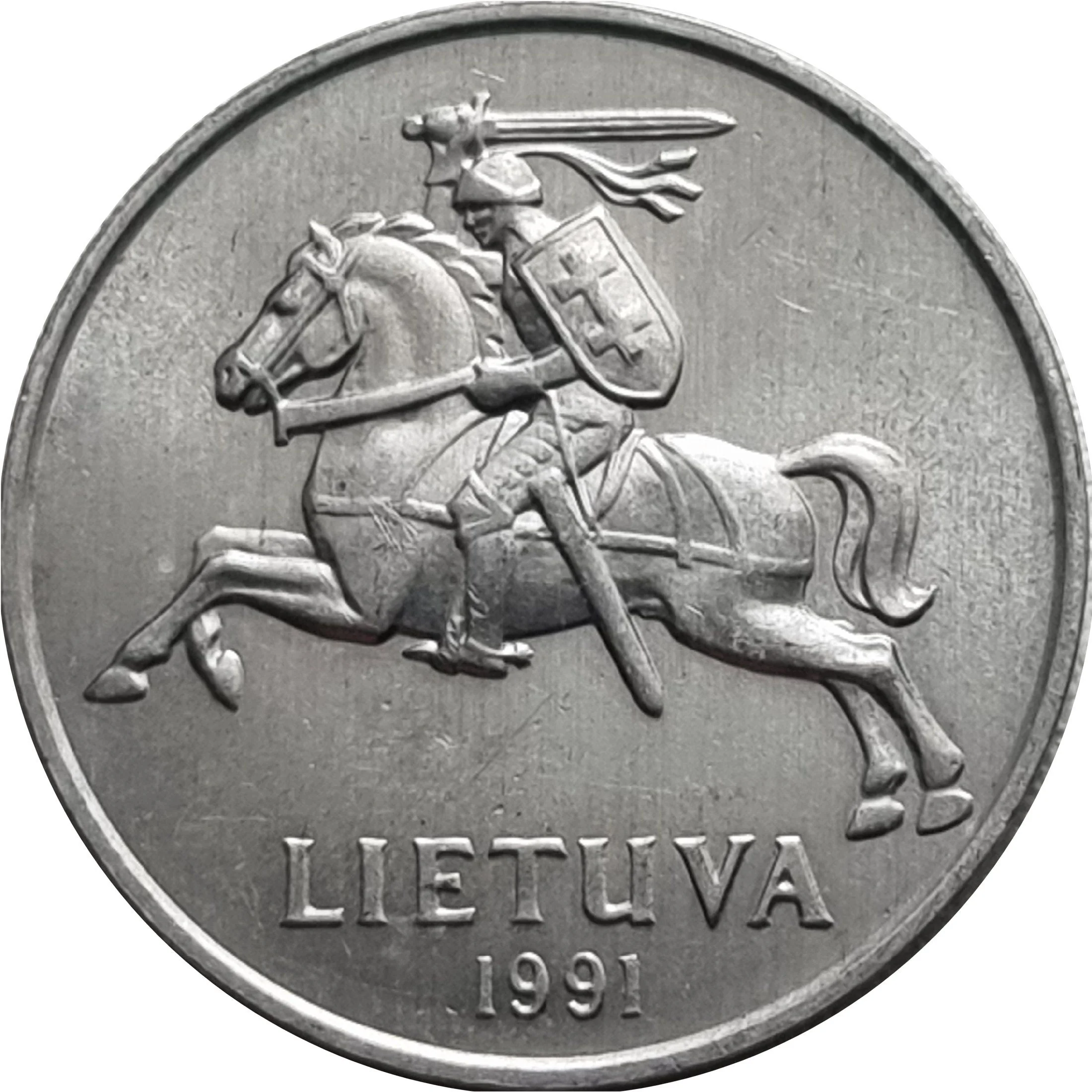
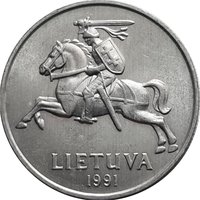
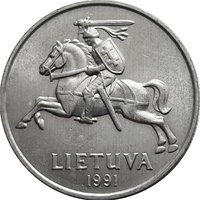
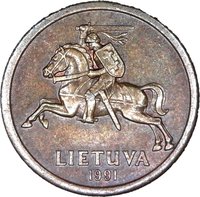
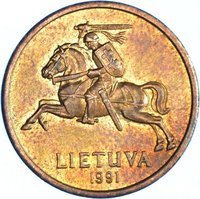
Lithuania's arms above the country name, with the date below.
Inscription:
LIETUVA
1991
1991
Translation:
LITHUANIA
1991
1991
Script: Latin
Language: Lithuanian
Engraver: Petras Garška
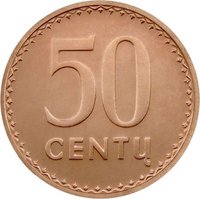
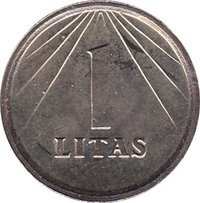
Reverse
Description:
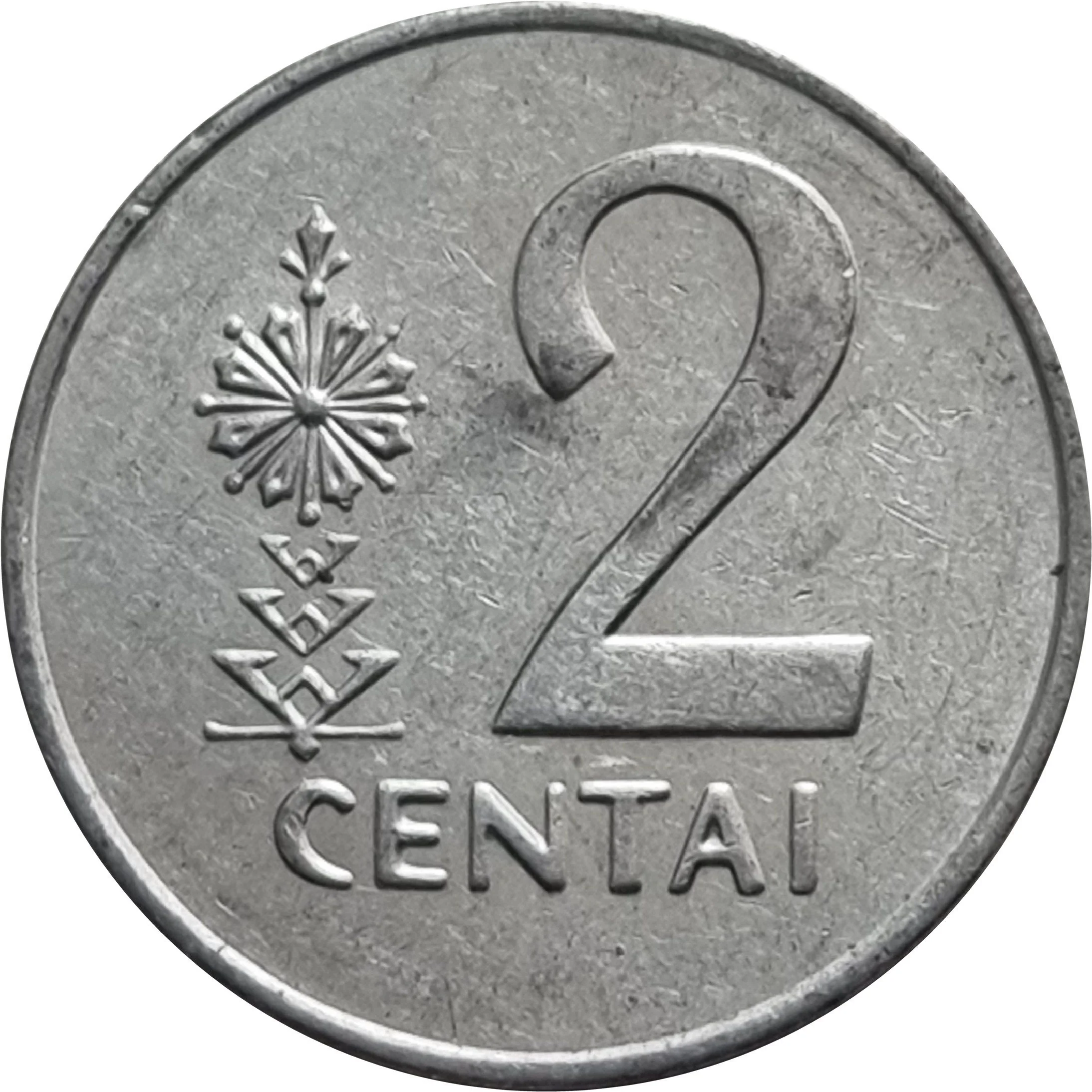
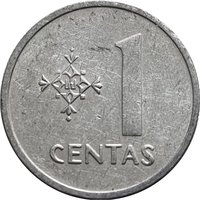
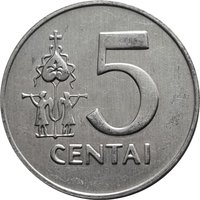
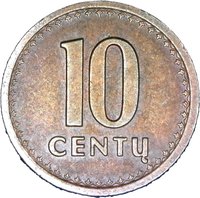
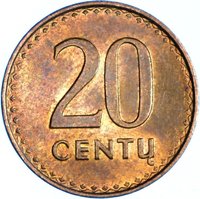
Large ornament with three open triangles and a stylized 16-element sun on top.
Inscription:
2 CENTAI
Script: Latin
Engraver: Petras Garška
Edge
Plain
Categories
| Animal> Horse |
| Object> Cold weapons |
Mints
| Name | Mark |
|---|---|
| Lithuanian Mint | — |
Mintings
| Year | Mint Mark | Mintage | Quality | Collection |
|---|---|---|---|---|
| 1991 | — | — |
Historical background
In 1991, following the restoration of Lithuania's independence on March 11th, the country faced an immediate and severe currency crisis. It remained trapped within the Soviet monetary system, using the Soviet ruble, but Moscow retaliated against the independence declaration by imposing harsh economic blockades and cutting off the flow of cash and credit. This created a critical shortage of physical rubles in circulation, crippling everyday commerce and threatening to collapse the nascent state's economy. The situation was exacerbated by the arrival of large quantities of unstable, pre-1991 Soviet rubles from other republics, fueling inflation and undermining financial stability.
The Lithuanian government's urgent response was the creation of an interim currency, the talonas (often called "vagnorkės" or "zoo tickets" due to the animal motifs on the notes), introduced in May 1991. Initially, these were distributed as coupons to supplement ruble purchases of scarce goods, but they quickly evolved into a parallel currency. The talonas was a necessary tool to ration goods, protect the domestic market from the inflating Soviet ruble, and assert monetary sovereignty. However, it was a temporary and unstable solution, as the economy struggled with hyperinflation, supply shocks, and the complexities of operating with two concurrent currencies.
This precarious period set the stage for Lithuania's definitive break from the Soviet monetary zone. The experience with the talonas, though fraught with difficulty, provided a crucial administrative foundation for launching a fully independent national currency. This ambition was realized in 1993 with the introduction of the permanent litas, which was initially pegged to the US dollar and marked the final, decisive step in securing Lithuania's economic independence from the former Soviet Union.
The Lithuanian government's urgent response was the creation of an interim currency, the talonas (often called "vagnorkės" or "zoo tickets" due to the animal motifs on the notes), introduced in May 1991. Initially, these were distributed as coupons to supplement ruble purchases of scarce goods, but they quickly evolved into a parallel currency. The talonas was a necessary tool to ration goods, protect the domestic market from the inflating Soviet ruble, and assert monetary sovereignty. However, it was a temporary and unstable solution, as the economy struggled with hyperinflation, supply shocks, and the complexities of operating with two concurrent currencies.
This precarious period set the stage for Lithuania's definitive break from the Soviet monetary zone. The experience with the talonas, though fraught with difficulty, provided a crucial administrative foundation for launching a fully independent national currency. This ambition was realized in 1993 with the introduction of the permanent litas, which was initially pegged to the US dollar and marked the final, decisive step in securing Lithuania's economic independence from the former Soviet Union.
Series: 1991 Lithuania circulation coins
🌱 Very Common