

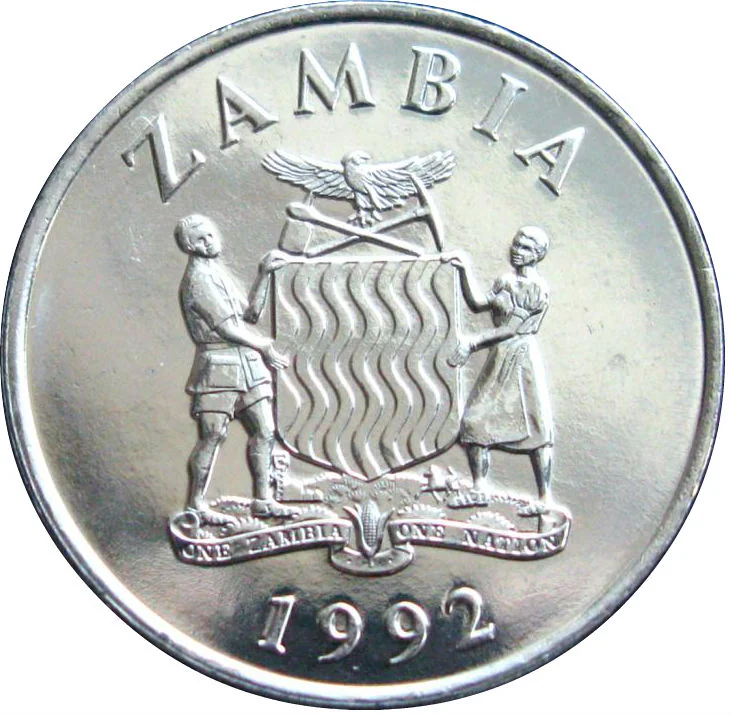
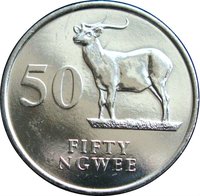
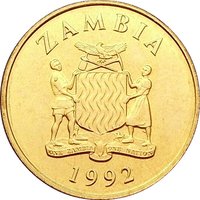
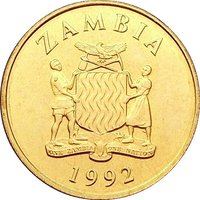
Obverse
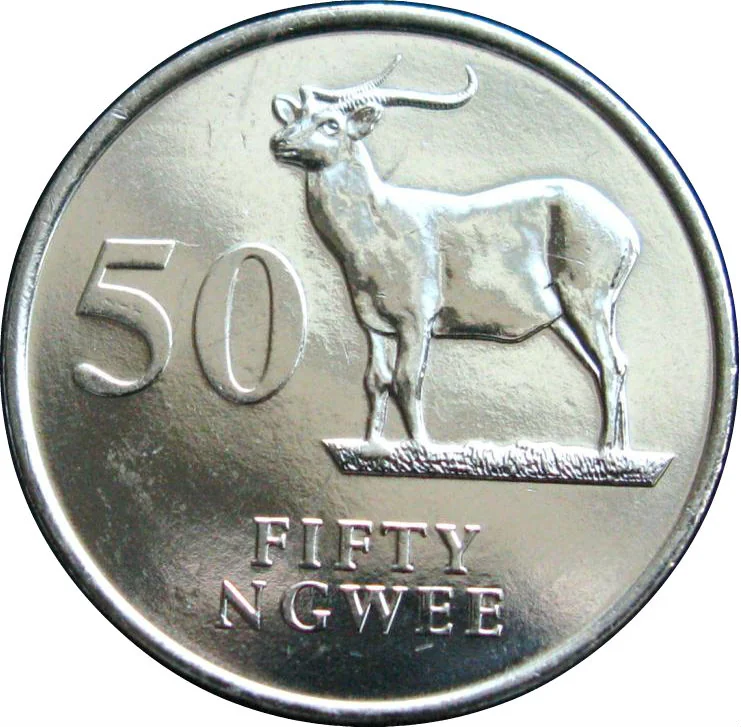
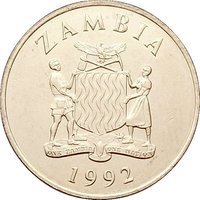
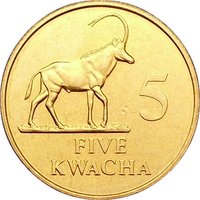
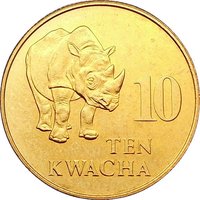
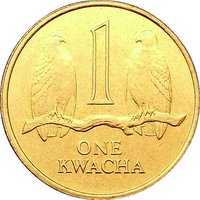
Reverse
Edge
Plain
Mints
| Name | Mark |
|---|---|
| Royal Mint | — |
Mintings
| Year | Mint Mark | Mintage | Quality | Collection |
|---|---|---|---|---|
| 1992 | — | — | ||
| 1992 | — | — | Proof |
Historical background
In 1992, Zambia was in the throes of a profound economic crisis, characterized by hyperinflation, severe shortages, and a massively overvalued official exchange rate. The national currency, the Zambian kwacha, was subject to strict foreign exchange controls and a fixed exchange rate set by the government. This system created a vast disparity between the official rate and the black-market rate, where the kwacha traded for a fraction of its official value. This distortion crippled formal exports, encouraged smuggling, and led to a critical shortage of foreign currency, which stifled imports of essential goods like medicines, spare parts, and fuel.
This dire situation was the culmination of decades of economic mismanagement under the one-party rule of President Kenneth Kaunda, who had pursued socialist-oriented policies and maintained heavy state control over the copper-dependent economy. Following a shift to multi-party democracy in 1991, the newly elected Movement for Multi-Party Democracy (MMD) government under President Frederick Chiluba embarked on a radical structural adjustment program (SAP) prescribed by the International Monetary Fund (IMF) and World Bank. A central pillar of this reform agenda was the liberalization of the foreign exchange market to correct the severe imbalances.
Consequently, 1992 was a watershed year for Zambian currency policy. In a decisive move, the government dismantled the fixed exchange rate system. The kwacha was floated, its value was allowed to be determined by market forces, and most foreign exchange controls were lifted. The immediate effect was a dramatic devaluation, with the kwacha losing over half of its value against the US dollar almost overnight. While this shock therapy exacerbated inflation and hardship in the short term, it was intended to eliminate the black market, attract foreign exchange, and lay the foundation for a more realistic and market-driven economy, setting the stage for the painful but transformative economic reforms of the 1990s.
This dire situation was the culmination of decades of economic mismanagement under the one-party rule of President Kenneth Kaunda, who had pursued socialist-oriented policies and maintained heavy state control over the copper-dependent economy. Following a shift to multi-party democracy in 1991, the newly elected Movement for Multi-Party Democracy (MMD) government under President Frederick Chiluba embarked on a radical structural adjustment program (SAP) prescribed by the International Monetary Fund (IMF) and World Bank. A central pillar of this reform agenda was the liberalization of the foreign exchange market to correct the severe imbalances.
Consequently, 1992 was a watershed year for Zambian currency policy. In a decisive move, the government dismantled the fixed exchange rate system. The kwacha was floated, its value was allowed to be determined by market forces, and most foreign exchange controls were lifted. The immediate effect was a dramatic devaluation, with the kwacha losing over half of its value against the US dollar almost overnight. While this shock therapy exacerbated inflation and hardship in the short term, it was intended to eliminate the black market, attract foreign exchange, and lay the foundation for a more realistic and market-driven economy, setting the stage for the painful but transformative economic reforms of the 1990s.
Series: 1992 Zambia circulation coins
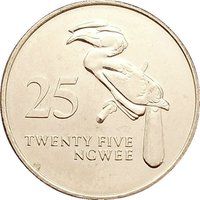
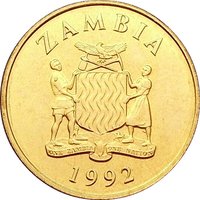
🌱 Common