

¼ yang – Joseon
Add to wishlist
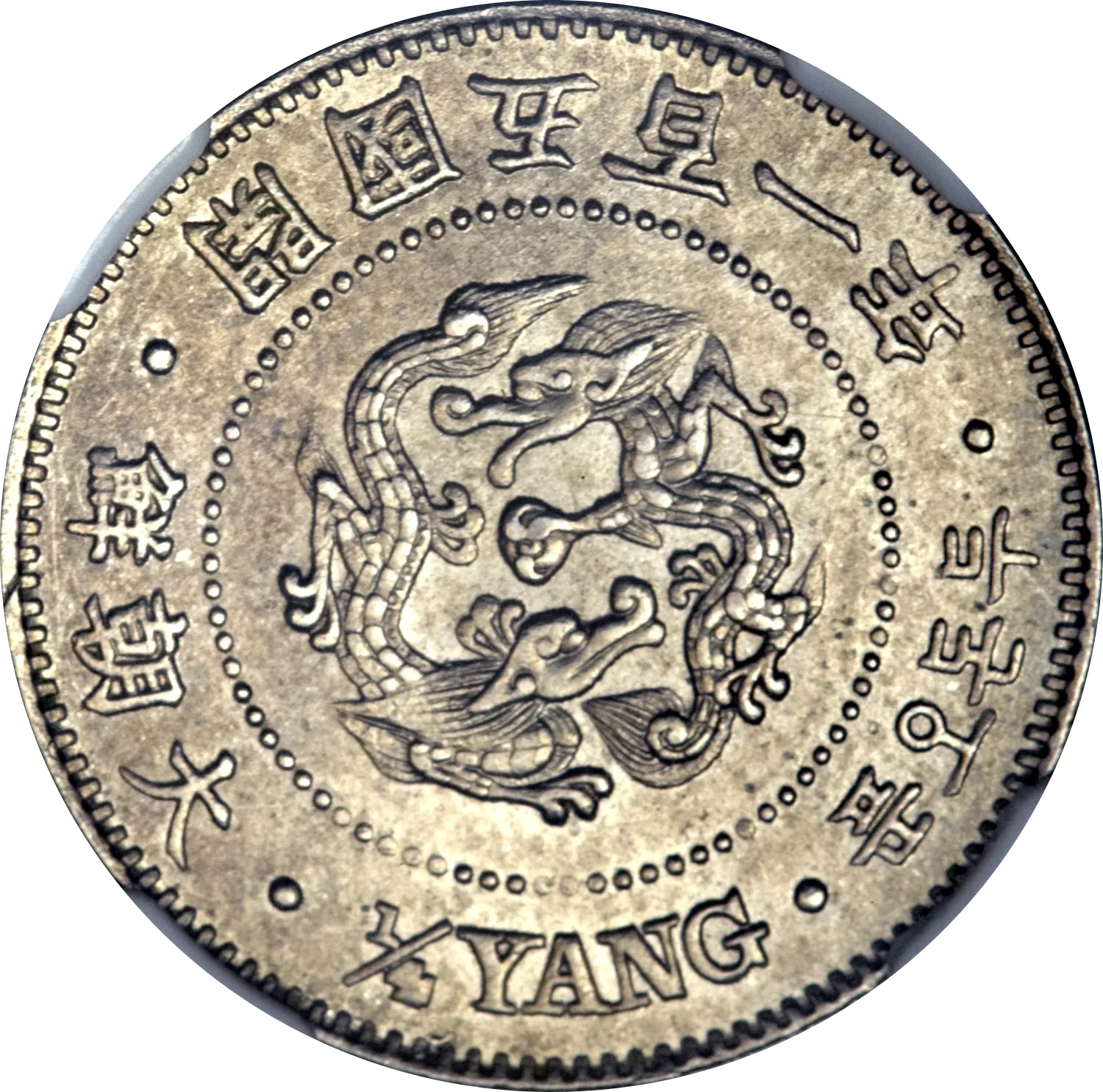
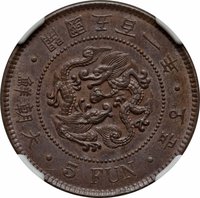
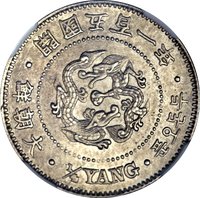
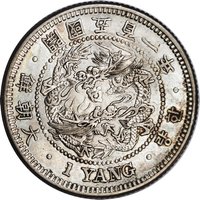
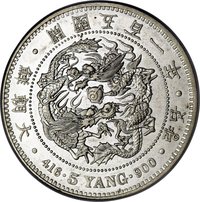
Obverse
Description:
Two dragons. Date top, denomination bottom.
Inscription:
• 大朝鮮 • 開國五百一年 • 두돈오푼 • ¼ YANG
Translation:
THE GREAT KOREA;
500TH YEAR AFTER THE FOUNDING OF THE NATION;
TWO DOLLARS AND FIVE POONS;
¼ YANG
500TH YEAR AFTER THE FOUNDING OF THE NATION;
TWO DOLLARS AND FIVE POONS;
¼ YANG
Engraver: Masuda Tomō
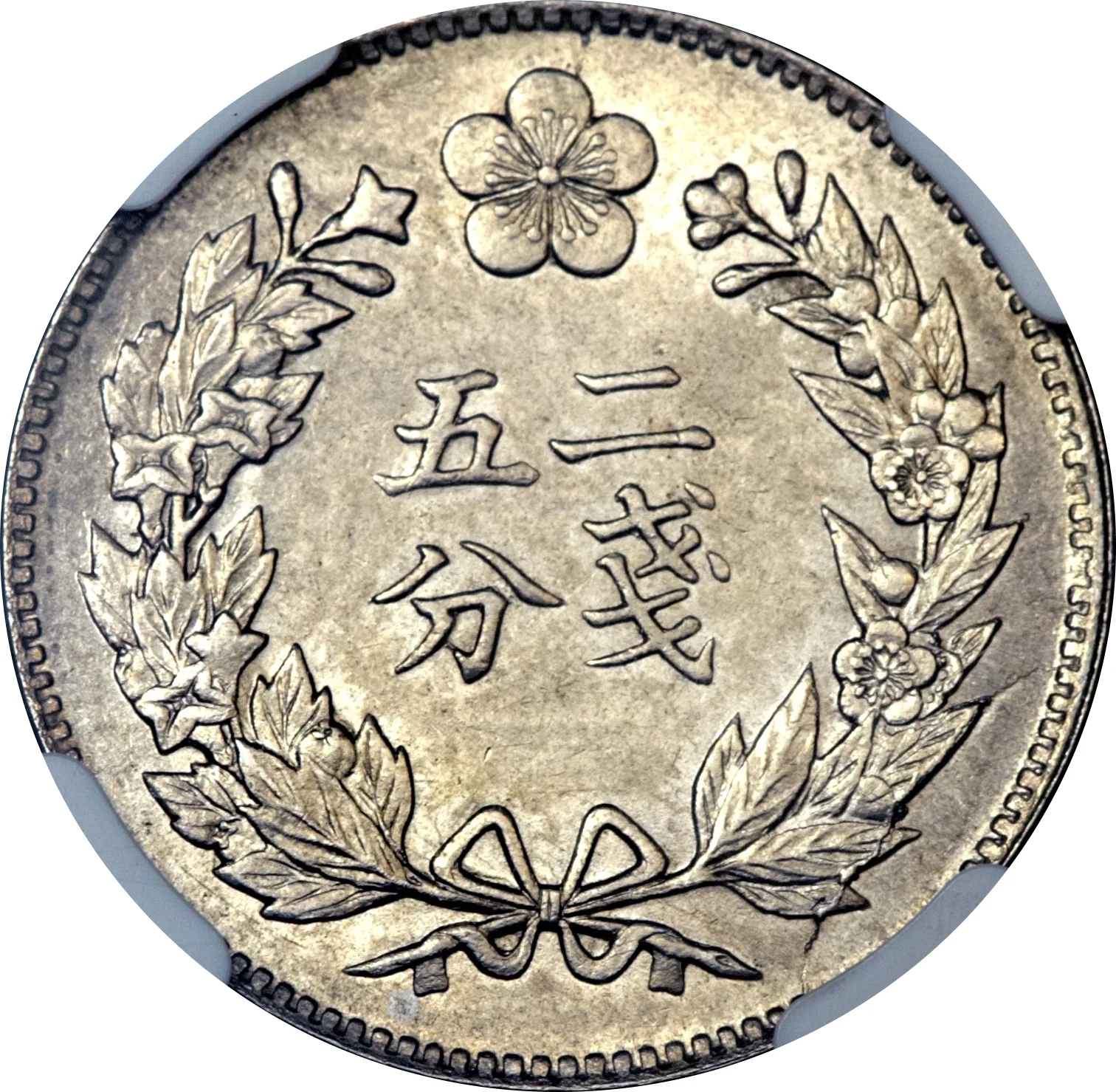
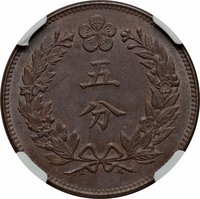
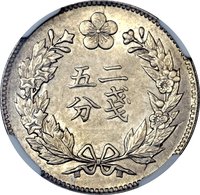
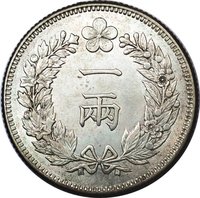
Reverse
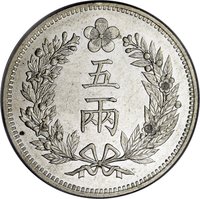
Description:
Denomination encircled by Rose of Sharon (left) and plum (right), with the Plum Blossom (Imperial Seal) above.
Inscription:
五二
分戔
分戔
Translation:
Fifty-two
Cents
Cents
Language: Classical Chinese
Engraver: Egami Genjirō
Edge
Categories
| Symbols> Coat of Arms |
| Symbol> Wreath |
| Mythology> Fantastic animal |
| Plants> Flower |
Mints
| Name | Mark |
|---|---|
| Incheon | — |
Mintings
| Year | Mint Mark | Mintage | Quality | Collection |
|---|---|---|---|---|
| 1892 | — | — | ||
| 1892 | — | — | Proof | |
| 1895 | — | — |
Historical background
In 1892, the currency system of the Joseon Dynasty was in a state of profound and chaotic transition, caught between a collapsing traditional order and the aggressive economic pressures of foreign powers. The official system was theoretically based on the mun, a round copper-alloy coin with a square hole, but centuries of debasement and rampant counterfeiting had severely devalued it. More significantly, the economy relied heavily on the use of privately minted yeopjeon (knife money), brass tokens of varying and unreliable quality issued by local merchants and magistrates, which created a patchwork of incompatible currencies and facilitated widespread fraud.
This monetary instability was exacerbated by the increasing influx of foreign silver, particularly the Mexican silver dollar, which flowed into Joseon through open ports following the unequal treaties of the 1880s. These foreign coins, valued for their consistent silver content, began to circulate alongside the debased copper currency, creating a dual-system that further complicated trade. The Korean government, under King Gojong, recognized the crisis and had already taken steps toward reform by establishing a modern mint in 1883 with the assistance of a German advisor. However, the new machine-struck yang coins (1 yang = 100 mun) faced public distrust and failed to displace the entrenched and chaotic mix of old mun and private yeopjeon.
Thus, by 1892, the currency situation was a critical weakness at the core of Joseon's sovereignty. The inability to control its own money supply undermined state finances, hindered commerce, and left the economy vulnerable to external manipulation. This financial disarray was both a symptom and a cause of the dynasty's declining power, setting the stage for the more radical monetary reforms that would follow, including the introduction of the won in 1902, as Joseon struggled to maintain its economic independence in the face of escalating Japanese and imperial rivalries.
This monetary instability was exacerbated by the increasing influx of foreign silver, particularly the Mexican silver dollar, which flowed into Joseon through open ports following the unequal treaties of the 1880s. These foreign coins, valued for their consistent silver content, began to circulate alongside the debased copper currency, creating a dual-system that further complicated trade. The Korean government, under King Gojong, recognized the crisis and had already taken steps toward reform by establishing a modern mint in 1883 with the assistance of a German advisor. However, the new machine-struck yang coins (1 yang = 100 mun) faced public distrust and failed to displace the entrenched and chaotic mix of old mun and private yeopjeon.
Thus, by 1892, the currency situation was a critical weakness at the core of Joseon's sovereignty. The inability to control its own money supply undermined state finances, hindered commerce, and left the economy vulnerable to external manipulation. This financial disarray was both a symptom and a cause of the dynasty's declining power, setting the stage for the more radical monetary reforms that would follow, including the introduction of the won in 1902, as Joseon struggled to maintain its economic independence in the face of escalating Japanese and imperial rivalries.
Series: 1892 Joseon circulation coins
💎 Extremely Rare