

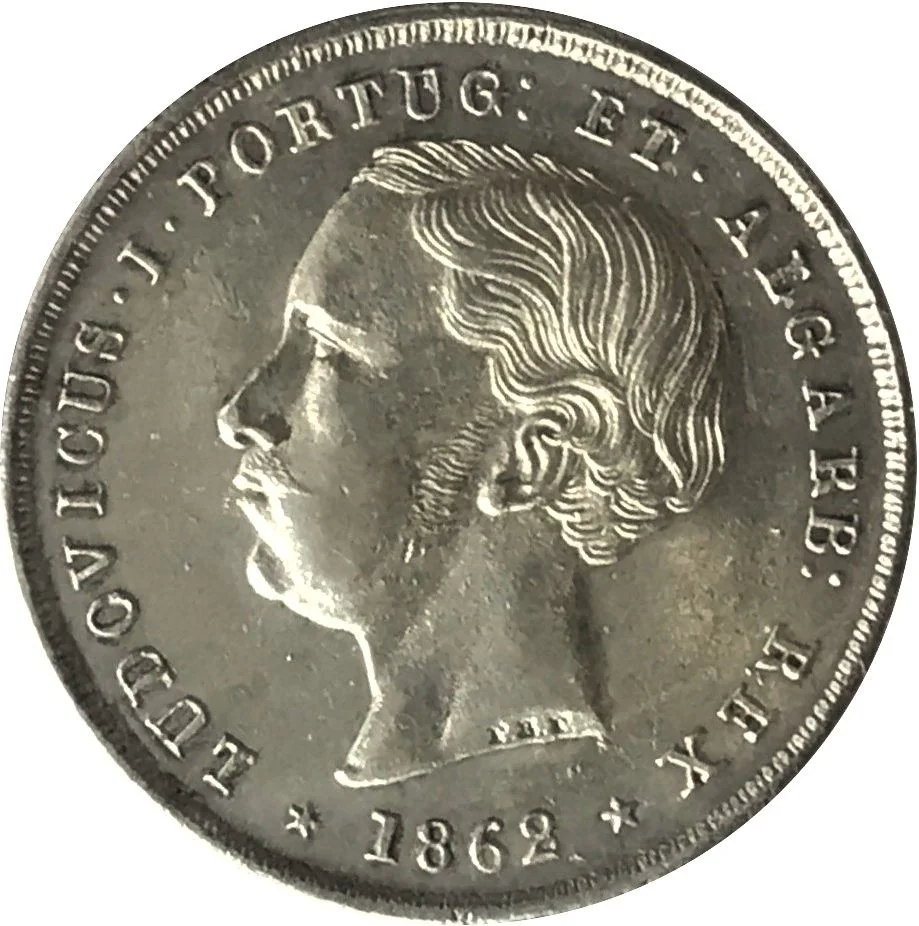
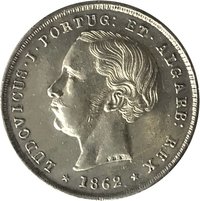
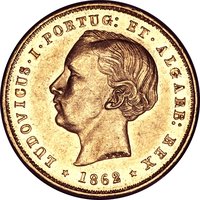
Obverse
Inscription:
LUDUVICUS.I.PORTUG:ET.ALGARB:REX
.1863.
.1863.
Translation:
Louis I, King of Portugal and the Algarves.
1863.
1863.
Script: Latin
Languages: Portuguese, Latin
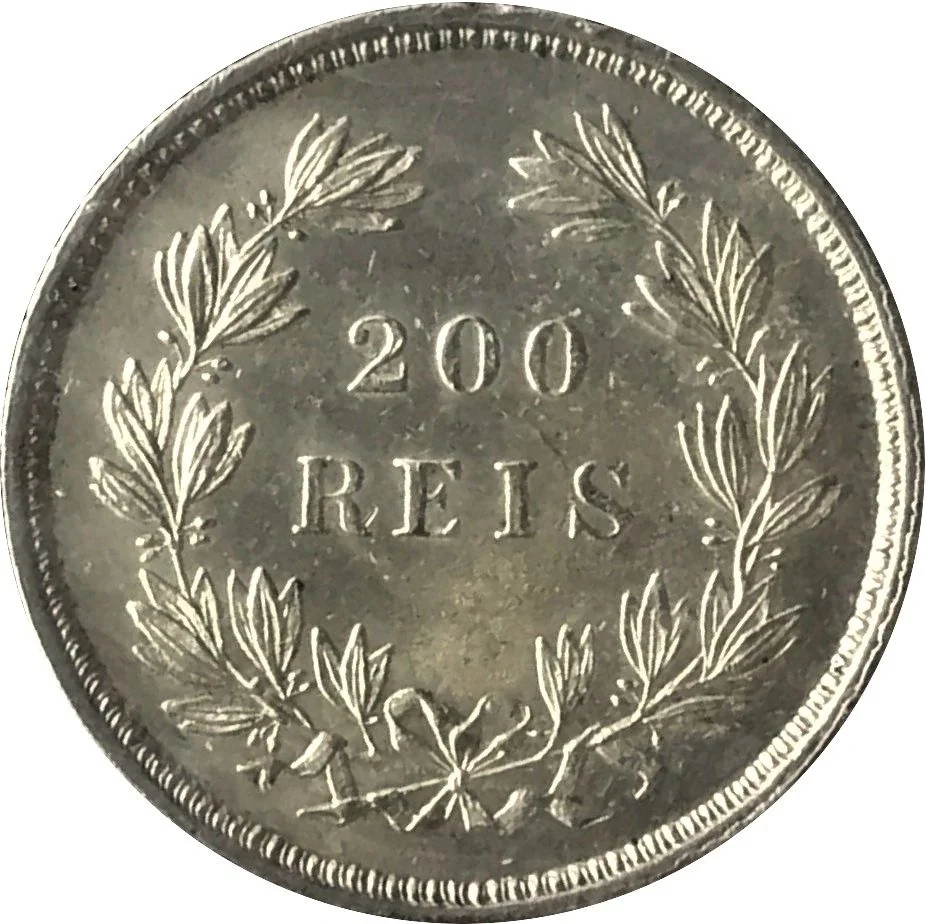
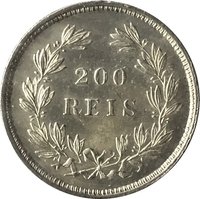
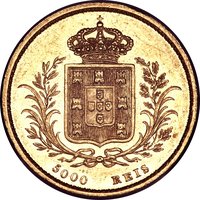
Reverse
Inscription:
200
REIS
REIS
Script: Latin
Edge
Reeded
Mints
| Name | Mark |
|---|---|
| Imprensa Nacional - Casa da Moeda | — |
Mintings
| Year | Mint Mark | Mintage | Quality | Collection |
|---|---|---|---|---|
| 1862 | — | — | Prooflike | |
| 1862 | — | 693,740 | ||
| 1863 | — | 345,000 | ||
| 1863 | — | — | Prooflike |
Historical background
In 1862, Portugal's currency situation was characterized by a complex and fragmented system, a legacy of its historical economic challenges. The country operated on a bimetallic standard in law, but in practice, it suffered from a severe shortage of gold coinage. The most common unit was the milréis, but circulation was dominated by a confusing mix of Portuguese silver coins, worn and clipped from centuries of use, alongside a heavy reliance on foreign gold coins, particularly British sovereigns and French francs, which were essential for international trade. This multiplicity of coins, each with fluctuating market values against the milréis, created chronic instability, hampered commerce, and reflected the nation's broader fiscal weakness following the Liberal Wars and substantial public debt.
This monetary disarray occurred within a specific political context: the period of Fontismo, the policies of Minister Fontes Pereira de Melo, who was actively promoting industrialization and infrastructure modernization. A reliable and uniform currency was seen as a fundamental prerequisite for this economic regeneration and for attracting foreign investment. Consequently, the 1850s and early 1860s were a period of serious monetary debate, with proposals to decimalize the system and to move Portugal toward the Latin Monetary Union, which was being formed by France and neighboring nations to standardize coinage.
Therefore, the year 1862 stands as a pivotal point just before major reform. The fragmented circulation and reliance on foreign specie highlighted the urgent need for change that would culminate in the landmark monetary law of 1867. This law would introduce a new decimal currency, the real, and formally align Portugal with the gold standard of the Latin Monetary Union, aiming to stabilize the currency, simplify transactions, and integrate the nation more fully into the European financial system. The situation in 1862 was thus one of acknowledged crisis, setting the stage for this decisive modernization of the Portuguese economy.
This monetary disarray occurred within a specific political context: the period of Fontismo, the policies of Minister Fontes Pereira de Melo, who was actively promoting industrialization and infrastructure modernization. A reliable and uniform currency was seen as a fundamental prerequisite for this economic regeneration and for attracting foreign investment. Consequently, the 1850s and early 1860s were a period of serious monetary debate, with proposals to decimalize the system and to move Portugal toward the Latin Monetary Union, which was being formed by France and neighboring nations to standardize coinage.
Therefore, the year 1862 stands as a pivotal point just before major reform. The fragmented circulation and reliance on foreign specie highlighted the urgent need for change that would culminate in the landmark monetary law of 1867. This law would introduce a new decimal currency, the real, and formally align Portugal with the gold standard of the Latin Monetary Union, aiming to stabilize the currency, simplify transactions, and integrate the nation more fully into the European financial system. The situation in 1862 was thus one of acknowledged crisis, setting the stage for this decisive modernization of the Portuguese economy.
⭐ Somewhat Rare