

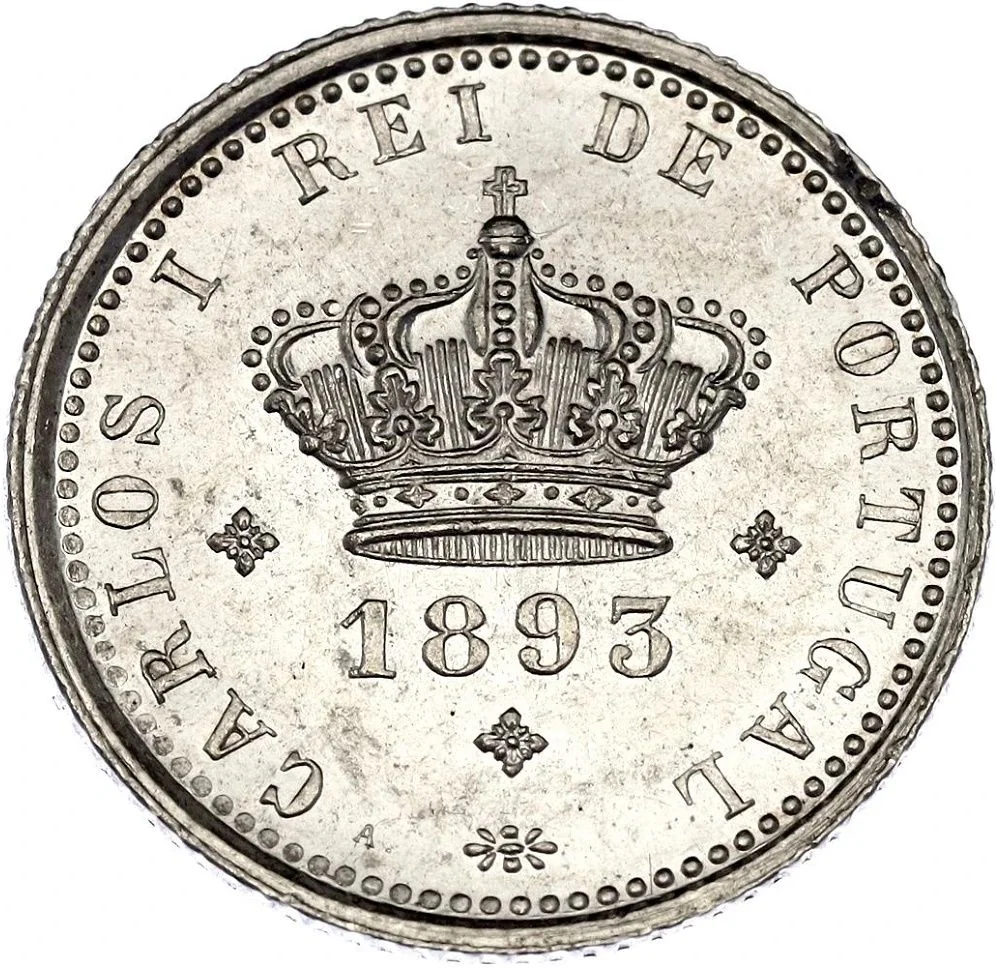
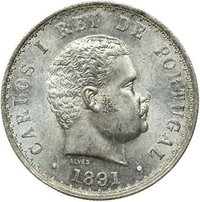
Obverse
Inscription:
CARLOS I REI DE PORTUGAL
1893
1893
Translation:
CARLOS I KING OF PORTUGAL
1893
1893
Script: Latin
Language: Portuguese
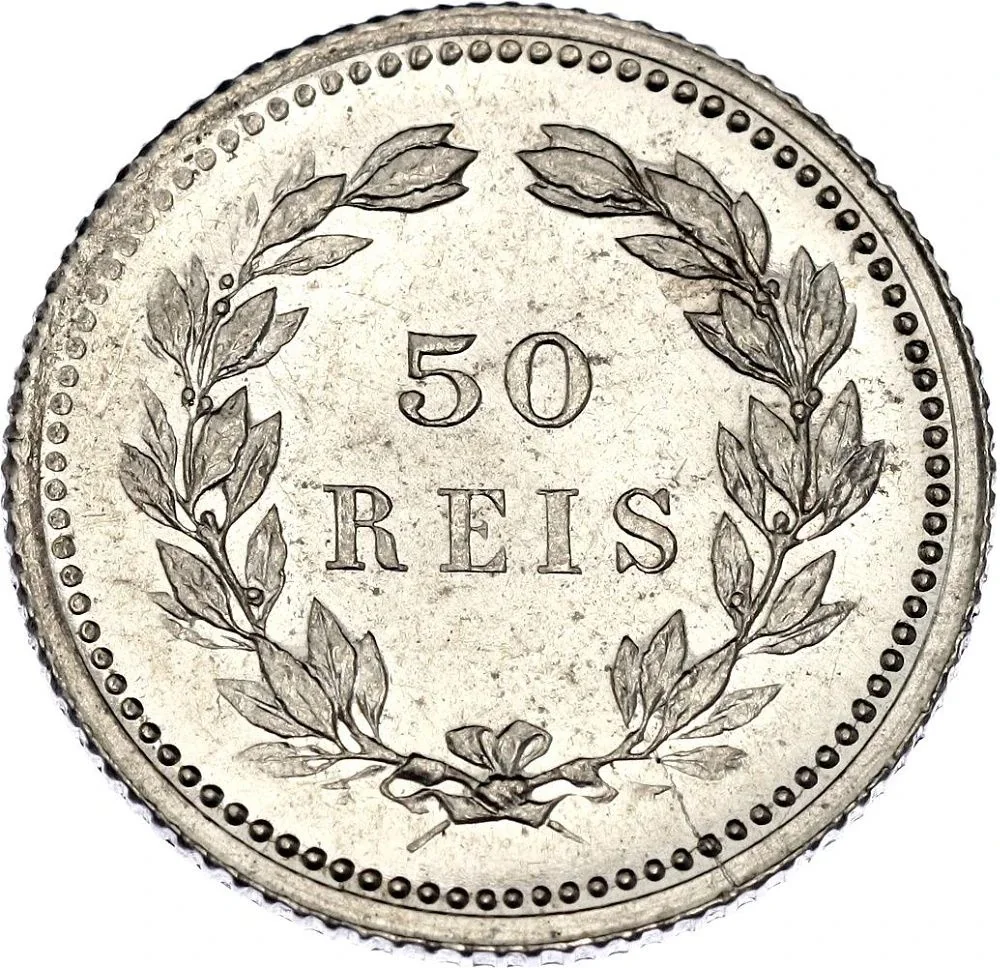
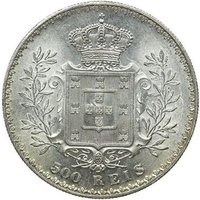
Reverse
Inscription:
50
REIS
REIS
Script: Latin
Edge
Reeded
Mints
| Name | Mark |
|---|---|
| Imprensa Nacional - Casa da Moeda | — |
Mintings
| Year | Mint Mark | Mintage | Quality | Collection |
|---|---|---|---|---|
| 1893 | — | — | Proof | |
| 1893 | — | 620,000 |
Historical background
In 1893, Portugal faced a severe currency and financial crisis, rooted in decades of economic mismanagement. The country had accumulated massive public debt through costly colonial ventures in Africa and domestic infrastructure projects, largely financed by borrowing. This was compounded by a chronic trade deficit and a reliance on the gold standard, to which the Portuguese currency, the real, was nominally pegged. However, the government's practice of issuing inconvertible paper money to finance its deficits had created a system where the paper real circulated at a significant discount to its gold value, undermining confidence.
The immediate trigger for the 1893 crisis was the collapse of the Brazilian Encilhamento financial bubble, where many Portuguese investors and banks had heavy exposure. This external shock caused a cascade of bank failures in Portugal, most notably the collapse of the Banco de Portugal's largest commercial rival, the Banco Lusitano. A classic liquidity crisis ensued, with a frantic public run on banks to convert paper notes into gold, rapidly depleting the nation's already modest gold reserves. The Banco de Portugal, acting as the issuer of currency, was forced to suspend the convertibility of its notes into gold on June 9, 1893, effectively taking Portugal off the gold standard.
The suspension marked a pivotal moment, leading to a sharp devaluation of the paper real and significant inflation, which severely impacted the living standards of the populace. In response, the government implemented austerity measures and sought foreign loans to stabilize the situation. The crisis ultimately consolidated the Banco de Portugal's role as the sole issuer of banknotes and set the stage for a major monetary reform in 1891, which was only fully implemented years later, establishing a new currency unit, the escudo, in 1911. The 1893 episode highlighted Portugal's economic fragility and its dependence on foreign capital and colonial fortunes.
The immediate trigger for the 1893 crisis was the collapse of the Brazilian Encilhamento financial bubble, where many Portuguese investors and banks had heavy exposure. This external shock caused a cascade of bank failures in Portugal, most notably the collapse of the Banco de Portugal's largest commercial rival, the Banco Lusitano. A classic liquidity crisis ensued, with a frantic public run on banks to convert paper notes into gold, rapidly depleting the nation's already modest gold reserves. The Banco de Portugal, acting as the issuer of currency, was forced to suspend the convertibility of its notes into gold on June 9, 1893, effectively taking Portugal off the gold standard.
The suspension marked a pivotal moment, leading to a sharp devaluation of the paper real and significant inflation, which severely impacted the living standards of the populace. In response, the government implemented austerity measures and sought foreign loans to stabilize the situation. The crisis ultimately consolidated the Banco de Portugal's role as the sole issuer of banknotes and set the stage for a major monetary reform in 1891, which was only fully implemented years later, establishing a new currency unit, the escudo, in 1911. The 1893 episode highlighted Portugal's economic fragility and its dependence on foreign capital and colonial fortunes.
🌟 Uncommon