

Obverse
Description:
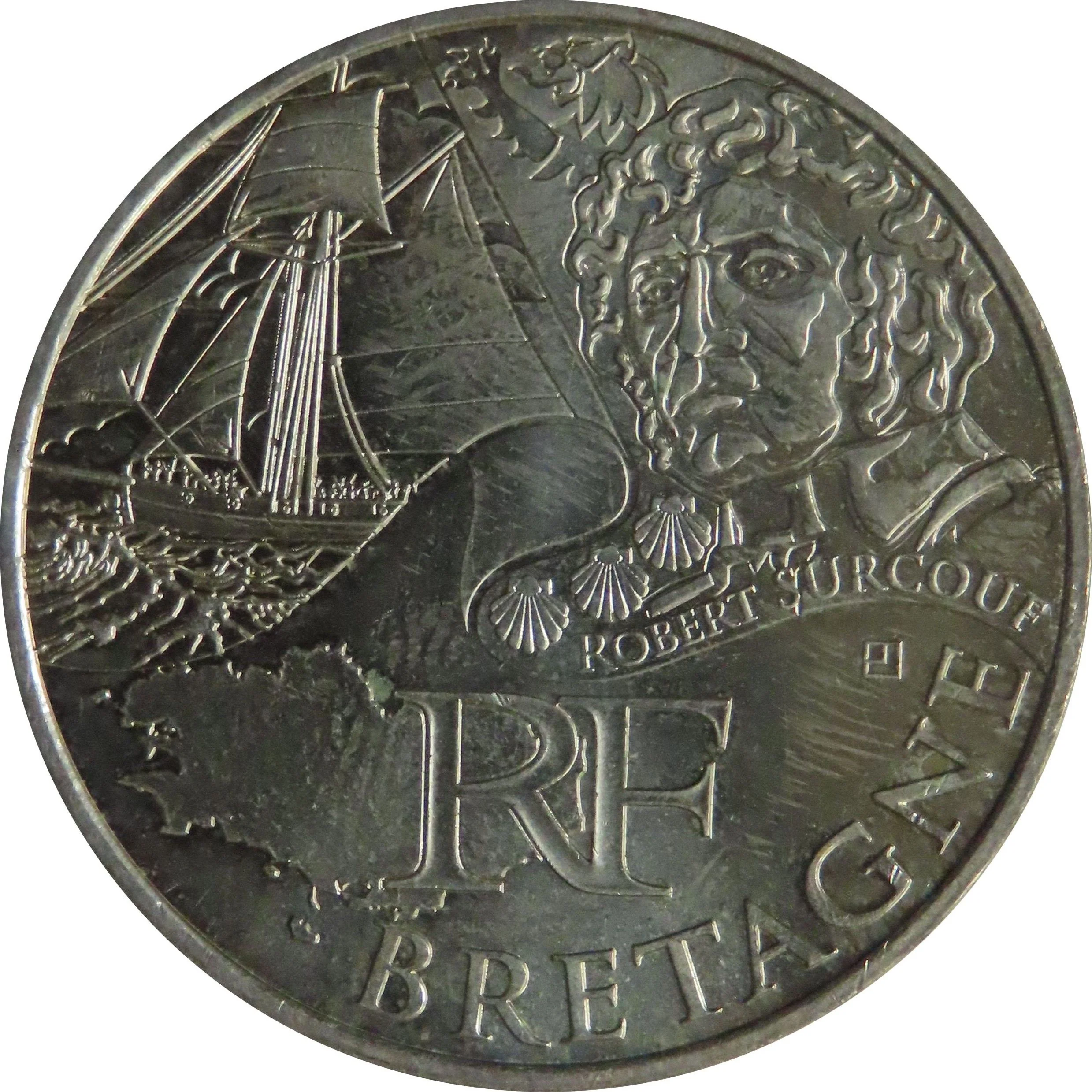
The coin depicts privateer Robert Surcouf and a sailboat beside his name. Below, the outline of Brittany includes "RF" and the region's name on a scroll.
Inscription:
ROBERT SURCOUFF
BRETAGNE RF
BRETAGNE RF
Script: Latin
Engraver: J. Jimenez
Reverse
Description:
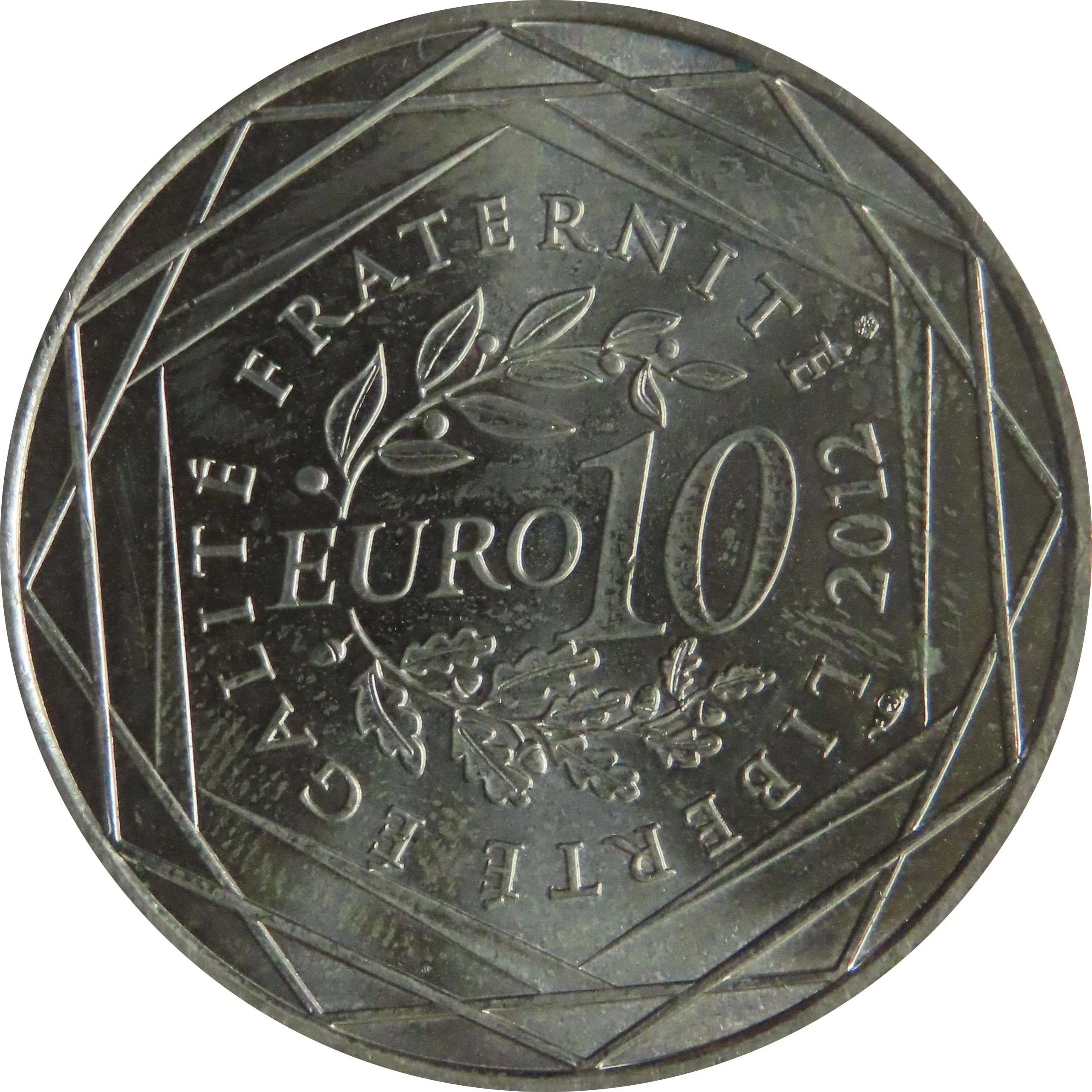
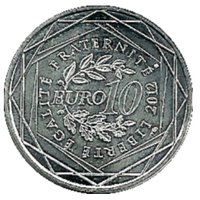
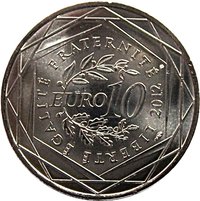
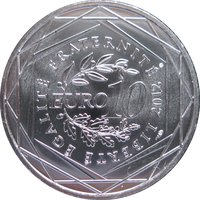
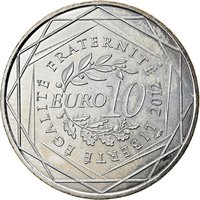
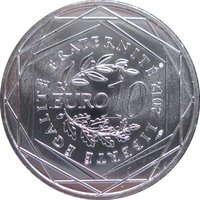
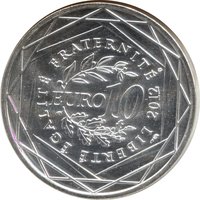
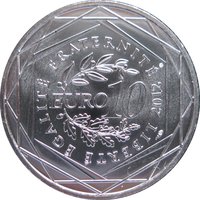
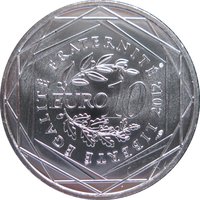
A laurel and oak branch flank the face value, encircled by the French motto and three hexagons.
Inscription:
LIBERTÉ ÉGALITÉ FRATERNITÉ
EURO 10
2012
EURO 10
2012
Translation:
LIBERTY EQUALITY FRATERNITY
EURO 10
2012
EURO 10
2012
Script: Latin
Language: French
Engraver: J. Jimenez
Edge
Plain.
Mints
| Name | Mark |
|---|---|
| Monnaie de Paris | — |
Mintings
| Year | Mint Mark | Mintage | Quality | Collection |
|---|---|---|---|---|
| 2012 | — | 140,000 |
Historical background
In 2012, France's currency situation was fundamentally defined by its membership in the Eurozone, using the euro (€) as its sole legal tender. The broader context was the ongoing European sovereign debt crisis, which had begun in 2009 and peaked in 2011-2012. While France was not among the most severely affected "peripheral" nations like Greece, Ireland, or Portugal, it faced significant market pressure. Concerns about the sustainability of its public debt, high budget deficits, and stagnant growth led to rising borrowing costs and intense scrutiny from credit rating agencies, which downgraded France's prized AAA rating in early 2012.
Domestically, the Socialist François Hollande was elected President in May 2012, campaigning on a platform critical of austerity and advocating for growth-oriented policies within Europe. His administration immediately faced the challenge of reconciling these promises with the strict fiscal constraints of the Eurozone and the need to reassure financial markets. This tension was central to France's currency reality: while it benefited from the stability and credibility of the shared euro, it had surrendered monetary policy autonomy to the European Central Bank (ECB), limiting its tools to address economic weakness solely to fiscal and structural measures.
The year culminated with pivotal ECB action. In July 2012, ECB President Mario Draghi's famous "whatever it takes" speech dramatically calmed markets by signalling unlimited support for Eurozone sovereign bonds. This was followed by the announcement of the Outright Monetary Transactions (OMT) program in September. These actions effectively ring-fenced the euro and alleviated the existential crisis, reducing the immediate pressure on France. Consequently, by the end of 2012, the acute threat to the euro's survival had receded, but France's underlying economic challenges—high unemployment, weak competitiveness, and the need for fiscal consolidation within the Eurozone framework—remained fully in place.
Domestically, the Socialist François Hollande was elected President in May 2012, campaigning on a platform critical of austerity and advocating for growth-oriented policies within Europe. His administration immediately faced the challenge of reconciling these promises with the strict fiscal constraints of the Eurozone and the need to reassure financial markets. This tension was central to France's currency reality: while it benefited from the stability and credibility of the shared euro, it had surrendered monetary policy autonomy to the European Central Bank (ECB), limiting its tools to address economic weakness solely to fiscal and structural measures.
The year culminated with pivotal ECB action. In July 2012, ECB President Mario Draghi's famous "whatever it takes" speech dramatically calmed markets by signalling unlimited support for Eurozone sovereign bonds. This was followed by the announcement of the Outright Monetary Transactions (OMT) program in September. These actions effectively ring-fenced the euro and alleviated the existential crisis, reducing the immediate pressure on France. Consequently, by the end of 2012, the acute threat to the euro's survival had receded, but France's underlying economic challenges—high unemployment, weak competitiveness, and the need for fiscal consolidation within the Eurozone framework—remained fully in place.
Series: French regions
🌱 Fairly Common