

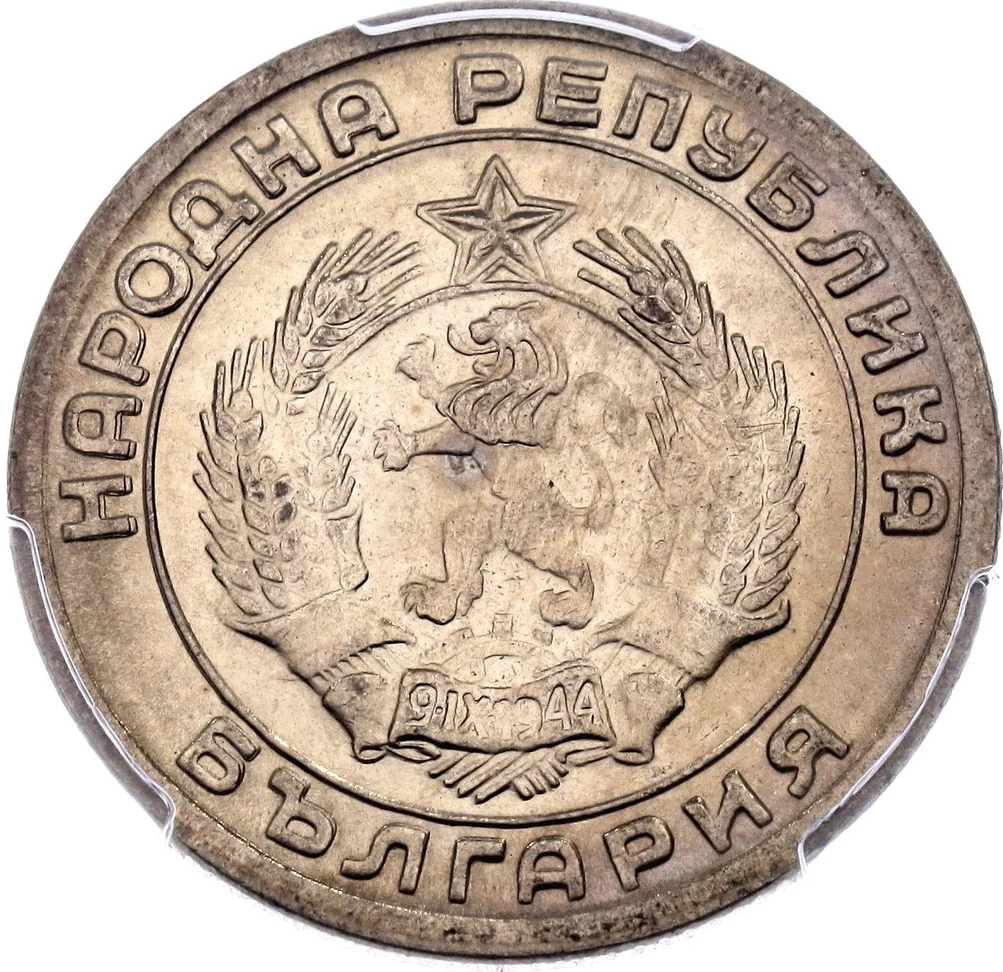
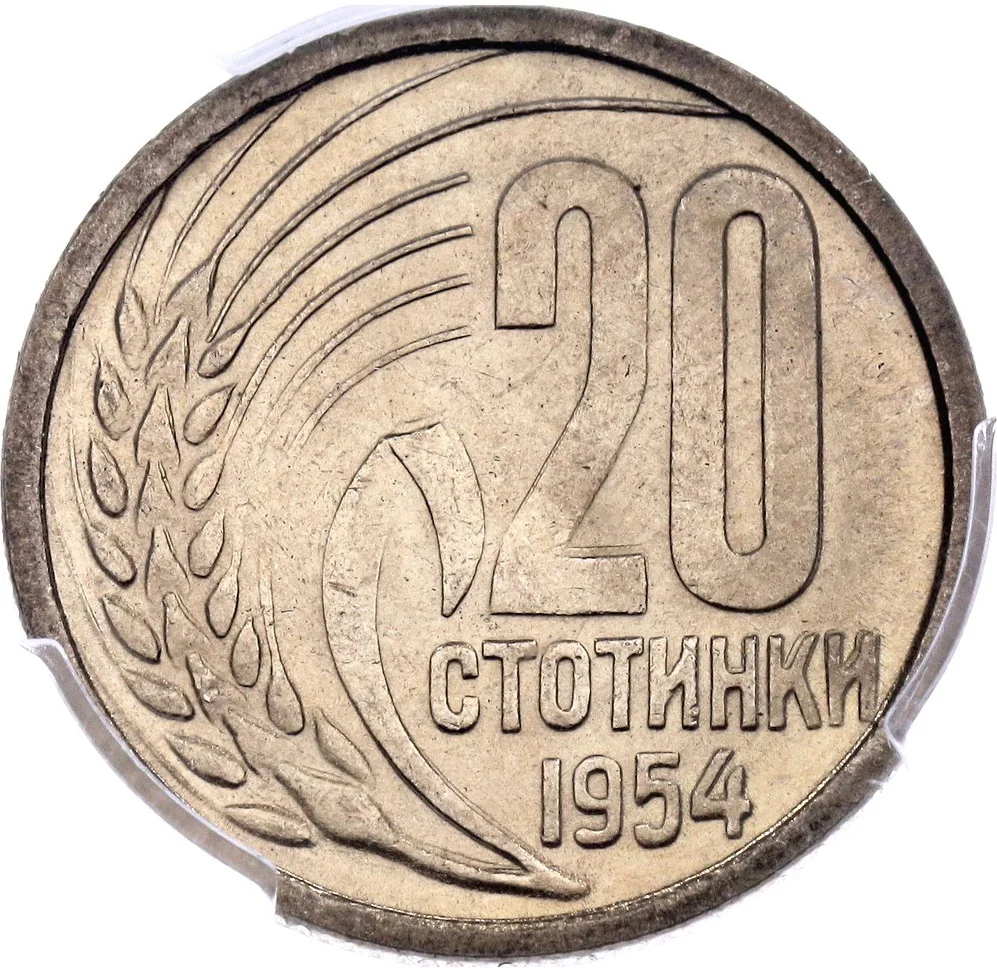
20 stotinki – Bulgaria
Add to wishlist
Bulgaria
Context
Years: 1952–1954
Issuer: Bulgaria
Period:
(1946—1990)
Currency:
(1952—1962)
Demonetization: 1 January 1962
Material
Diameter: 21 mm
Weight: 3 g
Thickness: 1.14 mm
Shape: Round
Composition: Copper-nickel
Technique: Milled
Alignment: Medal alignment
flip
References
KM: #
Numista: #3506
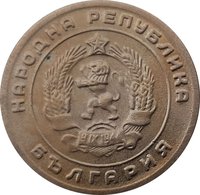
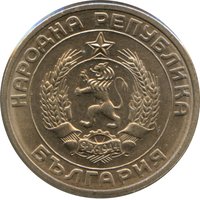
Obverse
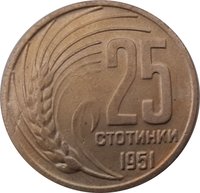
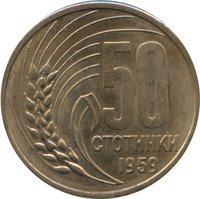
Reverse
Edge
Reeded
Categories
| Symbols> Coat of Arms |
Mints
| Name | Mark |
|---|---|
| Bulgarian Mint | — |
Mintings
| Year | Mint Mark | Mintage | Quality | Collection |
|---|---|---|---|---|
| 1952 | — | — | ||
| 1954 | — | — |
Historical background
In 1952, Bulgaria’s currency situation was defined by a major redenomination carried out by the communist government, which had consolidated power after World War II. This reform, enacted in May, replaced the old lev (introduced in 1881) with a "new lev" at an exchange rate of 100 old for 1 new. The primary official objectives were to simplify transactions, curb inflation remnants from the war, and signal economic stability under the planned economy. However, the move also served a critical political purpose: it was a tool for eliminating the savings and monetary assets of the former bourgeoisie, private traders, and perceived class enemies, as the conversion process was tightly controlled and often discriminatory.
The context for this reform was Bulgaria's full integration into the Soviet economic sphere, with its currency and financial system being meticulously aligned with Moscow's model. The state used the conversion to invalidate old banknotes unless they were exchanged under strict conditions, effectively wiping out hidden cash reserves and consolidating state control over all financial activity. Simultaneously, a complex system of multiple exchange rates was employed to favor state enterprises and manage foreign trade within the Council for Mutual Economic Assistance (COMECON), further isolating the domestic economy from global market influences.
Consequently, the 1952 currency reform was less a measure of pure monetary policy and more a definitive act of socio-economic engineering. It successfully stabilized the currency in a technical sense but did so through coercive means that transferred wealth to the state and deepened the population's dependence on the single-party system. The "new lev" would remain in place until the next major reform in 1962, reflecting a period of rigid, centrally-planned economic management where the currency served as an instrument of state control rather than a market commodity.
The context for this reform was Bulgaria's full integration into the Soviet economic sphere, with its currency and financial system being meticulously aligned with Moscow's model. The state used the conversion to invalidate old banknotes unless they were exchanged under strict conditions, effectively wiping out hidden cash reserves and consolidating state control over all financial activity. Simultaneously, a complex system of multiple exchange rates was employed to favor state enterprises and manage foreign trade within the Council for Mutual Economic Assistance (COMECON), further isolating the domestic economy from global market influences.
Consequently, the 1952 currency reform was less a measure of pure monetary policy and more a definitive act of socio-economic engineering. It successfully stabilized the currency in a technical sense but did so through coercive means that transferred wealth to the state and deepened the population's dependence on the single-party system. The "new lev" would remain in place until the next major reform in 1962, reflecting a period of rigid, centrally-planned economic management where the currency served as an instrument of state control rather than a market commodity.
🌱 Very Common