

Obverse
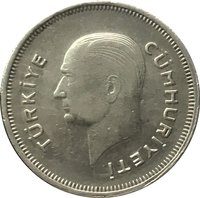
Description:
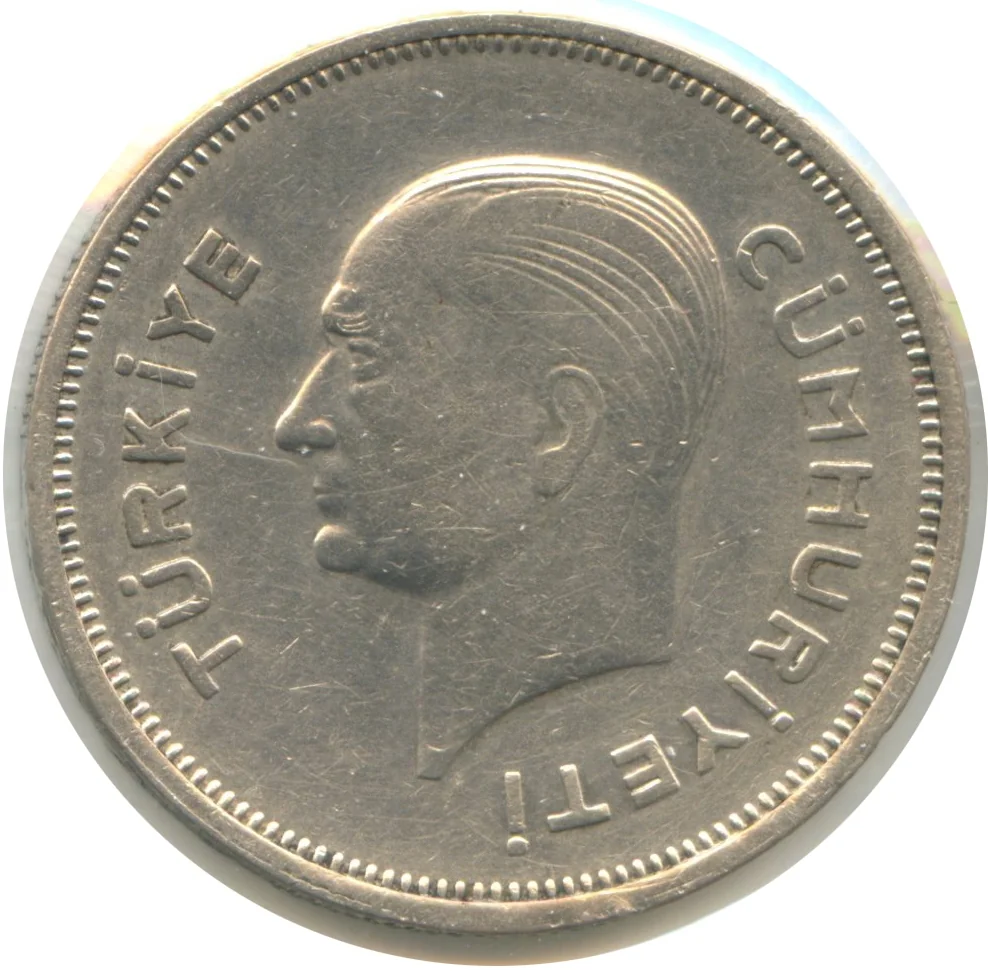
Atatürk's head.
Inscription:
TÜRKİYE CÜMHURİYETİ
Translation:
REPUBLIC OF TURKEY
Script: Latin
Language: Turkish
Engraver: Percy Metcalfe
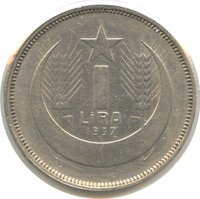
Reverse
Description:
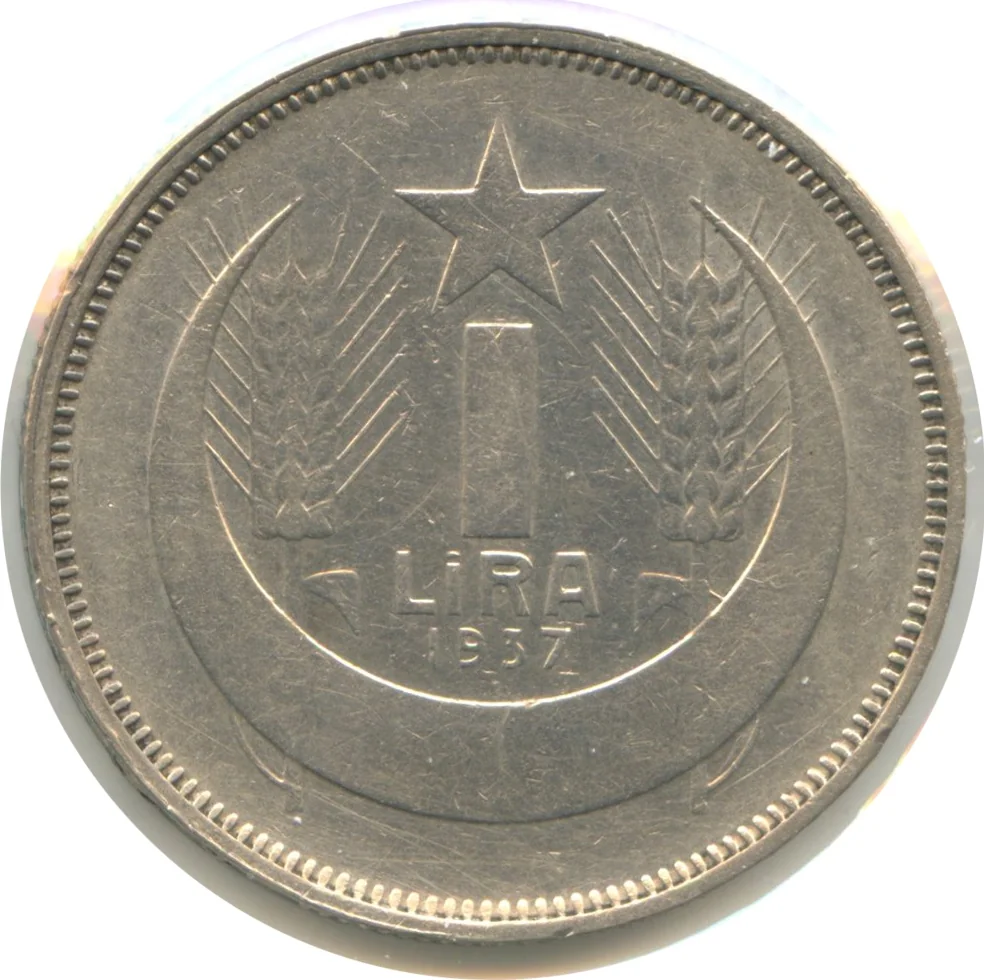
Value and date under star.
Inscription:
1 LİRA
Translation:
One Lira
Script: Latin
Language: Turkish
Engraver: Percy Metcalfe
Edge
Categories
| Person> Politician |
| Symbol> Moon |
Mintings
| Year | Mint Mark | Mintage | Quality | Collection |
|---|---|---|---|---|
| 1937 | — | 1,624,000 | ||
| 1938 | — | 8,282,000 | ||
| 1939 | — | 376,000 |
Historical background
In 1937, Turkey’s currency situation was defined by the early stability of the young republic under the economic principles of Kemalism (Statism). The Turkish lira, introduced in the 1920s to replace the Ottoman currency, was managed by the newly established Central Bank of the Republic of Turkey (TCMB), founded in 1930. This period was characterized by a fixed exchange rate regime pegged to a basket of currencies, primarily the French franc and later the British pound, which provided a decade of relative monetary stability and low inflation following the economic turmoil of the 1920s.
This stability was underpinned by a state-directed economic model focused on autarky and industrialization via five-year plans. The government maintained strict control over foreign exchange and international trade to conserve limited gold and foreign currency reserves, directing them toward strategic state-owned enterprises. Consequently, while the official lira was stable, the economy operated with significant protectionist barriers and a focus on inward development rather than integration with global financial markets.
However, by the late 1930s, underlying pressures were mounting. The global effects of the Great Depression, though initially mitigated by statism, began to strain the model. The costs of ambitious industrialization, combined with the looming threat of a major European war, started to deplete reserves and increase budget deficits. Therefore, 1937 represents the tail end of a period of artificial stability, just before the external shocks of World War II would force devaluations and expose the fragility of Turkey’s controlled currency system in the following decade.
This stability was underpinned by a state-directed economic model focused on autarky and industrialization via five-year plans. The government maintained strict control over foreign exchange and international trade to conserve limited gold and foreign currency reserves, directing them toward strategic state-owned enterprises. Consequently, while the official lira was stable, the economy operated with significant protectionist barriers and a focus on inward development rather than integration with global financial markets.
However, by the late 1930s, underlying pressures were mounting. The global effects of the Great Depression, though initially mitigated by statism, began to strain the model. The costs of ambitious industrialization, combined with the looming threat of a major European war, started to deplete reserves and increase budget deficits. Therefore, 1937 represents the tail end of a period of artificial stability, just before the external shocks of World War II would force devaluations and expose the fragility of Turkey’s controlled currency system in the following decade.
🌟 Limited