

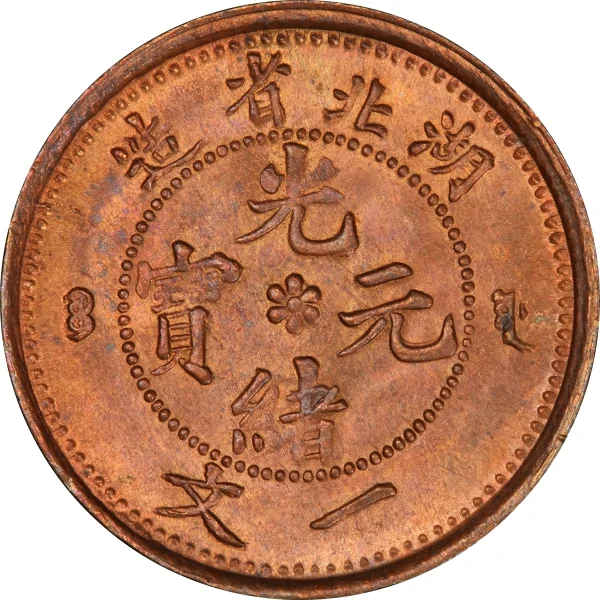
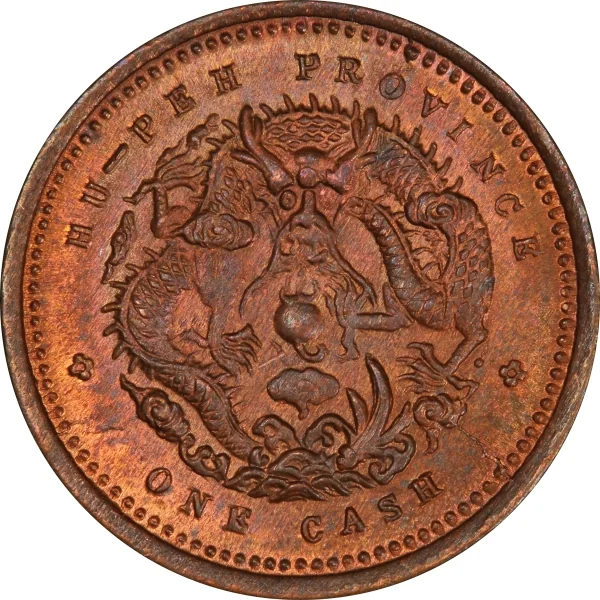
1 Cash – Hupeh Province
China
Context
Year: 1906
Country: China 
Issuer: Hupeh Province
Ruler: Guangxu
Currency:
(1895—1949)
Demonetized: Yes
Material
References
Y: #Click to copy to clipboard121
Numista: #34933
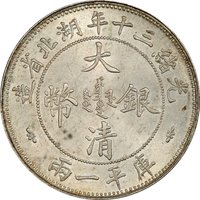
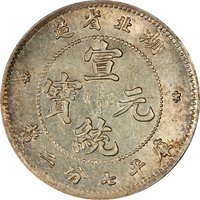
Obverse
Description:
Four Chinese characters arranged vertically, flanked by Manchu, with a central flower and additional Chinese text above and below.
Inscription:
造省北湖
ᠪᠣᠣ ᠶᡠᠸᠠᠨ
光
寶元
緒
文一
ᠪᠣᠣ ᠶᡠᠸᠠᠨ
光
寶元
緒
文一
Translation:
Board of Revenue, Northern Lake
Guangxu
Baoyuan
First Year
Guangxu
Baoyuan
First Year
Scripts: Chinese, Mongolian / Manchu
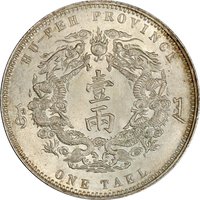
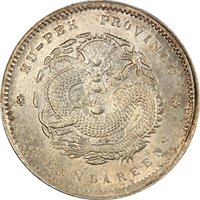
Reverse
Description:
Dragon encircling a pearl, surrounded by English text.
Inscription:
HU-PEH PROVINCE
ONE CASH
ONE CASH
Script: Latin
Edge
Plain
Categories
| Mythology> Fantastic animal |
| Plants> Flower |
Mintings
| Year | Mint Mark | Mintage | Quality | Collection |
|---|---|---|---|---|
| 1906 | — | — |
Historical background
In 1906, the currency situation in Hubei (Hupeh) Province was a complex and chaotic reflection of China's wider monetary disintegration during the late Qing Dynasty. The province, a major commercial hub centered on Wuhan, operated with a bewildering multiplicity of currencies. These included silver sycee (measured in taels), foreign silver dollars (notably Mexican and later Japanese Yen), and a vast array of copper cash coins, both genuine and debased. Furthermore, Hubei was a pioneer in minting modern coinage; the Wuchang Mint, established by Governor-General Zhang Zhidong in the 1890s, produced both silver and copper coins. However, these new "dragon dollars" and copper "ten-cash" coins circulated alongside older forms, creating layers of exchange rather than replacing them.
A critical problem was the lack of a standardized unit of account. Transactions were negotiated in three separate systems: taels of silver (often the Hankow tael for trade), silver dollars, and strings of copper cash. Exchange rates between these systems fluctuated daily based on market conditions, supply, and the intrinsic metal value of the coins, causing immense inconvenience and risk for merchants and peasants alike. The situation was exacerbated by the widespread circulation of privately minted, inferior copper cash and notes, as well as notes issued by native banks (qianzhuang), leading to frequent counterfeiting and localized inflation.
This monetary disorder directly hampered trade, tax collection, and modernization efforts. Governor-General Zhang Zhidong had attempted reform, but by 1906, the provincial currency system remained fragmented. The Qing court in Beijing was beginning to discuss centralized monetary reform, yet Hubei's experience highlighted the profound challenges: competing metallic standards, provincial autonomy in minting, and the deep-seated public distrust of unified paper currency. Thus, in 1906, Hubei stood as a microcosm of imperial China's economic fragility on the eve of its collapse.
A critical problem was the lack of a standardized unit of account. Transactions were negotiated in three separate systems: taels of silver (often the Hankow tael for trade), silver dollars, and strings of copper cash. Exchange rates between these systems fluctuated daily based on market conditions, supply, and the intrinsic metal value of the coins, causing immense inconvenience and risk for merchants and peasants alike. The situation was exacerbated by the widespread circulation of privately minted, inferior copper cash and notes, as well as notes issued by native banks (qianzhuang), leading to frequent counterfeiting and localized inflation.
This monetary disorder directly hampered trade, tax collection, and modernization efforts. Governor-General Zhang Zhidong had attempted reform, but by 1906, the provincial currency system remained fragmented. The Qing court in Beijing was beginning to discuss centralized monetary reform, yet Hubei's experience highlighted the profound challenges: competing metallic standards, provincial autonomy in minting, and the deep-seated public distrust of unified paper currency. Thus, in 1906, Hubei stood as a microcosm of imperial China's economic fragility on the eve of its collapse.
💎 Extremely Rare