

1 tael – Hupeh Province
Add to wishlist
China
Context
Year: 1904
Chinese - Guangxu era Year:: 30
Country: China
Issuer: Hupeh Province
Ruler: Guangxu
Currency:
(1895—1949)
Demonetized: Yes
Total mintage: 648,000
Material
References
Y: #
Numista: #3851
Value
Bullion value: $84.48
Obverse
Description:
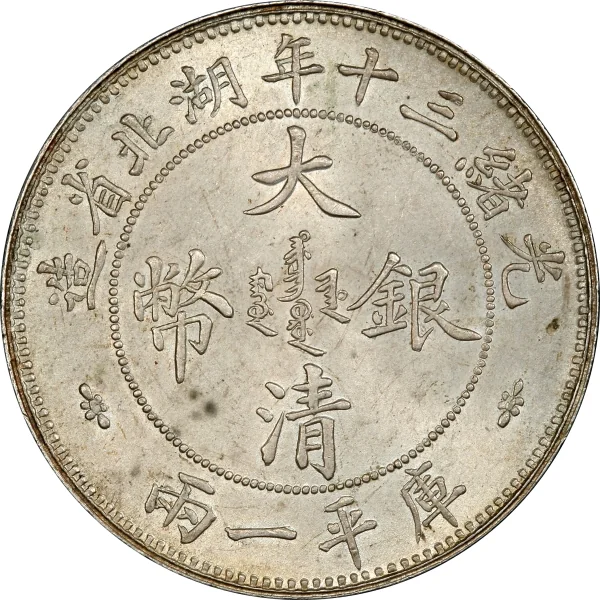
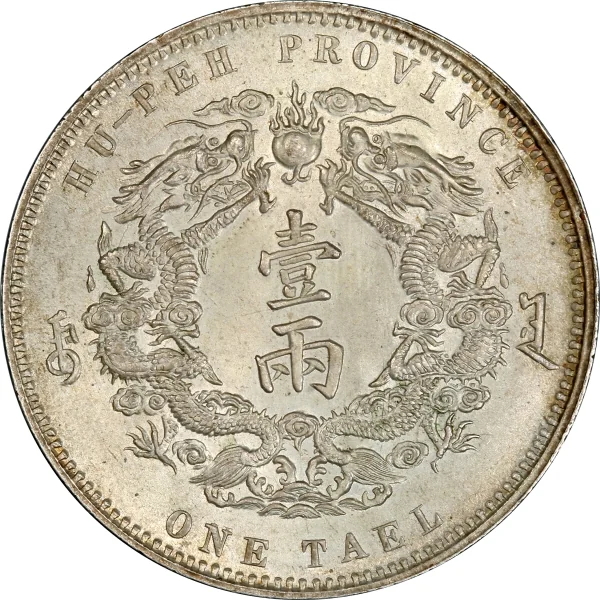
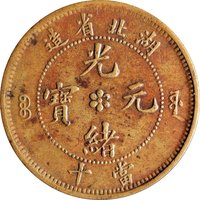
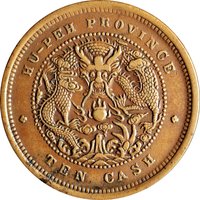
Two dragons frame four vertical Chinese ideograms, with Manchu text in the center, all encircled by more Chinese characters.
Inscription:
造省北湖年十三緖光
大
ᡩᠠᡳᠴᡳᠩ
幣 ᠮᡝᠩᡤᡠᠨ ᠵᡳᡥᠠ 銀
ᡤᡠᡵᡠᠨ
清
兩一平庫
大
ᡩᠠᡳᠴᡳᠩ
幣 ᠮᡝᠩᡤᡠᠨ ᠵᡳᡥᠠ 銀
ᡤᡠᡵᡠᠨ
清
兩一平庫
Translation:
Made in the 13th Year of Guangxu, (by) the Beihu Bureau of the Board of Revenue.
Great Qing Currency. Silver One Tael, (by) the Board of Revenue Treasury.
Great Qing Currency. Silver One Tael, (by) the Board of Revenue Treasury.
Languages: Manchu, Classical Chinese
Reverse
Edge
Reeded.
Categories
| Mythology> Fantastic animal |
Mintings
| Year | Mint Mark | Mintage | Quality | Collection |
|---|---|---|---|---|
| 1904 | — | 648,000 |
Historical background
In 1904, Hupeh (Hubei) Province, with its major commercial hub at Hankow (now part of Wuhan), operated within a complex and fragmented monetary system typical of late Qing China. The province did not issue its own distinct provincial currency but was a key site for the circulation of multiple, competing forms of money. The official medium was the silver tael, weighed and assessed for purity in the local Hankow tael standard, which was essential for large-scale trade and tax payments. However, the most common circulating coins were silver Mexican and later British Trade Dollars, as well as a flood of copper cash coins (wen) for everyday small transactions.
This system was strained by two major issues: a severe shortage of standardized small denomination coinage and the chaotic circulation of debased copper cash and privately minted tokens. Furthermore, the province was deeply affected by the wider imperial monetary crisis, including the fluctuating price of silver on the global market and the uneven introduction of new, machine-struck copper and silver coins from both central and provincial mints across China. These various coins, including those from the nearby Wuchang mint, circulated at values determined by local market consensus rather than a fixed, state-backed rate.
Consequently, merchants and the public in Hupeh faced daily challenges with exchange rates, counterfeiting, and the inherent inefficiency of a bimetallic system. This monetary disorder hampered commerce and tax collection, highlighting the Qing central government's weakening control over the economy. The situation in Hupeh in 1904 thus reflected a critical period of transition, caught between traditional monetary practices and the pressing, but still unrealized, need for a unified, modern currency system to support the province's vital role in domestic and international trade.
This system was strained by two major issues: a severe shortage of standardized small denomination coinage and the chaotic circulation of debased copper cash and privately minted tokens. Furthermore, the province was deeply affected by the wider imperial monetary crisis, including the fluctuating price of silver on the global market and the uneven introduction of new, machine-struck copper and silver coins from both central and provincial mints across China. These various coins, including those from the nearby Wuchang mint, circulated at values determined by local market consensus rather than a fixed, state-backed rate.
Consequently, merchants and the public in Hupeh faced daily challenges with exchange rates, counterfeiting, and the inherent inefficiency of a bimetallic system. This monetary disorder hampered commerce and tax collection, highlighting the Qing central government's weakening control over the economy. The situation in Hupeh in 1904 thus reflected a critical period of transition, caught between traditional monetary practices and the pressing, but still unrealized, need for a unified, modern currency system to support the province's vital role in domestic and international trade.
💎 Very Rare