

1 Silver Ducat – Netherlands
Netherlands
Context
Years: 1806–1808
Issuer: Netherlands 
Ruler: Louis Napoléon Bonaparte
Currency:
(1581—1817)
Demonetized: Yes
Total mintage: 1,074,145
Material
References
KM: #Click to copy to clipboard25
Numista: #349201
Value
Bullion value: $69.29
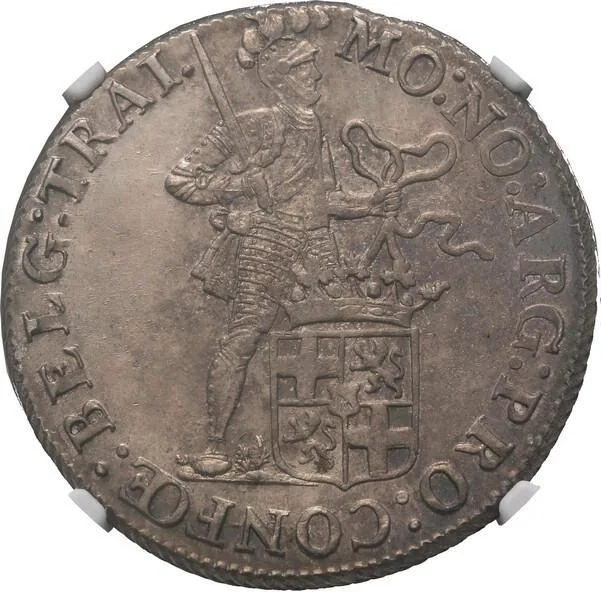
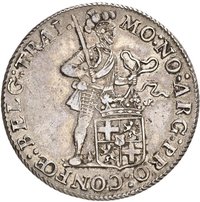
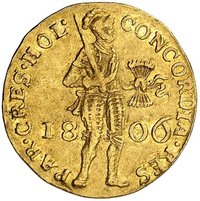
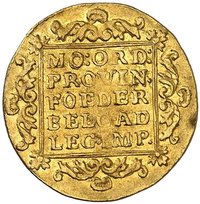
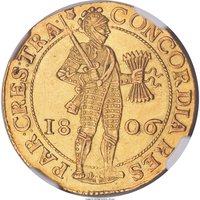
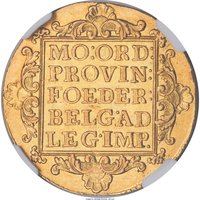
Obverse
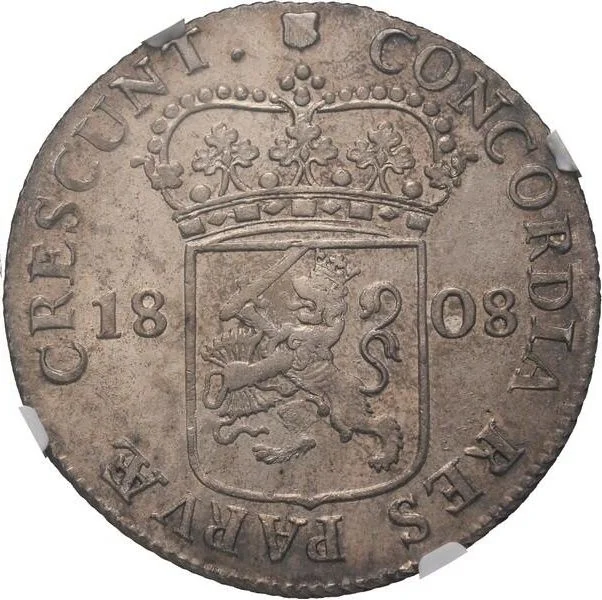
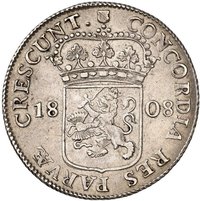
Reverse
Edge
Cable edge
Mints
| Name | Mark |
|---|---|
| Royal Dutch Mint | — |
Mintings
| Year | Mint Mark | Mintage | Quality | Collection |
|---|---|---|---|---|
| 1806 | — | 580,035 | ||
| 1807 | — | 150,700 | ||
| 1808 | — | 343,410 |
Historical background
In 1806, the Netherlands found itself in a complex monetary situation, deeply entangled in the political and economic upheavals of the Napoleonic Wars. The country, now reorganized as the Kingdom of Holland under Napoleon’s brother, Louis Bonaparte, was caught between French imperial demands and the ruin of its once-dominant commercial economy. The Continental System blockade against British trade, enforced by France, strangled Dutch ports and finance, leading to widespread economic stagnation and a severe shortage of specie (gold and silver coin). This scarcity of hard currency crippled everyday transactions and undermined financial confidence.
The currency system itself was a chaotic patchwork. In circulation were a confusing mix of older Dutch guilders (florins) from the pre-revolutionary Republic, French-assigned coins, and a proliferation of foreign and debased currencies. The value and acceptance of these coins varied greatly by region, and the lack of a unified, trusted national currency exacerbated economic difficulties. Furthermore, the state's financial position was dire; the kingdom was burdened by enormous debts inherited from the previous Batavian Republic and was compelled to pay heavy levies to France, draining its treasury and limiting its ability to reform the monetary system effectively.
Despite these pressures, King Louis Bonaparte made a concerted, though ultimately limited, effort to address the crisis. His government established a national bank, the Bank of Holland (Bank van Holland), in 1806 with the aim of stabilizing finance and issuing paper money. However, public distrust of paper currency, rooted in earlier disastrous experiments, and the continued economic decline prevented these measures from achieving lasting success. Thus, the monetary situation remained unstable and fragmented, a reflection of the kingdom's precarious position as a French satellite state, until its annexation directly into the French Empire in 1810, which imposed the French franc and further dissolved Dutch financial autonomy.
The currency system itself was a chaotic patchwork. In circulation were a confusing mix of older Dutch guilders (florins) from the pre-revolutionary Republic, French-assigned coins, and a proliferation of foreign and debased currencies. The value and acceptance of these coins varied greatly by region, and the lack of a unified, trusted national currency exacerbated economic difficulties. Furthermore, the state's financial position was dire; the kingdom was burdened by enormous debts inherited from the previous Batavian Republic and was compelled to pay heavy levies to France, draining its treasury and limiting its ability to reform the monetary system effectively.
Despite these pressures, King Louis Bonaparte made a concerted, though ultimately limited, effort to address the crisis. His government established a national bank, the Bank of Holland (Bank van Holland), in 1806 with the aim of stabilizing finance and issuing paper money. However, public distrust of paper currency, rooted in earlier disastrous experiments, and the continued economic decline prevented these measures from achieving lasting success. Thus, the monetary situation remained unstable and fragmented, a reflection of the kingdom's precarious position as a French satellite state, until its annexation directly into the French Empire in 1810, which imposed the French franc and further dissolved Dutch financial autonomy.
✨ Legendary