

20 Fen – Hunan Province
China
Context
Year: 1902
Country: China 
Issuer: Hunan Province
Ruler: Guangxu
Currency:
(1897—1949)
Demonetized: Yes
Material
References
Y: #Click to copy to clipboard116
Numista: #34910
Value
Bullion value: $12.53
Obverse
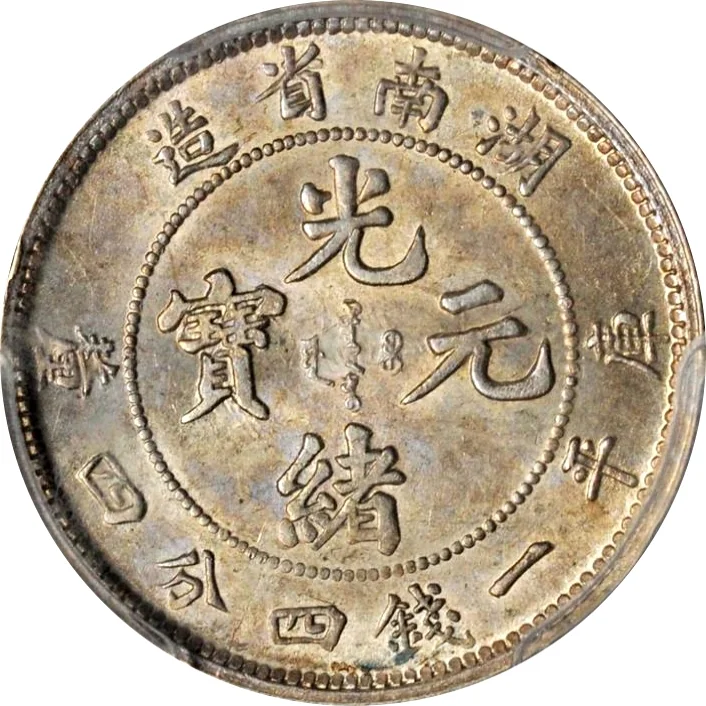
Description:
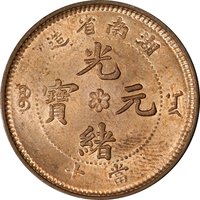
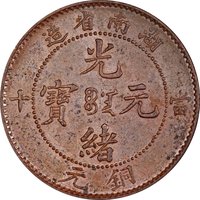
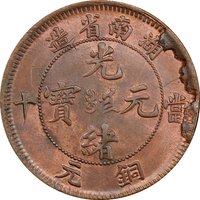
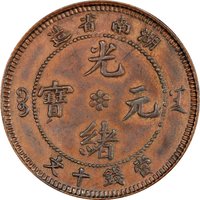
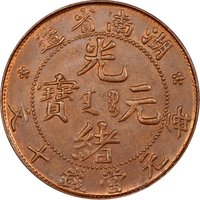
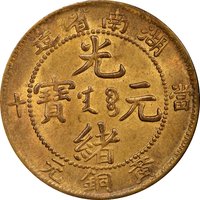
Chinese ideograms read vertically, right to left, with Manchu text in the center, all encircled by more Chinese characters.
Inscription:
造省南湖
光
ᠪᠠᡩᠠᡵᠠᠩᡤᠠ
寶 ᠶᡠᠸᠠᠨ ᠪᠣᠣ 元
ᡩᠣᡵᠣ
緒
釐四分四錢一平庫
光
ᠪᠠᡩᠠᡵᠠᠩᡤᠠ
寶 ᠶᡠᠸᠠᠨ ᠪᠣᠣ 元
ᡩᠣᡵᠣ
緒
釐四分四錢一平庫
Translation:
Made in the Southern Lake of the Ministry of Works
Guangxu [reign era]
Badarangga Doro [Manchu for "Guangxu reign"]
Yuan Bao [currency name]
One Pingku [standard] tael, four mace, four candareens
Guangxu [reign era]
Badarangga Doro [Manchu for "Guangxu reign"]
Yuan Bao [currency name]
One Pingku [standard] tael, four mace, four candareens
Scripts: Chinese, Mongolian / Manchu
Languages: Manchu, Classical Chinese
Reverse
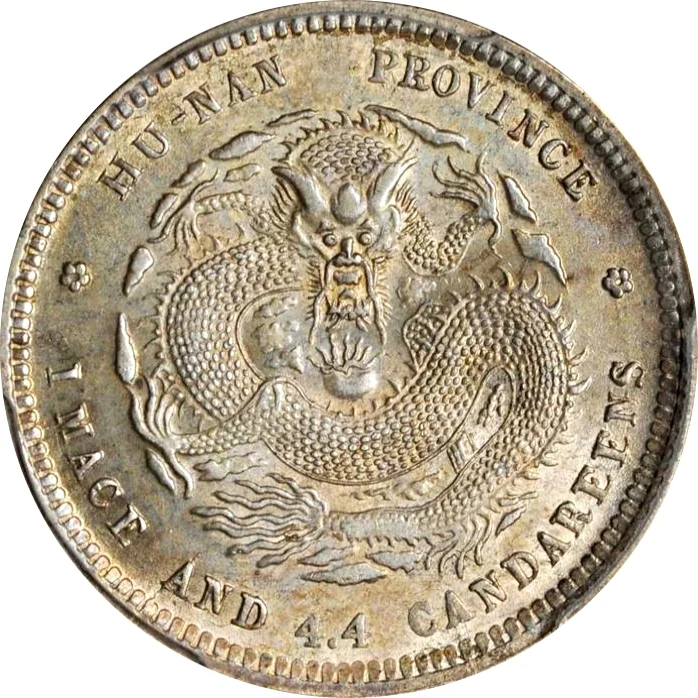
Description:
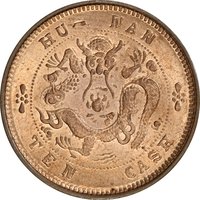
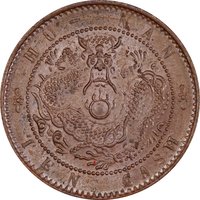
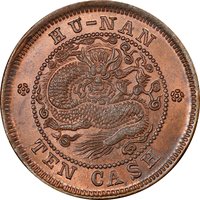
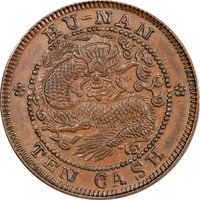
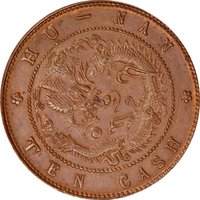
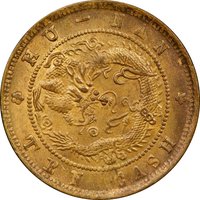
Dragon encircling a pearl, surrounded by English text.
Inscription:
HU-NAN PROVINCE
1 MACE AND 4.4 CANDAREENS
1 MACE AND 4.4 CANDAREENS
Script: Latin
Edge
Reeded.
Categories
| Mythology> Fantastic animal |
Mintings
| Year | Mint Mark | Mintage | Quality | Collection |
|---|---|---|---|---|
| 1902 | — | — |
Historical background
In 1902, Hunan Province, like much of late Qing China, was mired in a complex and debilitating monetary crisis. The system was a chaotic mix of official and unofficial currencies, lacking central control. The primary "currency" was silver, measured in taels, but there was no standard mint; the provincial Hunan Mint produced silver coins of varying purity and weight, while foreign silver dollars (especially Mexican "Eagle" dollars) also circulated at a premium due to their reliability. Crucially, the vast majority of everyday transactions for the populace relied on copper cash coins (tongyuan), which were strung together in diao. The exchange rate between silver and copper was volatile and a critical source of economic strain.
This period was defined by a severe and worsening "cash famine" (qianhuang). The supply of copper cash was insufficient, driven by hoarding, counterfeiting, and the outflow of copper as a metal. Simultaneously, the province was flooded with debased private notes and lead-alloy counterfeit cash, further eroding trust. The disastrous Boxer Indemnity payments, imposed after 1901, required massive silver transfers to foreign powers, draining the province's hard currency reserves and causing the value of silver to skyrocket relative to copper. For peasants and laborers who earned income in copper but often paid taxes calculated in silver, this meant effective tax increases and deepening poverty, fueling widespread social discontent.
The provincial authorities attempted reactive measures, such as ordering the mint to increase coinage and cracking down on counterfeiters, but these were inadequate. The fundamental issue was the absence of a unified, state-managed monetary system. This currency disorder crippled internal trade, hampered government revenue, and became a potent symbol of Qing administrative failure. It created fertile ground for the economic grievances that would feed into Hunan's growing reformist and revolutionary movements in the final decade of the dynasty.
This period was defined by a severe and worsening "cash famine" (qianhuang). The supply of copper cash was insufficient, driven by hoarding, counterfeiting, and the outflow of copper as a metal. Simultaneously, the province was flooded with debased private notes and lead-alloy counterfeit cash, further eroding trust. The disastrous Boxer Indemnity payments, imposed after 1901, required massive silver transfers to foreign powers, draining the province's hard currency reserves and causing the value of silver to skyrocket relative to copper. For peasants and laborers who earned income in copper but often paid taxes calculated in silver, this meant effective tax increases and deepening poverty, fueling widespread social discontent.
The provincial authorities attempted reactive measures, such as ordering the mint to increase coinage and cracking down on counterfeiters, but these were inadequate. The fundamental issue was the absence of a unified, state-managed monetary system. This currency disorder crippled internal trade, hampered government revenue, and became a potent symbol of Qing administrative failure. It created fertile ground for the economic grievances that would feed into Hunan's growing reformist and revolutionary movements in the final decade of the dynasty.
✨ Legendary