

10 cash – Fukien Province
Add to wishlist
China
Context
Years: 1901–1905
Country: China
Issuer: Fukien Province
Ruler: Guangxu
Currency:
(1896—1949)
Demonetized: Yes
Material
References
Y: #
Numista: #34904
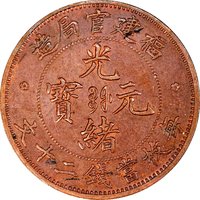
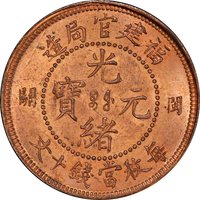
Obverse
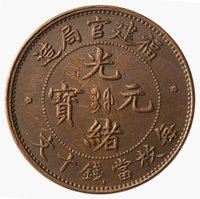
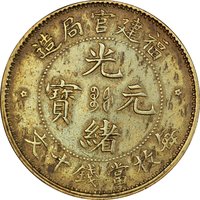
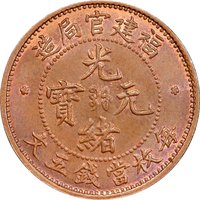
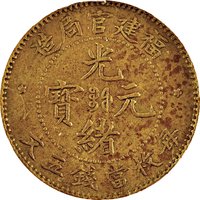
Description:
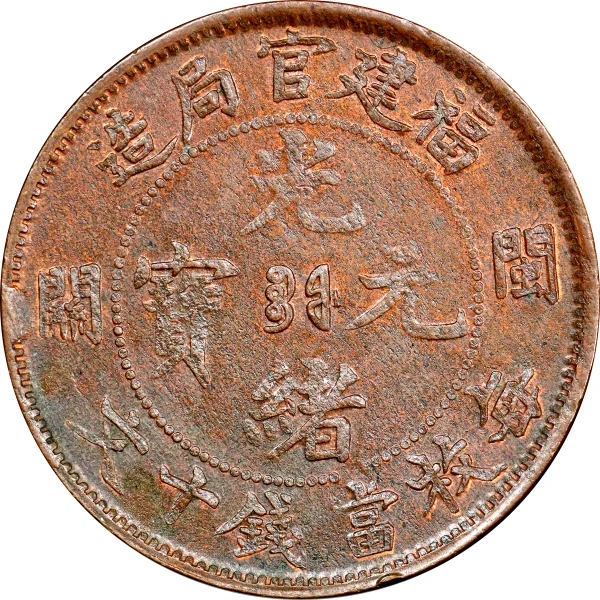
Chinese ideograms top to bottom, right to left, with central Manchu text, all encircled by more Chinese characters.
Inscription:
造局官建福
關閩
光
寶 ᠪᠣᠣ ᡶᡠ 元
緒
文十錢當枚毎
關閩
光
寶 ᠪᠣᠣ ᡶᡠ 元
緒
文十錢當枚毎
Translation:
Superintendent of the Mint, Jian Fu
Guangxu
Treasure Coinage
Every one piece equals ten wén
Guangxu
Treasure Coinage
Every one piece equals ten wén
Scripts: Chinese, Mongolian / Manchu
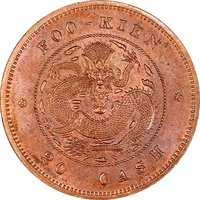
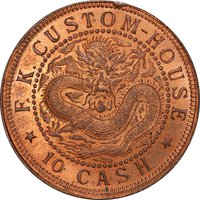
Reverse
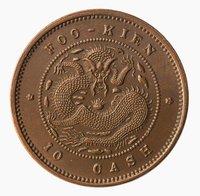
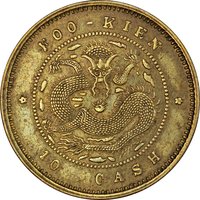
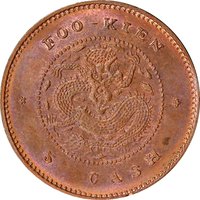
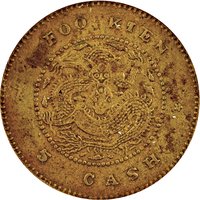
Description:
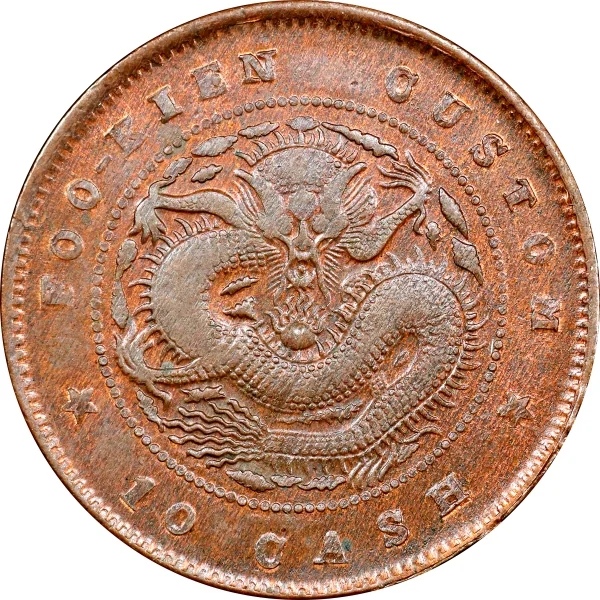
Dragon encircling a pearl, surrounded by English text.
Inscription:
FOO-KIEN CUSTOM
10 CASH
10 CASH
Script: Latin
Edge
Plain
Categories
| Mythology> Fantastic animal |
Mintings
| Year | Mint Mark | Mintage | Quality | Collection |
|---|---|---|---|---|
| — | — | — |
Historical background
In 1901, the currency situation in Fukien (Fujian) Province was a complex and chaotic reflection of China's late Qing Dynasty decline. The province operated under a multi-layered monetary system with no single standard. Official transactions were nominally conducted in silver, primarily using silver sycee (ingots) measured in the provincial tael unit, which differed in weight and purity from standards used in Shanghai or Beijing. However, a severe shortage of standardized coinage meant that everyday commerce relied heavily on a bewildering variety of physical currencies circulating simultaneously, including copper cash coins (both Qing-issued and older issues), foreign silver dollars (especially Mexican and Spanish Carolus pesos, known as "eagle dollars"), and privately minted copper and silver tokens from local merchants and guilds.
This monetary fragmentation was exacerbated by Fukien's extensive coastal trade and large overseas diaspora. Remittances from Fujanese emigrants in Southeast Asia and beyond flooded into the province, often in the form of foreign bank notes or silver dollars, further integrating international currencies into the local economy. Provincial authorities had little control, as the imperial government's authority was weak and its own currency systems were in disarray. The lack of a unified, trusted currency stifled commerce, facilitated fraud, and created constant exchange arbitrage, imposing a heavy transactional burden on merchants and peasants alike.
The situation was a source of economic instability and popular grievance. The intrinsic value of copper cash against silver had been falling for decades, a trend known as qianjian yinzhang (depreciation of cash against silver), which increased the tax burden on commoners who earned in copper but often had to pay taxes calculated in silver. While imperial reforms attempted to introduce a national silver coinage (the Dragon Dollar), their penetration in Fujian by 1901 remained limited. Thus, the province's monetary landscape was a dysfunctional patchwork, emblematic of the decaying imperial sovereignty and the growing influence of foreign and local commercial powers over the Qing state's fundamental right to issue money.
This monetary fragmentation was exacerbated by Fukien's extensive coastal trade and large overseas diaspora. Remittances from Fujanese emigrants in Southeast Asia and beyond flooded into the province, often in the form of foreign bank notes or silver dollars, further integrating international currencies into the local economy. Provincial authorities had little control, as the imperial government's authority was weak and its own currency systems were in disarray. The lack of a unified, trusted currency stifled commerce, facilitated fraud, and created constant exchange arbitrage, imposing a heavy transactional burden on merchants and peasants alike.
The situation was a source of economic instability and popular grievance. The intrinsic value of copper cash against silver had been falling for decades, a trend known as qianjian yinzhang (depreciation of cash against silver), which increased the tax burden on commoners who earned in copper but often had to pay taxes calculated in silver. While imperial reforms attempted to introduce a national silver coinage (the Dragon Dollar), their penetration in Fujian by 1901 remained limited. Thus, the province's monetary landscape was a dysfunctional patchwork, emblematic of the decaying imperial sovereignty and the growing influence of foreign and local commercial powers over the Qing state's fundamental right to issue money.
✨ Legendary