

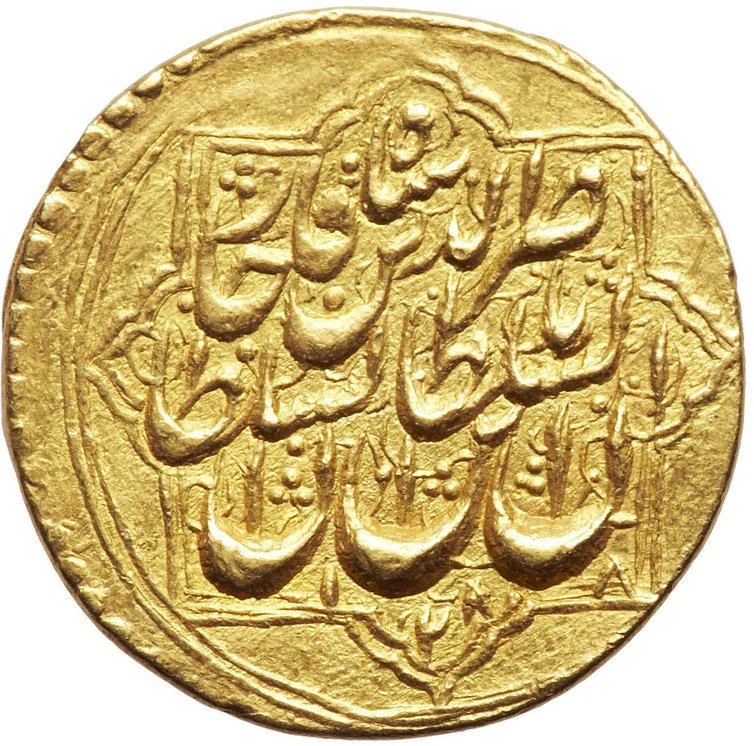
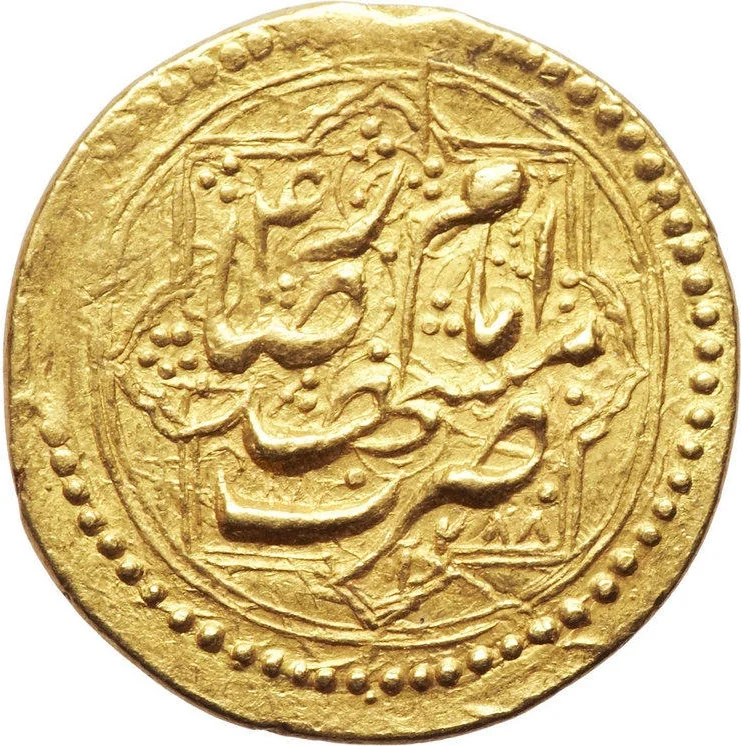
Iran
Context
Year: 1871
Islamic (Hijri) Year: 1288
Issuer: Iran 
Ruler: Naser al-Din Shah
Currency:
(1825—1932)
Demonetized: Yes
Material
References
Numista: #139414
Value
Bullion value: $574.35
Obverse
Reverse
Edge
Plain
Mintings
| Year | Mint Mark | Mintage | Quality | Collection |
|---|---|---|---|---|
| 1871 | — | — |
Historical background
In 1871, Iran's currency system was in a state of profound disarray, a legacy of centuries of debasement and weak central control. The monetary landscape was a complex and chaotic patchwork. The primary unit was the silver qiran (also spelled kran), but its value and silver content had been steadily eroded by successive Qajar rulers to finance state expenses. Alongside this, various gold coins like the toman (worth 10 qirans) and a plethora of foreign currencies, particularly British sovereigns and Russian rubles, circulated freely, their values fluctuating with trade and political influence. Most debilitating for the domestic economy was the widespread circulation of thousands of copper pul coins, issued by provincial governors and even city mullahs, which were not standardized and caused immense confusion in local bazaars.
This monetary chaos was both a symptom and a cause of severe economic weakness. The Qajar state, facing empty coffers due to costly royal extravagance, military campaigns, and concessions to foreign powers, lacked the fiscal discipline to reform the system. Revenue collection was inefficient, and the government increasingly relied on selling monopolies and concessions to British and Russian interests, which further drained wealth. The instability of the currency severely hampered internal trade, as exchange rates between silver, gold, copper, and foreign coins were negotiated daily, creating uncertainty and discouraging investment.
The year 1871 itself fell within a period of particularly acute crisis and foreign intervention. It was the very year that the infamous Reuter Concession was granted to Baron Julius de Reuter, handing over control of Iran’s entire banking system, mines, railways, and other key assets to a British subject. While this sweeping concession would be cancelled two years later under pressure from Russia and domestic opposition, it highlighted the desperate state of Persian finances. The government's inability to manage its currency was a key factor forcing it to seek foreign loans and capitulate to such exploitative agreements, embedding European financial influence deeper into the Iranian economy and setting the stage for future geopolitical rivalry.
This monetary chaos was both a symptom and a cause of severe economic weakness. The Qajar state, facing empty coffers due to costly royal extravagance, military campaigns, and concessions to foreign powers, lacked the fiscal discipline to reform the system. Revenue collection was inefficient, and the government increasingly relied on selling monopolies and concessions to British and Russian interests, which further drained wealth. The instability of the currency severely hampered internal trade, as exchange rates between silver, gold, copper, and foreign coins were negotiated daily, creating uncertainty and discouraging investment.
The year 1871 itself fell within a period of particularly acute crisis and foreign intervention. It was the very year that the infamous Reuter Concession was granted to Baron Julius de Reuter, handing over control of Iran’s entire banking system, mines, railways, and other key assets to a British subject. While this sweeping concession would be cancelled two years later under pressure from Russia and domestic opposition, it highlighted the desperate state of Persian finances. The government's inability to manage its currency was a key factor forcing it to seek foreign loans and capitulate to such exploitative agreements, embedding European financial influence deeper into the Iranian economy and setting the stage for future geopolitical rivalry.
✨ Legendary