

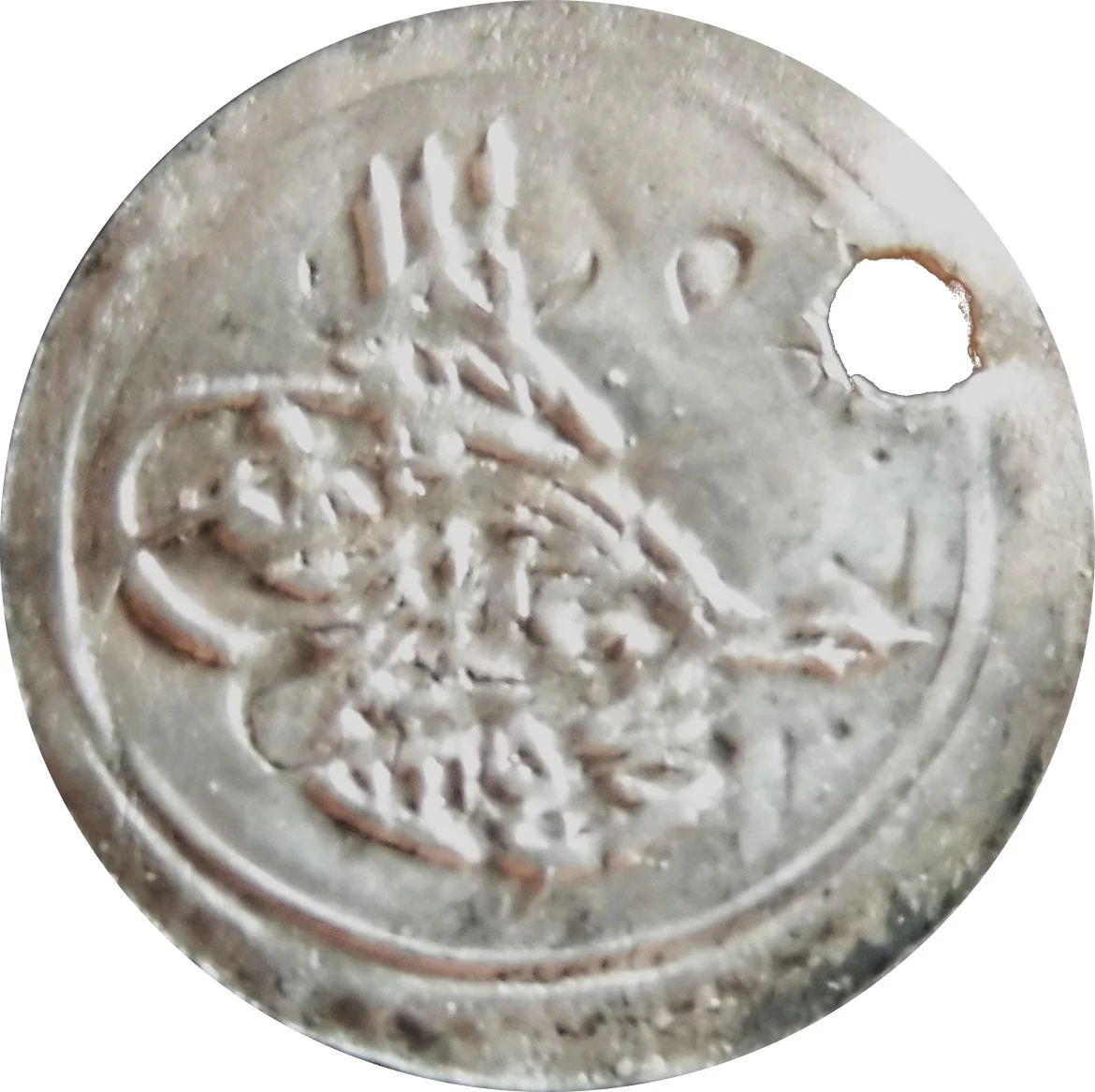
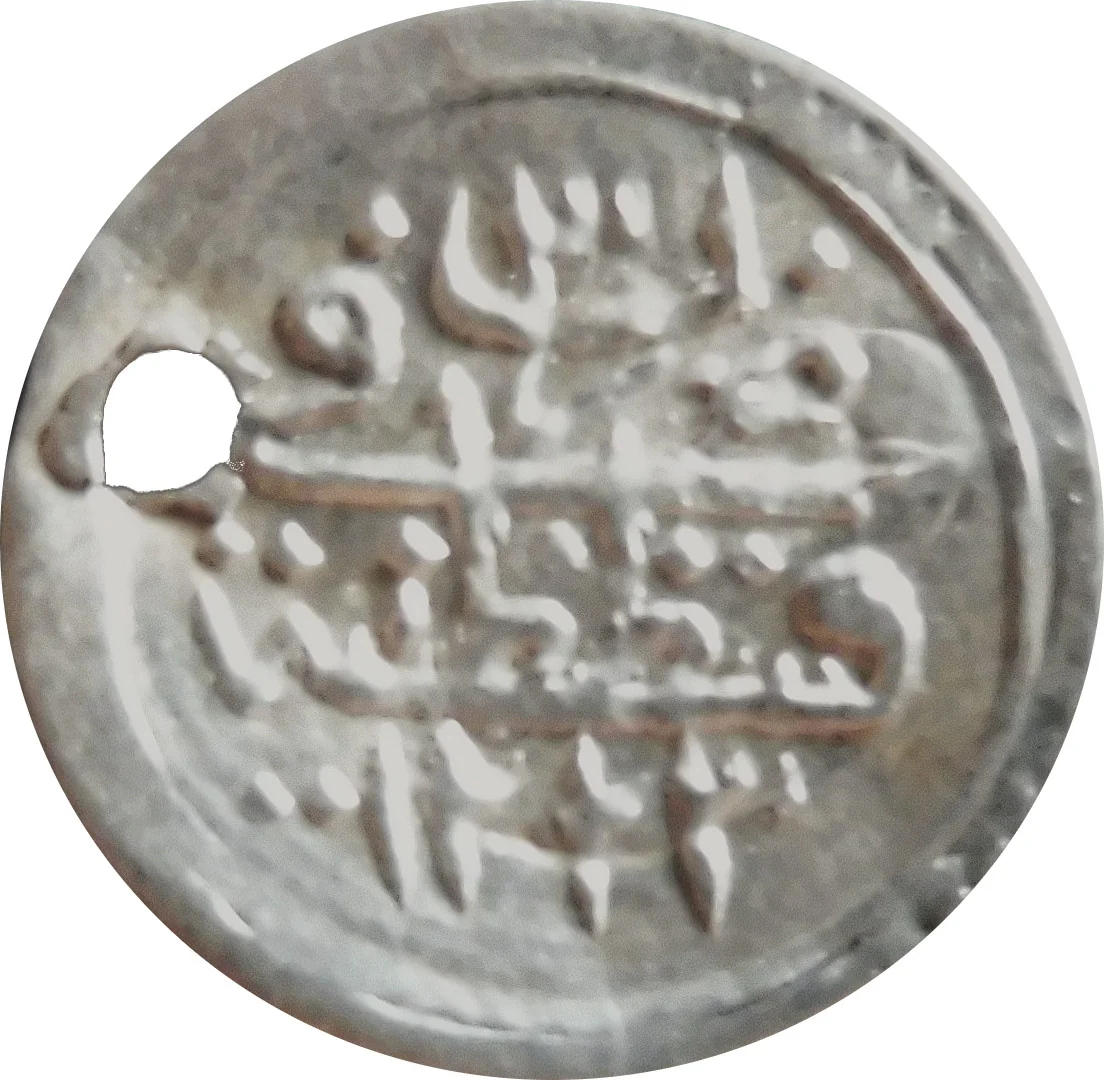
1 Para – Ottoman Empire
Turkey
Context
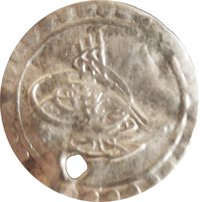
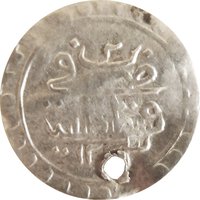
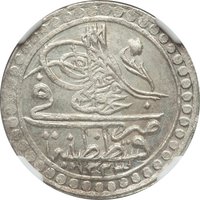
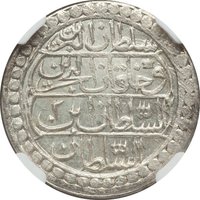
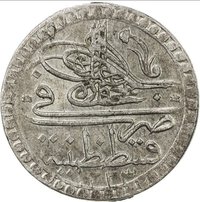
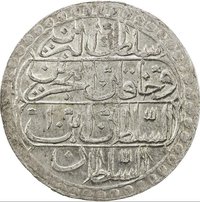
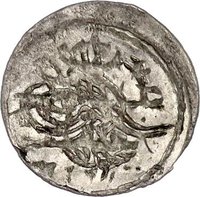
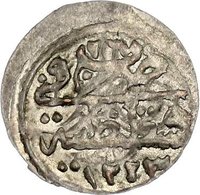
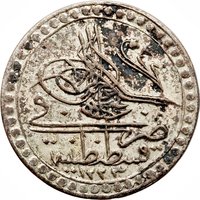
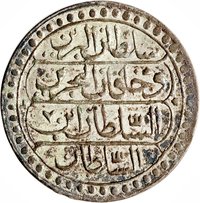
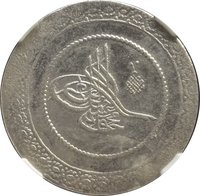
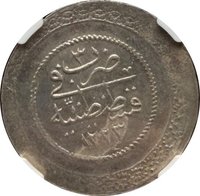
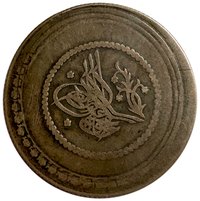
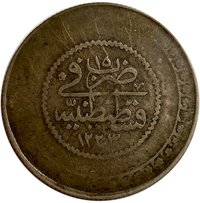
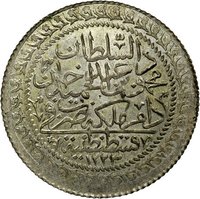
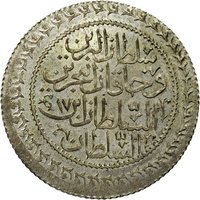
Year: 1808
Islamic (Hijri) Year: 1223
Country: Turkey 
Issuer: Ottoman Empire
Ruler: Mahmud II
Currency:
(1688—1844)
Demonetized: Yes
Material
References
KM: #Click to copy to clipboard578
Numista: #139355
Value
Bullion value: $0.30
Mints
| Name | Mark |
|---|---|
| Constantinople | — |
Mintings
| Year | Mint Mark | Mintage | Quality | Collection |
|---|---|---|---|---|
| 1808 | — | — |
Historical background
In 1808, the Ottoman Empire's currency system was in a state of severe crisis, a direct reflection of the empire's broader political and military decline. The primary unit, the silver akçe, had been drastically debased over centuries, losing so much value that it was virtually obsolete for large transactions. In its place, a bimetallic system centered on the silver kuruş (piastre) and the gold lira was used, but without stable exchange rates. The empire, chronically short of precious metals due to trade imbalances and military expenses, resorted to repeated debasements, reducing the silver content of coins to fund the treasury. This created a chaotic monetary environment where the actual value of coins fluctuated wildly based on their mint date and metal purity, undermining both domestic trade and state finances.
The situation was exacerbated by the widespread circulation of foreign currencies, particularly the Austrian thaler and Spanish real, which were often preferred by merchants due to their reliable silver content. This "currency substitution" highlighted the loss of confidence in Ottoman minting authority and further drained specie from the economy. Additionally, provincial governors and local power-holders frequently issued their own debased coins, adding to the monetary anarchy. The state's attempts to introduce new coins, like the zolota and para, failed to restore stability, as they were often underweight or quickly debased themselves.
Sultan Mahmud II, who ascended the throne in 1808 amidst rebellion and turmoil, inherited this financial disarray. The currency crisis was a fundamental obstacle to his centralizing reforms and military modernization, as it made revenue collection unpredictable and state payments unreliable. While his immediate focus in 1808 was on consolidating political power, the dysfunctional monetary system represented a critical weakness that would require a comprehensive and sustained solution—a task that would only begin to be addressed later in his reign with more systematic fiscal and monetary reforms.
The situation was exacerbated by the widespread circulation of foreign currencies, particularly the Austrian thaler and Spanish real, which were often preferred by merchants due to their reliable silver content. This "currency substitution" highlighted the loss of confidence in Ottoman minting authority and further drained specie from the economy. Additionally, provincial governors and local power-holders frequently issued their own debased coins, adding to the monetary anarchy. The state's attempts to introduce new coins, like the zolota and para, failed to restore stability, as they were often underweight or quickly debased themselves.
Sultan Mahmud II, who ascended the throne in 1808 amidst rebellion and turmoil, inherited this financial disarray. The currency crisis was a fundamental obstacle to his centralizing reforms and military modernization, as it made revenue collection unpredictable and state payments unreliable. While his immediate focus in 1808 was on consolidating political power, the dysfunctional monetary system represented a critical weakness that would require a comprehensive and sustained solution—a task that would only begin to be addressed later in his reign with more systematic fiscal and monetary reforms.
💎 Very Rare