

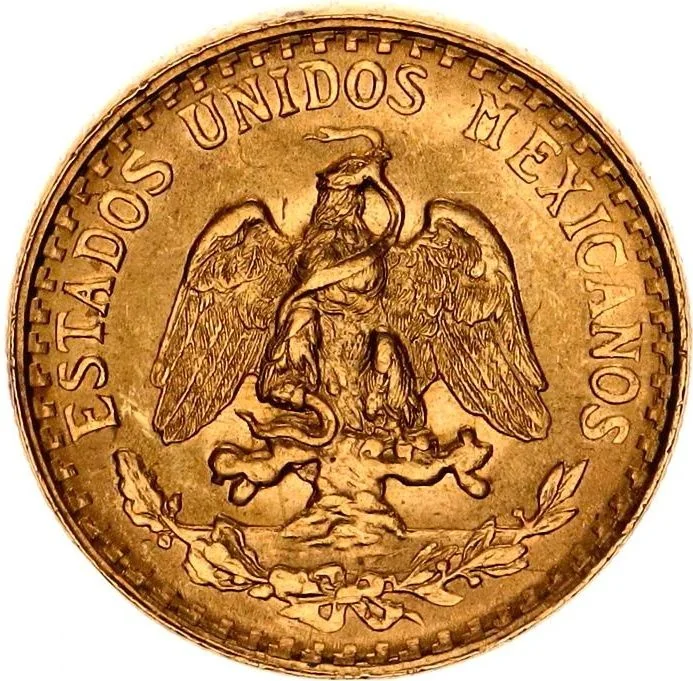
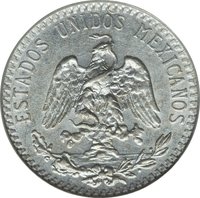
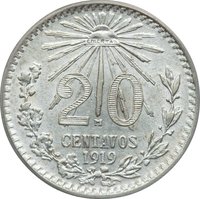
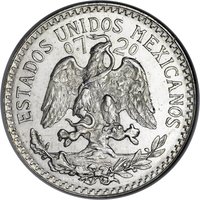
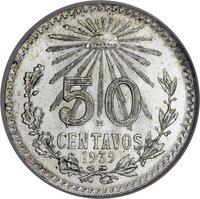
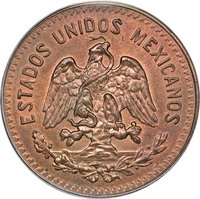
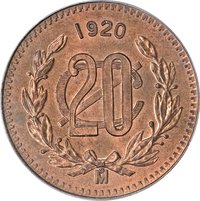
Obverse
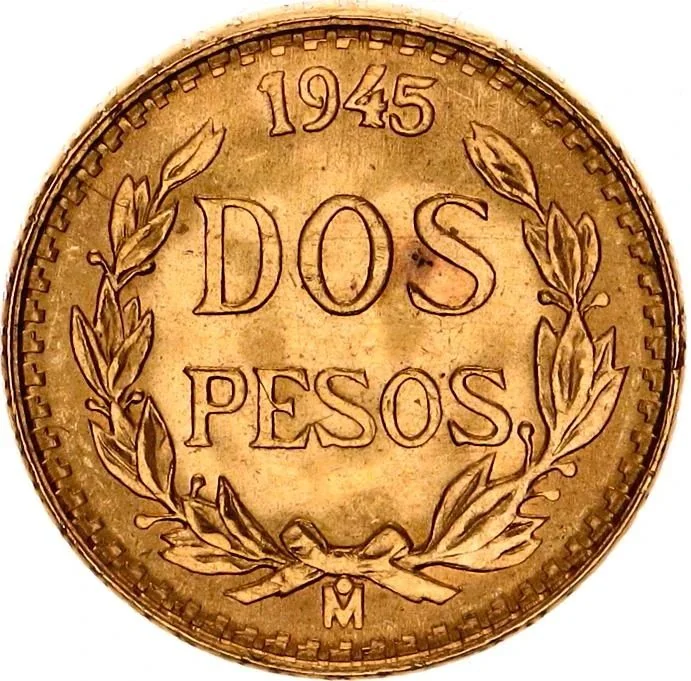
Reverse
Edge
Reeded with a unique pattern
Legend:
|| || || || || etc.
Mints
| Name | Mark |
|---|---|
| Mexican Mint | Mo |
Mintings
Historical background
By 1919, Mexico’s currency situation was one of profound instability and fragmentation, a direct legacy of the decade-long Mexican Revolution (1910-1920). The overthrow of Porfirio Díaz’s regime and the subsequent violent struggle for power had shattered the centralized banking and monetary system. The Constitutionalist government under Venustiano Carranza, recognized de facto by the United States but still fighting major rebel armies like Villa’s and Zapata’s, faced a critical problem: it lacked the financial resources to fund its administration and military campaigns. This led to the massive issuance of unbacked paper money, known as bilimbiques and later infalsificables, which flooded the economy and depreciated rapidly.
The result was a chaotic multi-currency environment. Alongside the depreciating government issues, various revolutionary factions, state governments, and even private companies issued their own notes and coins, creating a bewildering patchwork of currencies of wildly differing values. Crucially, the old Porfirian silver pesos, particularly the famous "Libertad" or "Caballito" coins, remained in circulation and were hoarded by the public due to their intrinsic silver value. This created a classic Gresham’s Law dynamic, where "bad money" (paper) drove "good money" (silver) out of circulation, further eroding trust in any paper currency and pushing many transactions, especially in rural areas, back toward barter.
Consequently, inflation was rampant and the economy was severely dollarized in northern border regions. The Carranza government’s attempts to mandate the use of its paper money by decree failed, as public rejection was near-universal. This monetary chaos severely hampered economic recovery and trade, undermining the government's authority and complicating everyday life for citizens. The currency crisis of 1919 underscored that military victory alone would not secure peace; establishing monetary sovereignty and restoring public confidence in a single national currency would be a fundamental challenge for any post-revolutionary state.
The result was a chaotic multi-currency environment. Alongside the depreciating government issues, various revolutionary factions, state governments, and even private companies issued their own notes and coins, creating a bewildering patchwork of currencies of wildly differing values. Crucially, the old Porfirian silver pesos, particularly the famous "Libertad" or "Caballito" coins, remained in circulation and were hoarded by the public due to their intrinsic silver value. This created a classic Gresham’s Law dynamic, where "bad money" (paper) drove "good money" (silver) out of circulation, further eroding trust in any paper currency and pushing many transactions, especially in rural areas, back toward barter.
Consequently, inflation was rampant and the economy was severely dollarized in northern border regions. The Carranza government’s attempts to mandate the use of its paper money by decree failed, as public rejection was near-universal. This monetary chaos severely hampered economic recovery and trade, undermining the government's authority and complicating everyday life for citizens. The currency crisis of 1919 underscored that military victory alone would not secure peace; establishing monetary sovereignty and restoring public confidence in a single national currency would be a fundamental challenge for any post-revolutionary state.
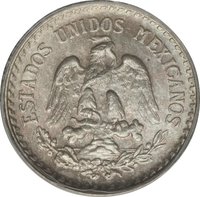
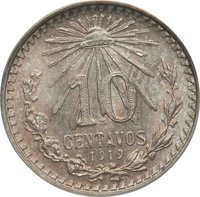
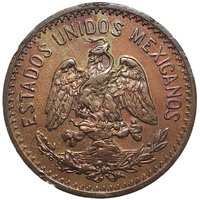
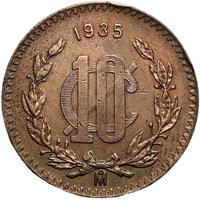
Series: 1919 Mexico circulation coins
🌱 Common