

5 taka – Bangladesh
Add to wishlist
Bangladesh
Context
Years: 2012–2013
Issuer: Bangladesh
Issuing organization: Bangladesh Bank
Period:
(since 1971)
Currency:
(since 1972)
Total mintage: 600,000,000
Material
References
KM: #
Numista: #34783
Value
Exchange value: 5 BDT
Obverse
Description:
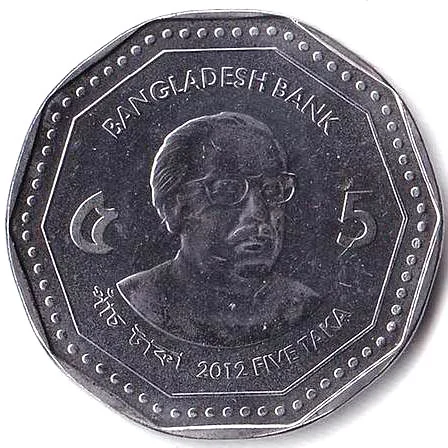
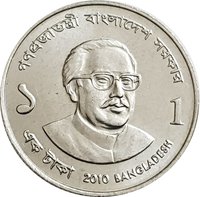
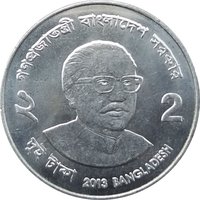
Top: issuing authority. Center: Sheikh Mujibur Rahman portrait. Sides: value in Bangla and English. Bottom: issue year and value in figures (Bangla and English).
Inscription:
BANGLADESH BANK
৫ 5
পাঁচ টাকা 2012 FIVE TAKA
৫ 5
পাঁচ টাকা 2012 FIVE TAKA
Translation:
BANGLADESH BANK
5 5
FIVE TAKA 2012 FIVE TAKA
5 5
FIVE TAKA 2012 FIVE TAKA
Reverse
Edge
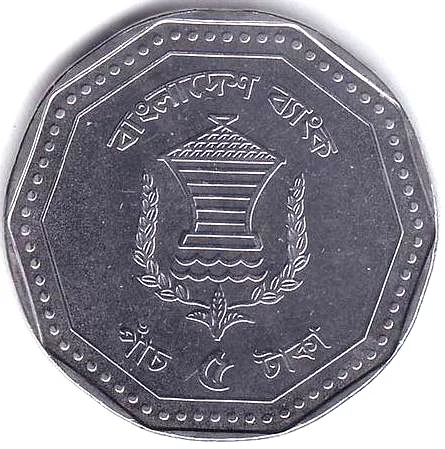
Smooth, slight edges in points of Decagon.
Categories
| Person> Politician |
Mints
| Name | Mark |
|---|---|
| Mint of Finland | — |
Mintings
| Year | Mint Mark | Mintage | Quality | Collection |
|---|---|---|---|---|
| 2012 | — | — | ||
| 2013 | — | 600,000,000 |
Historical background
In 2012, Bangladesh faced a significant and multifaceted currency crisis, primarily driven by a sharp decline in its foreign exchange reserves. The central bank, Bangladesh Bank, was forced to repeatedly devalue the Taka (BDT) throughout the year to curb a widening current account deficit and stem the rapid depletion of reserves, which fell from over USD 10 billion in 2011 to a precarious level near USD 9 billion by year's end. This pressure stemmed from a combination of high import costs—particularly for fuel, machinery, and food grains—and a slowdown in the growth of key exports like ready-made garments, alongside a decline in remittance inflows from overseas workers.
The situation was exacerbated by both global and domestic factors. Internationally, the lingering effects of the Eurozone debt crisis dampened export demand and impacted remittance flows from key destinations like the Middle East and Europe. Domestically, political instability and energy shortages hampered industrial productivity, while a surge in luxury and non-essential imports further strained the balance of payments. To manage the crisis, Bangladesh Bank intervened heavily in the foreign exchange market, sold dollars directly to commercial banks, and imposed stricter controls on imports, including letters of credit for non-essential goods.
These measures, while necessary for short-term stabilization, had significant economic consequences. The devaluation of the Taka made imports more expensive, contributing to inflationary pressures that eroded public purchasing power. Businesses faced higher costs for imported raw materials and machinery, and servicing foreign debt became more expensive. The crisis of 2012 ultimately highlighted the structural vulnerabilities in Bangladesh's economy, prompting calls for deeper reforms to boost export diversification, enhance remittance channels through formal systems, and build a more robust fiscal buffer against external shocks.
The situation was exacerbated by both global and domestic factors. Internationally, the lingering effects of the Eurozone debt crisis dampened export demand and impacted remittance flows from key destinations like the Middle East and Europe. Domestically, political instability and energy shortages hampered industrial productivity, while a surge in luxury and non-essential imports further strained the balance of payments. To manage the crisis, Bangladesh Bank intervened heavily in the foreign exchange market, sold dollars directly to commercial banks, and imposed stricter controls on imports, including letters of credit for non-essential goods.
These measures, while necessary for short-term stabilization, had significant economic consequences. The devaluation of the Taka made imports more expensive, contributing to inflationary pressures that eroded public purchasing power. Businesses faced higher costs for imported raw materials and machinery, and servicing foreign debt became more expensive. The crisis of 2012 ultimately highlighted the structural vulnerabilities in Bangladesh's economy, prompting calls for deeper reforms to boost export diversification, enhance remittance channels through formal systems, and build a more robust fiscal buffer against external shocks.


🌱 Very Common