

2 taka – Bangladesh
Add to wishlist
Bangladesh
Context
Year: 2013
Issuer: Bangladesh
Period:
(since 1971)
Currency:
(since 1972)
Total mintage: 500,057,240
Material
Diameter: 24 mm
Weight: 5.5 g
Thickness: 1.8 mm
Shape: Round
Composition: Stainless steel
Technique: Milled
Alignment: Medal alignment
flip
References
KM: #
Numista: #133880
Value
Exchange value: 2 BDT
Obverse
Description:
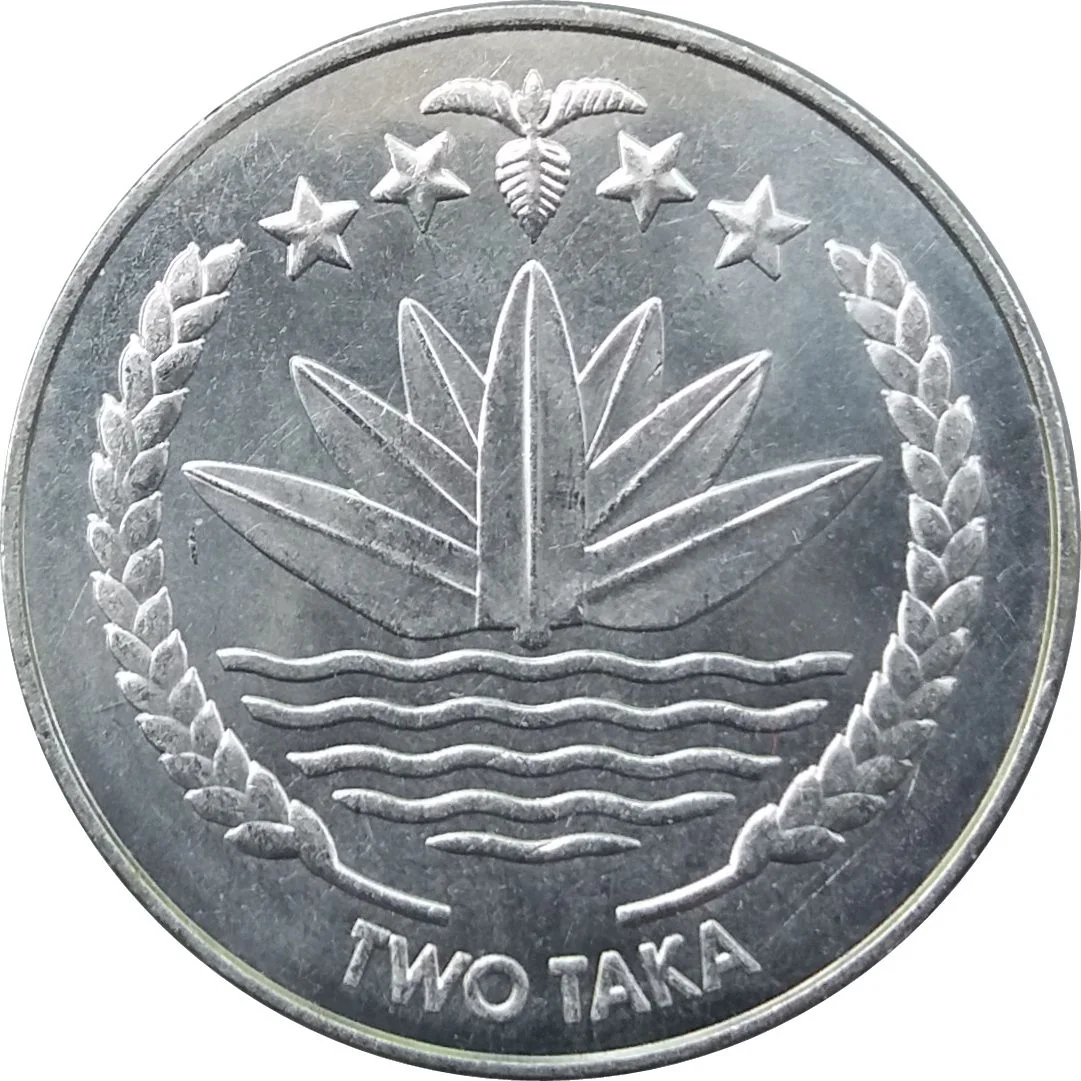
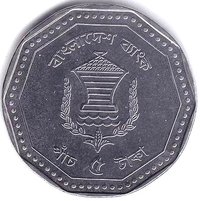
Face value: Bangladesh's national emblem—a water lily flanked by rice sheaves, topped with a tea leaf clover and four stars symbolizing the 1972 constitutional principles: nationalism, secularism, socialism, and democracy.
Inscription:
TWO TAKA
Script: Latin
Reverse
Description:
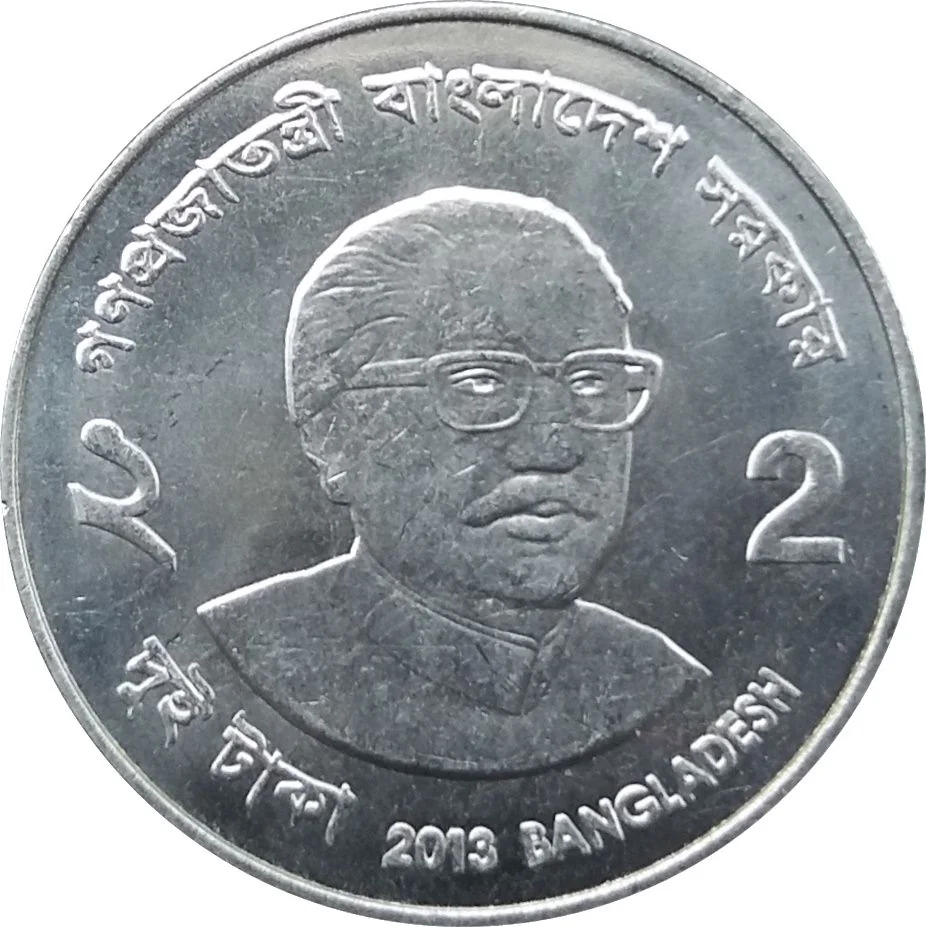
Top: Issuing authority in Bengali.
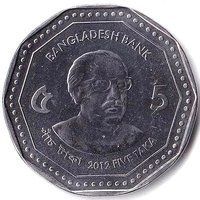
Center: Portrait of Sheikh Mujibur Rahman.
Sides: Numerical value in Bangla and English.
Bottom: Value in words, issue year, and country name.
Center: Portrait of Sheikh Mujibur Rahman.
Sides: Numerical value in Bangla and English.
Bottom: Value in words, issue year, and country name.
Inscription:
গণপ্রজাতন্ত্রী বাংলাদেশ সরকার
২ 2
দুই টাকা 2013 BANGLADESH
২ 2
দুই টাকা 2013 BANGLADESH
Translation:
Government of the People's Republic of Bangladesh
2
Two Taka 2013 BANGLADESH
2
Two Taka 2013 BANGLADESH
Language: Bengali
Edge
Plain
Categories
| Person> Politician |
| Plants> Flower |
| Symbols> Coat of Arms |
Mints
| Name | Mark |
|---|---|
| Japan Mint | — |
Mintings
| Year | Mint Mark | Mintage | Quality | Collection |
|---|---|---|---|---|
| 2013 | — | 500,057,240 |
Historical background
In 2013, Bangladesh's currency situation was characterized by significant volatility and pressure on the Bangladeshi Taka (BDT), primarily driven by a combination of political instability and external economic factors. The year was dominated by intense political unrest in the lead-up to the January 2014 general elections, with widespread strikes (hartals) and blockades severely disrupting economic activity, exports, and investor confidence. This domestic turmoil coincided with external challenges, notably the aftermath of the Rana Plaza garment factory collapse in April, which raised global concerns about the country's crucial ready-made garment (RMG) sector and threatened its export earnings—a key source of foreign exchange.
These factors exacerbated pressures on the country's balance of payments. While remittance inflows from expatriate workers remained a resilient source of foreign currency, import growth was high, particularly for fuel and capital machinery, widening the trade deficit. Consequently, foreign exchange reserves came under strain, declining from a comfortable position earlier in the decade. To manage the situation, Bangladesh Bank, the central bank, intermittently intervened in the foreign exchange market to support the Taka and allowed for a controlled depreciation to preserve reserves. The currency depreciated by approximately 10-12% against the US dollar over the course of the year, moving from around BDT 78 to BDT 78.5 per dollar at the start of 2013 to closing near BDT 77.8 by year-end, though it experienced much sharper volatility in between.
Overall, the 2013 currency scenario reflected an economy grappling with acute political shocks that overshadowed its fundamental growth drivers. The depreciation of the Taka was a necessary adjustment to correct imbalances and maintain export competitiveness, but it also raised concerns about imported inflation. The year underscored the vulnerability of Bangladesh's macroeconomic stability to domestic political crises, even as its core economic sectors demonstrated underlying resilience.
These factors exacerbated pressures on the country's balance of payments. While remittance inflows from expatriate workers remained a resilient source of foreign currency, import growth was high, particularly for fuel and capital machinery, widening the trade deficit. Consequently, foreign exchange reserves came under strain, declining from a comfortable position earlier in the decade. To manage the situation, Bangladesh Bank, the central bank, intermittently intervened in the foreign exchange market to support the Taka and allowed for a controlled depreciation to preserve reserves. The currency depreciated by approximately 10-12% against the US dollar over the course of the year, moving from around BDT 78 to BDT 78.5 per dollar at the start of 2013 to closing near BDT 77.8 by year-end, though it experienced much sharper volatility in between.
Overall, the 2013 currency scenario reflected an economy grappling with acute political shocks that overshadowed its fundamental growth drivers. The depreciation of the Taka was a necessary adjustment to correct imbalances and maintain export competitiveness, but it also raised concerns about imported inflation. The year underscored the vulnerability of Bangladesh's macroeconomic stability to domestic political crises, even as its core economic sectors demonstrated underlying resilience.
🌱 Common