

20 pence – Jersey
Add to wishlist
Context
Years: 1983–1997
Country: British Crown dependencies
Issuer: Jersey
Ruler: Elizabeth II
Currency:
(since 1971)
Total mintage: 2,150,000
Material
Diameter: 21.4 mm
Weight: 5 g
Thickness: 1.7 mm
Shape: Equilateral curve heptagon
Composition: Copper-nickel
Technique: Milled
Alignment: Medal alignment
flip
References
KM: #
Numista: #3478
Value
Exchange value: 0.20 JEP
Obverse
Description:
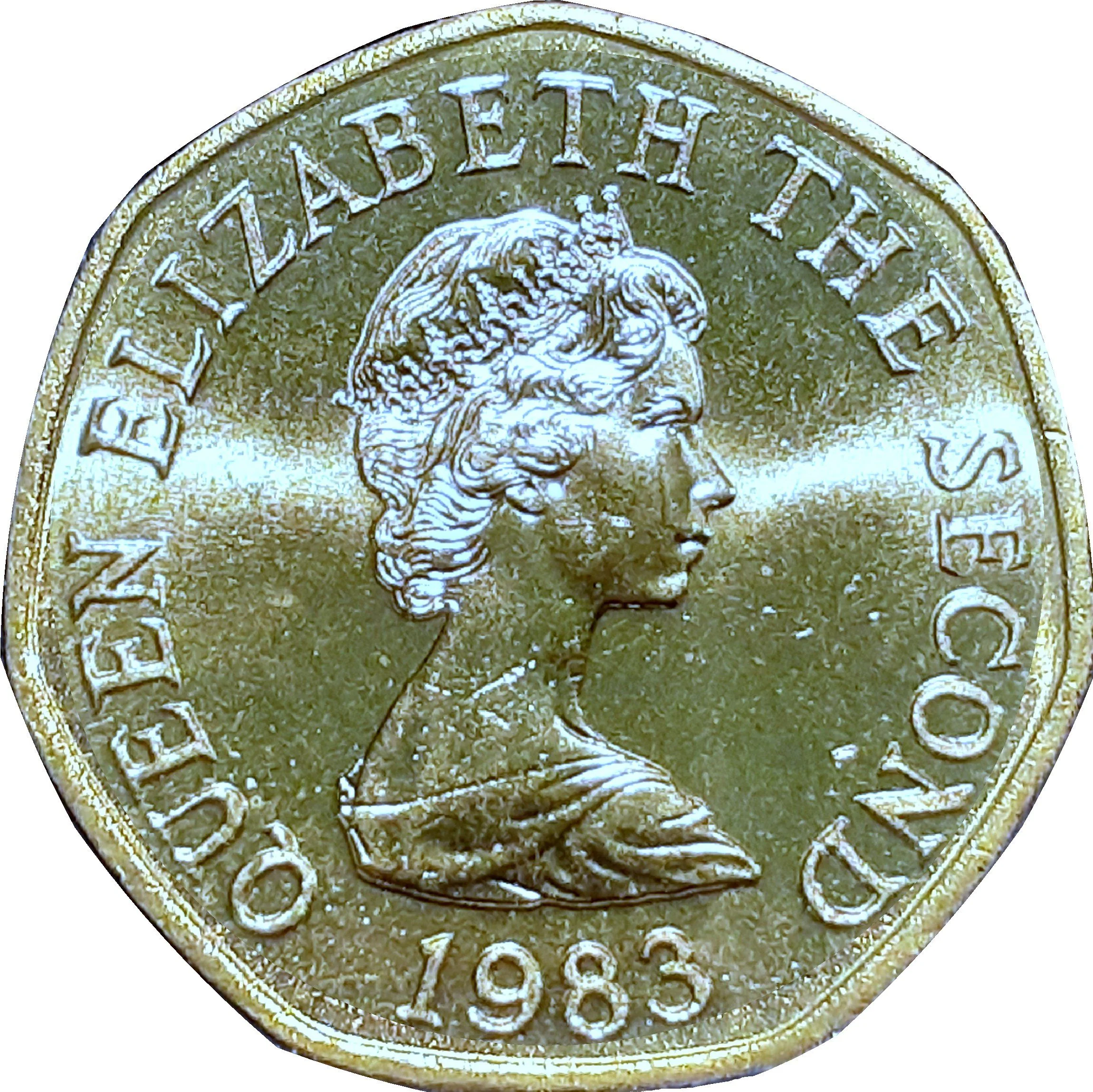
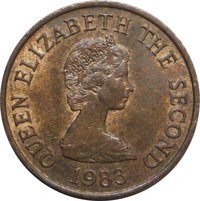
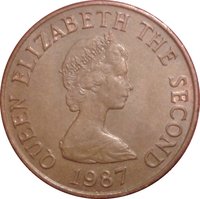
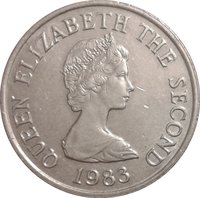
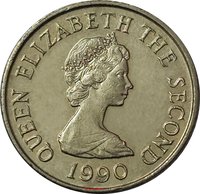
Queen Elizabeth II in profile, wearing the Girls of Great Britain tiara.
Inscription:
QUEEN ELIZABETH THE SECOND
1983
1983
Script: Latin
Engraver: Arnold Machin
Reverse
Description:
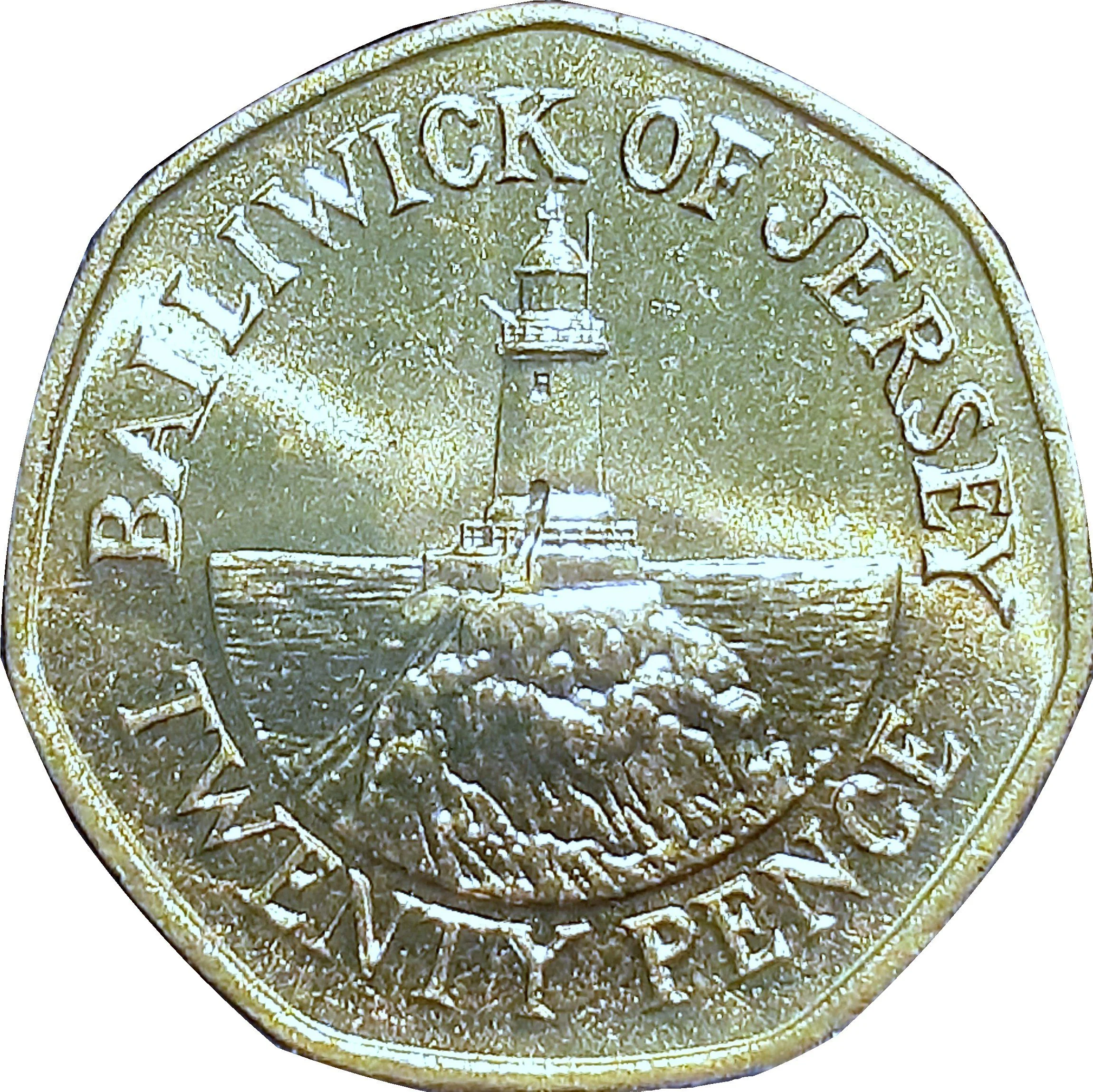
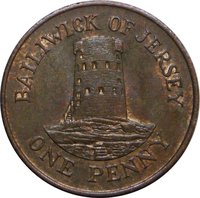
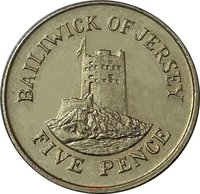
La Corbière lighthouse by the sea. Country above, value below.
Inscription:
BAILIWICK OF JERSEY
TWENTY PENCE
TWENTY PENCE
Script: Latin
Engraver: Robert Lowe
Edge
Plain
Categories
| Building> Lighthouse |
| Person> Monarch |
Mints
| Name | Mark |
|---|---|
| Royal Mint | — |
Mintings
| Year | Mint Mark | Mintage | Quality | Collection |
|---|---|---|---|---|
| 1983 | — | 400,000 | ||
| 1984 | — | 250,000 | ||
| 1986 | — | 100,000 | ||
| 1987 | — | 100,000 | ||
| 1989 | — | 100,000 | ||
| 1990 | — | 150,000 | ||
| 1992 | — | — | In sets | |
| 1994 | — | 200,000 | ||
| 1996 | — | 250,000 | ||
| 1997 | — | 600,000 |
Historical background
In 1983, the currency situation in Jersey was characterised by its continued use of the Jersey pound, which operated in a long-standing one-to-one parity with the British pound sterling. As a British Crown Dependency, Jersey was not part of the United Kingdom, but its economy and banking system were deeply integrated with Britain's. The island issued its own banknotes and coins, which were legal tender only in Jersey, while UK sterling notes and coins also circulated freely and were accepted interchangeably. This system provided stability but meant Jersey's monetary policy was effectively set by the Bank of England, with no independent mechanism to address local economic conditions.
The period was one of economic transition for the island. Jersey was actively developing its finance sector, moving beyond its traditional agricultural and tourism bases. This growth increased the volume and complexity of financial transactions, all conducted in sterling. There was no serious consideration of deviating from the sterling link, as it provided crucial confidence for the burgeoning banking and trust industries, which relied on the stability and international recognition of the UK currency. The fixed parity was a cornerstone of Jersey's economic identity.
However, the arrangement also meant Jersey was exposed to UK monetary conditions, including the high interest rates of the early 1980s used to combat inflation in Britain. While these policies were designed for the UK economy, they directly impacted borrowing costs in Jersey, affecting local businesses and mortgages. This highlighted the inherent tension in the currency union: it offered stability and convenience but at the cost of ceding monetary sovereignty. By 1983, this was a settled and largely unchallenged reality, forming the bedrock upon which Jersey's modern financial centre would be built.
The period was one of economic transition for the island. Jersey was actively developing its finance sector, moving beyond its traditional agricultural and tourism bases. This growth increased the volume and complexity of financial transactions, all conducted in sterling. There was no serious consideration of deviating from the sterling link, as it provided crucial confidence for the burgeoning banking and trust industries, which relied on the stability and international recognition of the UK currency. The fixed parity was a cornerstone of Jersey's economic identity.
However, the arrangement also meant Jersey was exposed to UK monetary conditions, including the high interest rates of the early 1980s used to combat inflation in Britain. While these policies were designed for the UK economy, they directly impacted borrowing costs in Jersey, affecting local businesses and mortgages. This highlighted the inherent tension in the currency union: it offered stability and convenience but at the cost of ceding monetary sovereignty. By 1983, this was a settled and largely unchallenged reality, forming the bedrock upon which Jersey's modern financial centre would be built.
Series: 1983 Jersey circulation coins

🌱 Very Common