

2000 dinars – Iran
Add to wishlist
Iran
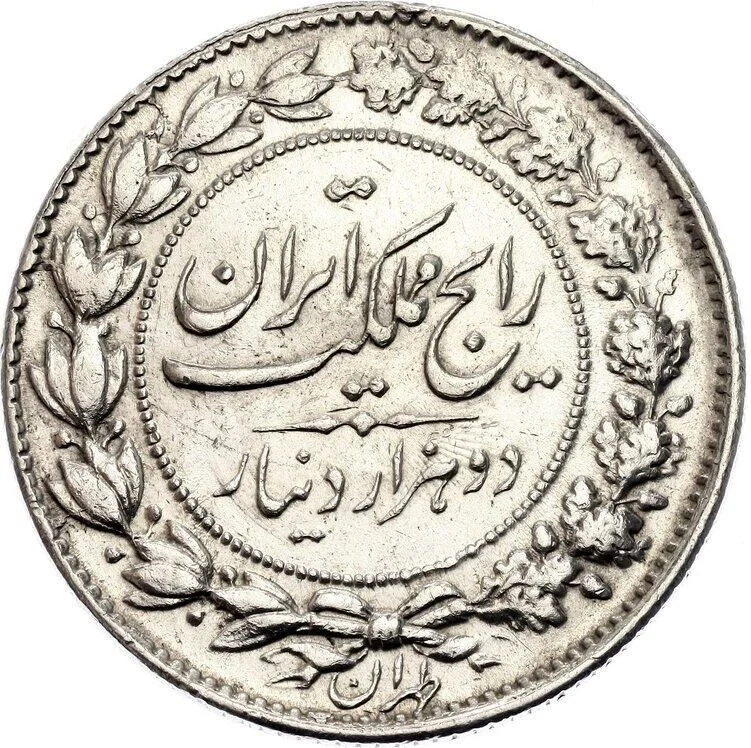
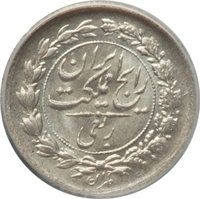
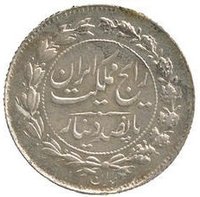
Obverse
Description:
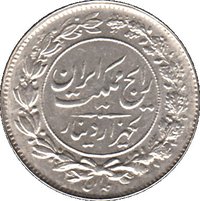
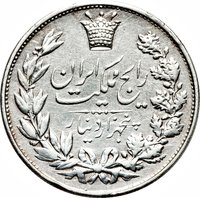
The emblem of Iran.
Inscription:
رایج مملکت ایران
دو هزار دینار
طهران
دو هزار دینار
طهران
Translation:
Current in the Kingdom of Iran
Two Thousand Dinars
Tehran
Two Thousand Dinars
Tehran
Script: Persian (nastaliq)
Language: Persian
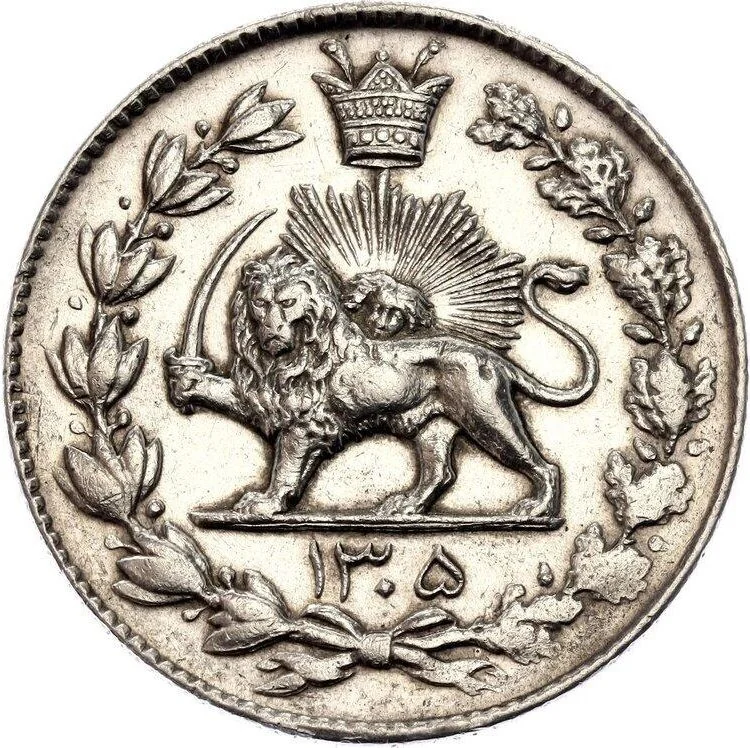
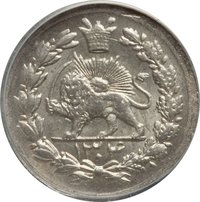
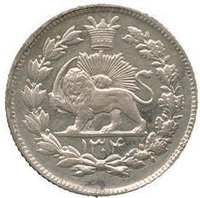
Reverse
Description:
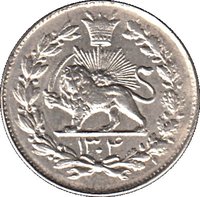
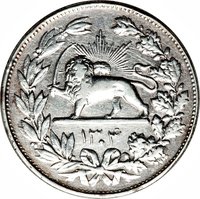
Qajar crown with lion, sun, and oak and olive leaves.
Inscription:
۱۳۰۵
Translation:
1305
Script: Persian (nastaliq)
Language: Persian
Edge
Reeded
Mints
| Name | Mark |
|---|---|
| Tehran | طهران |
Mintings
| Year | Mint Mark | Mintage | Quality | Collection |
|---|---|---|---|---|
| 1925 | — | 11,920,000 | ||
| 1926 | — | 9,785,000 |
Historical background
In 1925, Iran’s currency system was fragmented, unstable, and a significant obstacle to national unity and economic development. The monetary landscape was a chaotic mix of domestic and foreign coins and notes. Domestically, the primary unit was the silver qiran (also kran), but its value and silver content had been debased over decades. Copper shahis and puls were used for small change, while gold tomans (worth 10 qirans) served as a unit of account. Crucially, a vast array of foreign coins, particularly Russian rubles and British sovereigns, circulated widely, especially in the north and south respectively, undermining Iranian sovereignty and causing exchange rate confusion. The state’s inability to control the money supply or enforce a uniform standard created a system rife with uncertainty for merchants and the public.
This monetary disarray was a direct legacy of the Qajar dynasty’s weakness and foreign influence. The 19th century had seen massive concessions to foreign powers, draining silver from the country and preventing the establishment of a national bank. The first attempt at paper money, the Imperial Bank of Persia notes issued by a British concession in the 1890s, were not legal tender and competed with notes from the Russian-owned Loan and Discount Bank of Persia. Thus, Iran’s currency was effectively privatized and internationalized, with its stability tied to external actors rather than the government in Tehran. By 1925, years of war, occupation during World War I, and budgetary crises had led to severe inflation and a further loss of confidence in the already-depreciated coinage.
The ascension of Reza Shah Pahlavi to the throne in December 1925 marked a turning point, with monetary reform becoming an immediate national priority. The new regime saw a unified, state-controlled currency as essential for modernizing the economy, strengthening central authority, and reducing foreign interference. Consequently, the groundwork was being laid in 1925 for the sweeping reforms that would follow, culminating in the 1932 monetary law that introduced the rial as the new official unit, established the National Bank of Iran (Bank Melli) as the sole issuer of notes, and finally ended the circulation of foreign currencies. The currency situation in 1925, therefore, represents the chaotic end of the Qajar era and the precipice of a forced and centralizing Pahlavi modernization.
This monetary disarray was a direct legacy of the Qajar dynasty’s weakness and foreign influence. The 19th century had seen massive concessions to foreign powers, draining silver from the country and preventing the establishment of a national bank. The first attempt at paper money, the Imperial Bank of Persia notes issued by a British concession in the 1890s, were not legal tender and competed with notes from the Russian-owned Loan and Discount Bank of Persia. Thus, Iran’s currency was effectively privatized and internationalized, with its stability tied to external actors rather than the government in Tehran. By 1925, years of war, occupation during World War I, and budgetary crises had led to severe inflation and a further loss of confidence in the already-depreciated coinage.
The ascension of Reza Shah Pahlavi to the throne in December 1925 marked a turning point, with monetary reform becoming an immediate national priority. The new regime saw a unified, state-controlled currency as essential for modernizing the economy, strengthening central authority, and reducing foreign interference. Consequently, the groundwork was being laid in 1925 for the sweeping reforms that would follow, culminating in the 1932 monetary law that introduced the rial as the new official unit, established the National Bank of Iran (Bank Melli) as the sole issuer of notes, and finally ended the circulation of foreign currencies. The currency situation in 1925, therefore, represents the chaotic end of the Qajar era and the precipice of a forced and centralizing Pahlavi modernization.
Series: 1925 Iran circulation coins
⭐ Rare