

20 rand – South Africa
Add to wishlist
South Africa
Context
Material
Diameter: 22 mm
Weight: 7.78 g
Gold Weight:: 7.78 g
Shape: Round
Composition: 99.99% Gold
Standard: Silver quarter ounce
Magnetic: No
Technique: Milled
Alignment: Medal alignment
flip
References
KM: #
Numista: #347278
Value
Exchange value: 20 ZAR
Bullion value: $1193.34
Inflation-adjusted value: 41.23 ZAR
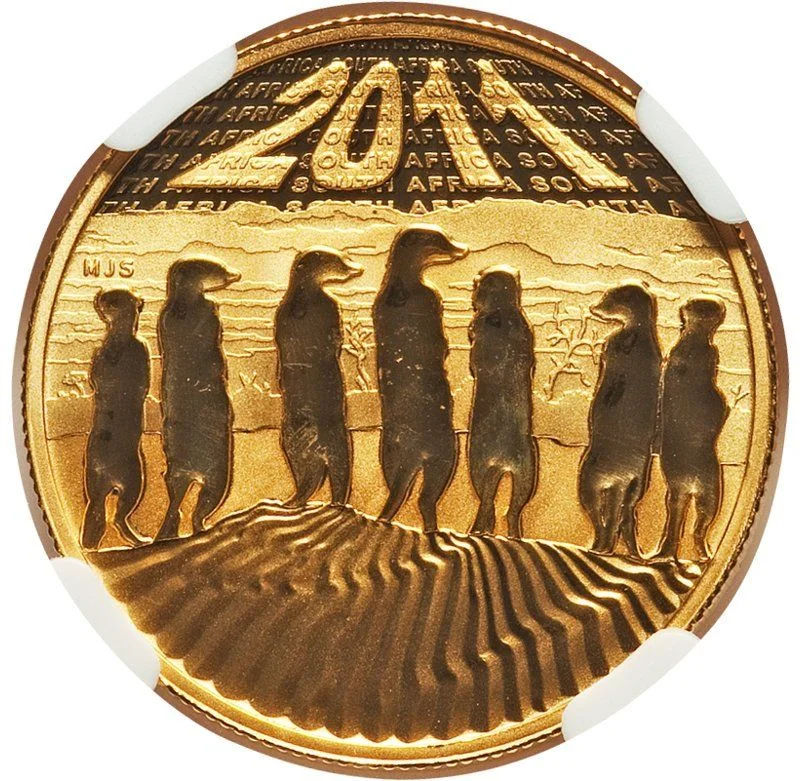
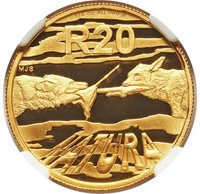
Obverse
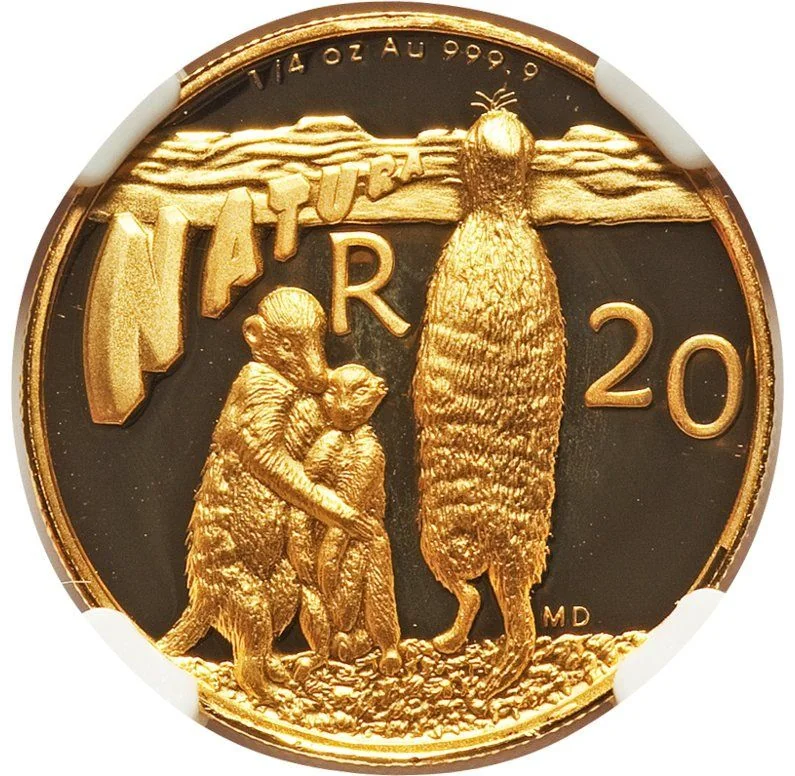
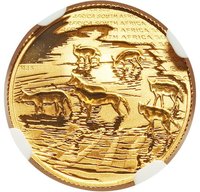
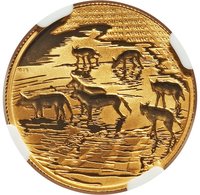
Reverse
Description:
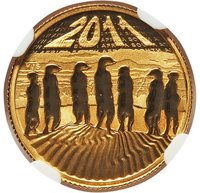
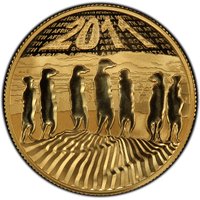
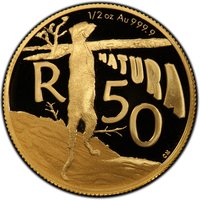
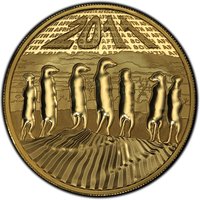
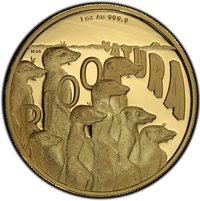
Alert sentinels.
Inscription:
1/4 oz Au 999.9
NATURA
R20
MD
NATURA
R20
MD
Script: Latin
Engraver: Motshabi Daisy Mothobela
Edge
Reeded
Categories
| Animal |
Mintings
| Year | Mint Mark | Mintage | Quality | Collection |
|---|---|---|---|---|
| 2011 | — | 1,312 | Proof |
Historical background
In 2011, South Africa's currency, the rand (ZAR), was characterized by significant volatility and a weakening trend against major currencies like the US dollar. This period followed the global financial crisis, and while the domestic economy was in a fragile recovery, the rand was heavily influenced by external "risk-on, risk-off" sentiment. As a commodity-linked currency, it benefited from high global prices for gold, platinum, and other exports, but remained vulnerable to shifts in international investor appetite for emerging market assets. Domestically, concerns over slow economic growth, high unemployment, and current account deficits added underlying pressure.
A key feature of the 2011 landscape was substantial capital inflows into South African bonds and equities, attracted by relatively high interest rates. However, these "hot money" flows were seen as fickle, amplifying the rand's sensitivity to global events. The European sovereign debt crisis, which escalated in 2011, triggered widespread risk aversion, leading to sharp, sudden sell-offs of the rand as investors retreated to safe-haven assets. This resulted in a pronounced pattern: the rand would strengthen during calm periods on yield-seeking flows, only to plummet during bouts of global market turmoil.
Monetary policy was in a delicate balancing act. The South African Reserve Bank (SARB), under Governor Gill Marcus, had lowered the repo rate to a historic low of 5.5% in late 2010 to stimulate growth, which contributed to the rand's attractiveness for carry trades. However, by 2011, rising inflation—driven by higher fuel and food prices—began to limit the scope for further easing. The SARB's primary mandate to anchor inflation constrained its ability to intervene directly to support the currency, leaving the rand largely at the mercy of global forces and commodity cycles throughout the year.
A key feature of the 2011 landscape was substantial capital inflows into South African bonds and equities, attracted by relatively high interest rates. However, these "hot money" flows were seen as fickle, amplifying the rand's sensitivity to global events. The European sovereign debt crisis, which escalated in 2011, triggered widespread risk aversion, leading to sharp, sudden sell-offs of the rand as investors retreated to safe-haven assets. This resulted in a pronounced pattern: the rand would strengthen during calm periods on yield-seeking flows, only to plummet during bouts of global market turmoil.
Monetary policy was in a delicate balancing act. The South African Reserve Bank (SARB), under Governor Gill Marcus, had lowered the repo rate to a historic low of 5.5% in late 2010 to stimulate growth, which contributed to the rand's attractiveness for carry trades. However, by 2011, rising inflation—driven by higher fuel and food prices—began to limit the scope for further easing. The SARB's primary mandate to anchor inflation constrained its ability to intervene directly to support the currency, leaving the rand largely at the mercy of global forces and commodity cycles throughout the year.
Series: Safari Through Africa
✨ Legendary