

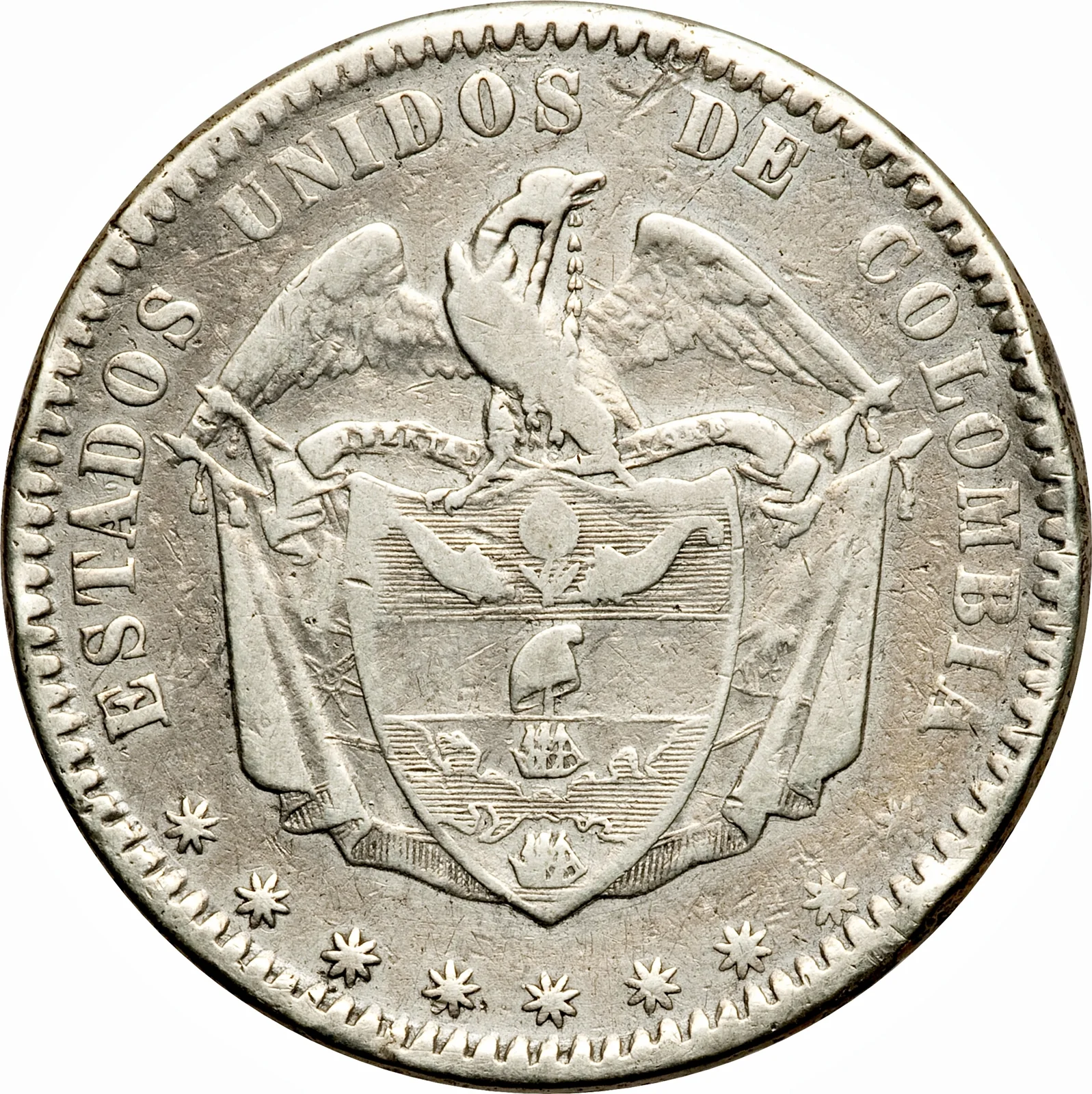
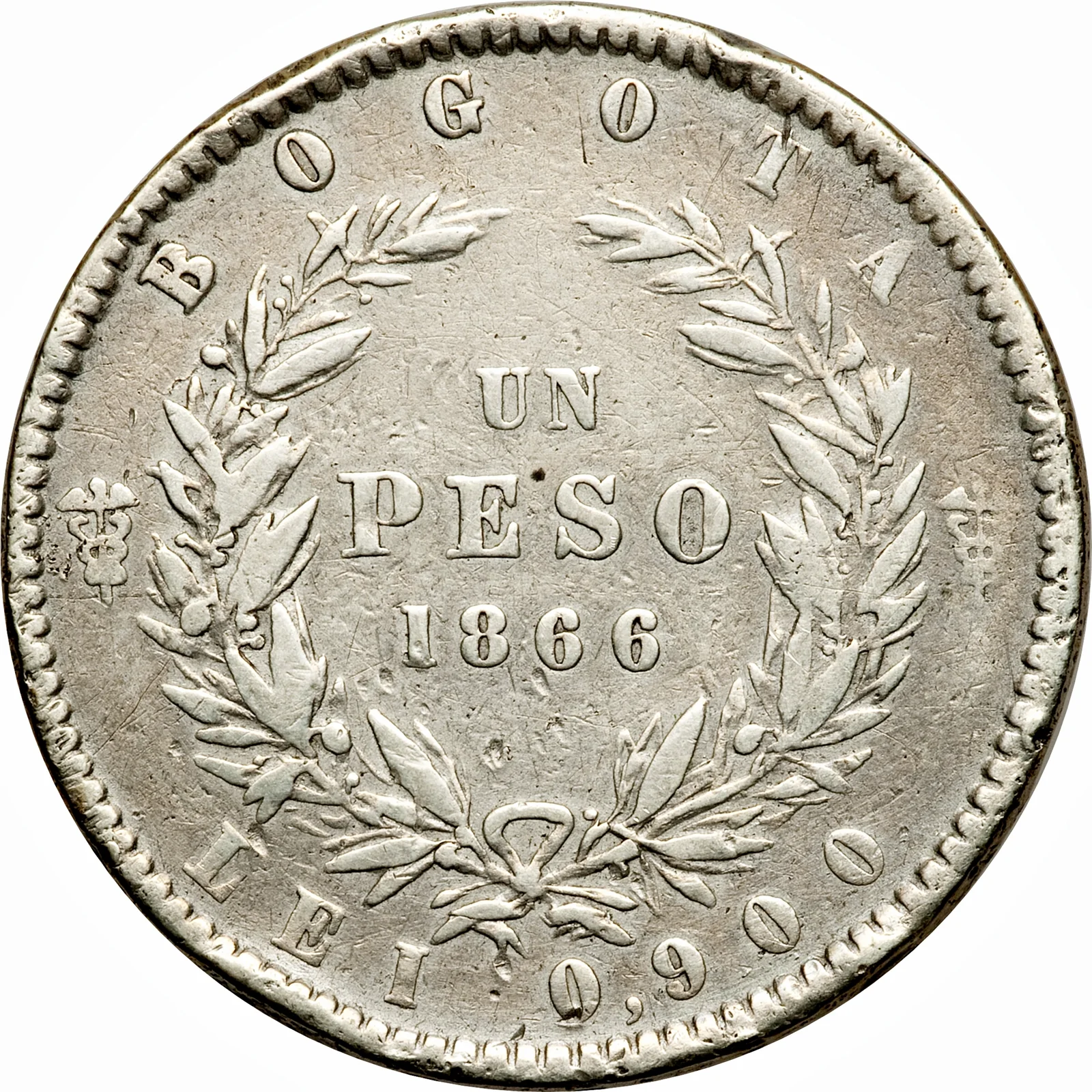
Obverse
Reverse
Description:
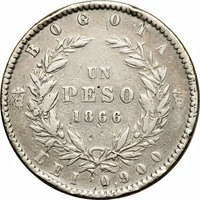
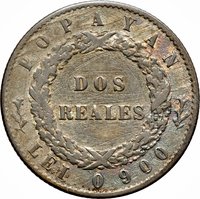
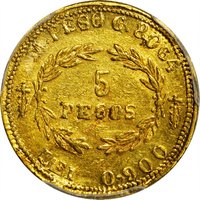
Denomination and year inside wreath. Mint above, fineness below.
Inscription:
BOGOTA
UN PESO
1866
LEI 0,900
UN PESO
1866
LEI 0,900
Script: Latin
Edge
Mints
| Name | Mark |
|---|---|
| Bogota Mint | — |
| Casa de Moneda de Colombia | — |
Mintings
| Year | Mint Mark | Mintage | Quality | Collection |
|---|---|---|---|---|
| 1862 | — | 55,000 | ||
| 1863 | — | — | ||
| 1864 | — | 104,000 | ||
| 1865 | — | 122,000 | ||
| 1866 | — | 91,000 | ||
| 1867 | — | 44,000 | ||
| 1868 | — | 17,000 |
Historical background
In 1862, Colombia was navigating the turbulent aftermath of the 1860-1862 civil war, known as the War of the Cauca, which pitted the centralist government of President Mariano Ospina Rodríguez against federalist forces led by General Tomás Cipriano de Mosquera. The conflict culminated in Mosquera's victory and the establishment of the United States of Colombia under the federalist constitution of 1863. This political upheaval directly shaped the monetary landscape, as the country operated without a unified national currency. The monetary system was a fragmented mix of foreign coins (primarily British sovereigns, French francs, and Peruvian pesos), privately issued banknotes from emerging local banks, and worn and clipped colonial-era Spanish coins that remained in circulation, leading to widespread confusion in trade and valuation.
The federalist model enshrined in the Rionegro Constitution of 1863, which granted immense sovereignty to the nine individual states, exacerbated this monetary disarray. With weak central authority, the federal government lacked the power to issue a uniform national currency. Instead, several sovereign states, as well as private banks authorized by state governments, began issuing their own paper money and coins. This resulted in a proliferation of currencies of varying credibility and value, with rates fluctuating not only based on the issuer's solvency but also on political loyalties and regional economic conditions. Counterfeiting was rampant, and public trust in paper money was generally low.
Consequently, the currency situation in 1862 was one of transition and disorder, caught between the collapse of the old Granadine Confederation's systems and the not-yet-realized monetary ideals of the new federal republic. The primary challenges were the absence of a standardized monetary unit, the inflationary pressures from unregulated note issuance, and the complex task of establishing financial credibility for both the new central government and the state entities. This unstable environment set the stage for the monetary debates and experiments that would characterize the United States of Colombia in the following decades, as the nation grappled with the economic consequences of its radical political decentralization.
The federalist model enshrined in the Rionegro Constitution of 1863, which granted immense sovereignty to the nine individual states, exacerbated this monetary disarray. With weak central authority, the federal government lacked the power to issue a uniform national currency. Instead, several sovereign states, as well as private banks authorized by state governments, began issuing their own paper money and coins. This resulted in a proliferation of currencies of varying credibility and value, with rates fluctuating not only based on the issuer's solvency but also on political loyalties and regional economic conditions. Counterfeiting was rampant, and public trust in paper money was generally low.
Consequently, the currency situation in 1862 was one of transition and disorder, caught between the collapse of the old Granadine Confederation's systems and the not-yet-realized monetary ideals of the new federal republic. The primary challenges were the absence of a standardized monetary unit, the inflationary pressures from unregulated note issuance, and the complex task of establishing financial credibility for both the new central government and the state entities. This unstable environment set the stage for the monetary debates and experiments that would characterize the United States of Colombia in the following decades, as the nation grappled with the economic consequences of its radical political decentralization.
Series: 1862 Colombia circulation coins

💎 Very Rare