

1 pound – Jersey
Add to wishlist
Context
Year: 1984
Country: British Crown dependencies
Issuer: Jersey
Ruler: Elizabeth II
Currency:
(since 1971)
Demonetization: 15 October 2017
Total mintage: 250
Material
References
KM: #
Numista: #346628
Value
Exchange value: 1 JEP
Bullion value: $2779.49
Obverse
Description:
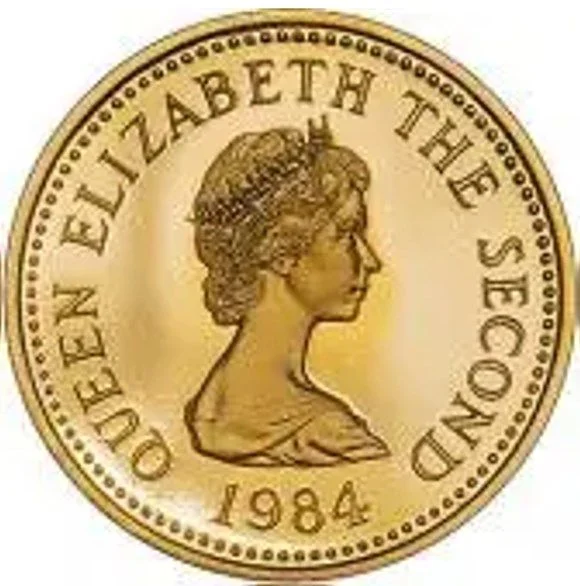
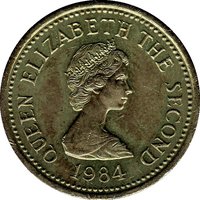
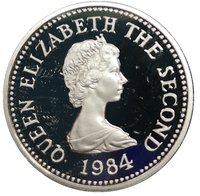
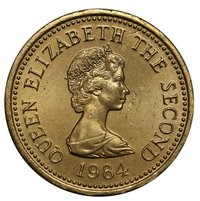
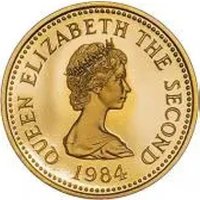
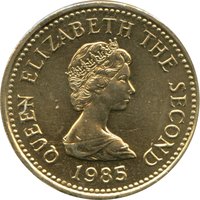
Queen Elizabeth II in profile, wearing the Girls of Great Britain tiara.
Inscription:
QUEEN ELIZABETH THE SECOND
1984
1984
Script: Latin
Engraver: Arnold Machin
Reverse
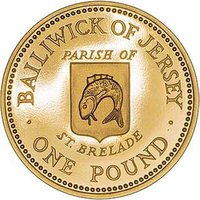
Description:
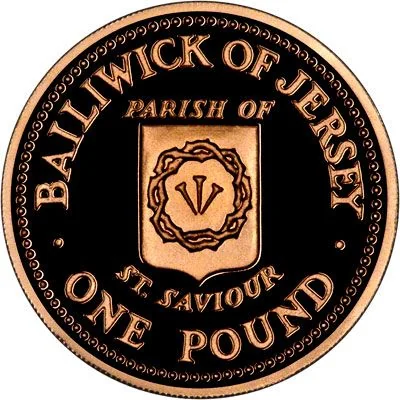
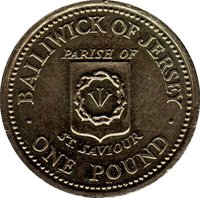
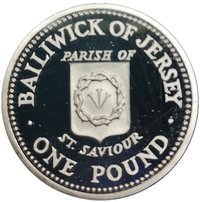
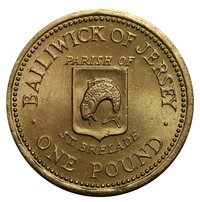
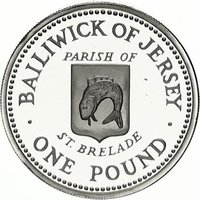
Shield of St. Saviour Parish, bearing a crown of thorns and three nails.
Inscription:
BAILIWICK OF JERSEY
PARISH OF
ST. SAVIOUR
· ONE POUND ·
PARISH OF
ST. SAVIOUR
· ONE POUND ·
Script: Latin
Edge
Inscripted
Legend:
CAESAREA INSULA
Mints
| Name | Mark |
|---|---|
| Royal Mint | — |
Mintings
| Year | Mint Mark | Mintage | Quality | Collection |
|---|---|---|---|---|
| 1984 | — | 250 | Proof |
Historical background
In 1984, the currency situation in Jersey was characterised by its long-standing and stable link to the British pound sterling. As a Crown Dependency with its own government, Jersey issued its own banknotes and coins, which were denominated in pounds and pence. However, these were not a separate currency but local issues of sterling, fully backed by and interchangeable at par with Bank of England notes. This arrangement provided economic stability and facilitated seamless trade and travel with the United Kingdom, Jersey's dominant economic partner.
The system was underpinned by the Currency Notes (Jersey) Law 1959, which required the island's government to hold sterling assets to cover 100% of the value of its issued notes. This conservative monetary policy meant Jersey effectively outsourced its central banking functions to the UK, with no independent interest rate or exchange rate policy. The local notes, featuring distinctive Jersey imagery, served as a symbol of political identity while remaining a component of the wider sterling area.
The year 1984 saw no significant monetary crisis or change, as the system functioned smoothly. However, the period was one of growing financial services sophistication for the island. The stability of its sterling link was a key foundation for Jersey's burgeoning offshore finance sector, providing confidence for international banking and investment businesses establishing a presence there. Discussions about economic autonomy occasionally arose, but the practical benefits of the sterling link ensured its continued dominance as the cornerstone of Jersey's monetary framework.
The system was underpinned by the Currency Notes (Jersey) Law 1959, which required the island's government to hold sterling assets to cover 100% of the value of its issued notes. This conservative monetary policy meant Jersey effectively outsourced its central banking functions to the UK, with no independent interest rate or exchange rate policy. The local notes, featuring distinctive Jersey imagery, served as a symbol of political identity while remaining a component of the wider sterling area.
The year 1984 saw no significant monetary crisis or change, as the system functioned smoothly. However, the period was one of growing financial services sophistication for the island. The stability of its sterling link was a key foundation for Jersey's burgeoning offshore finance sector, providing confidence for international banking and investment businesses establishing a presence there. Discussions about economic autonomy occasionally arose, but the practical benefits of the sterling link ensured its continued dominance as the cornerstone of Jersey's monetary framework.
Series: Parishes of Jersey

✨ Legendary