

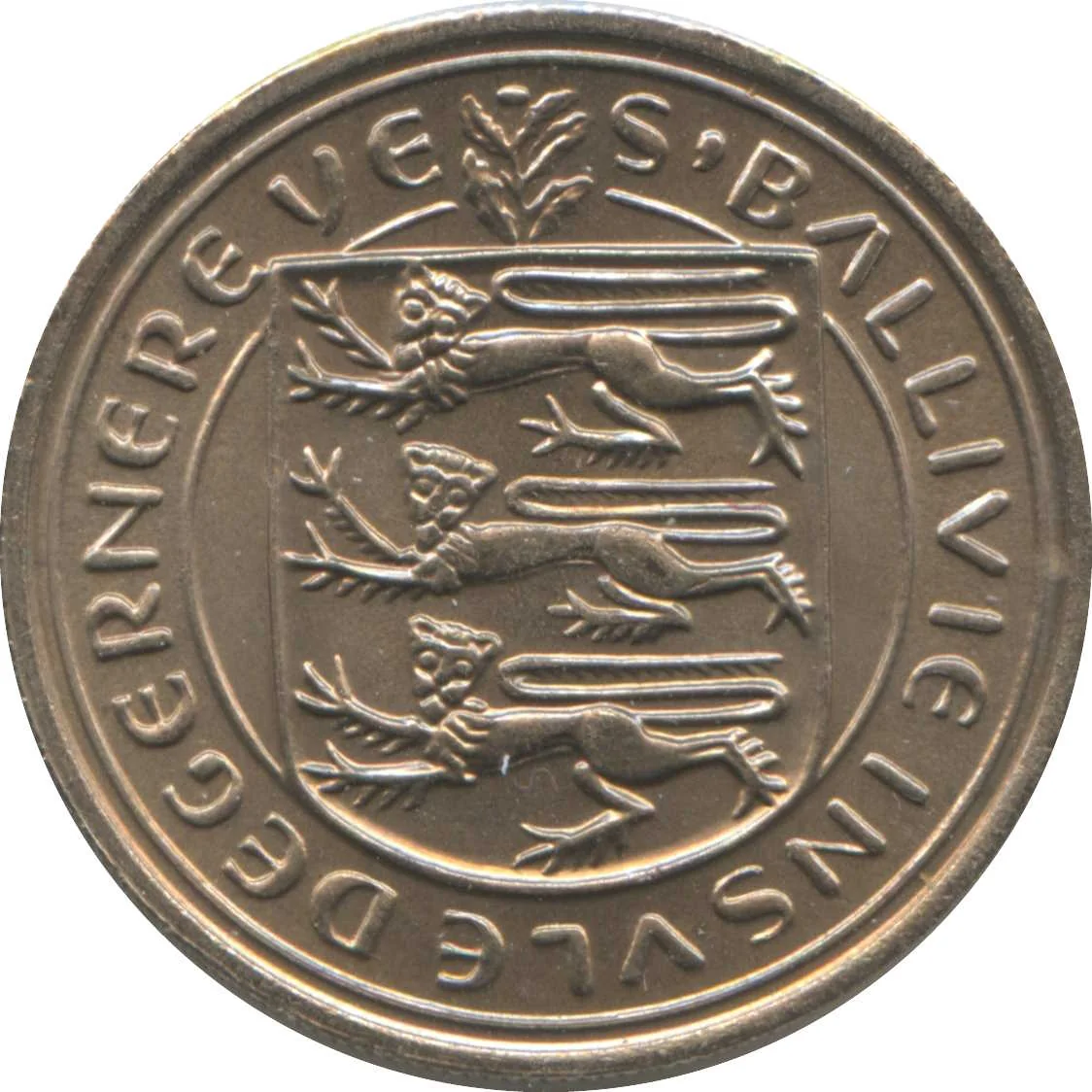
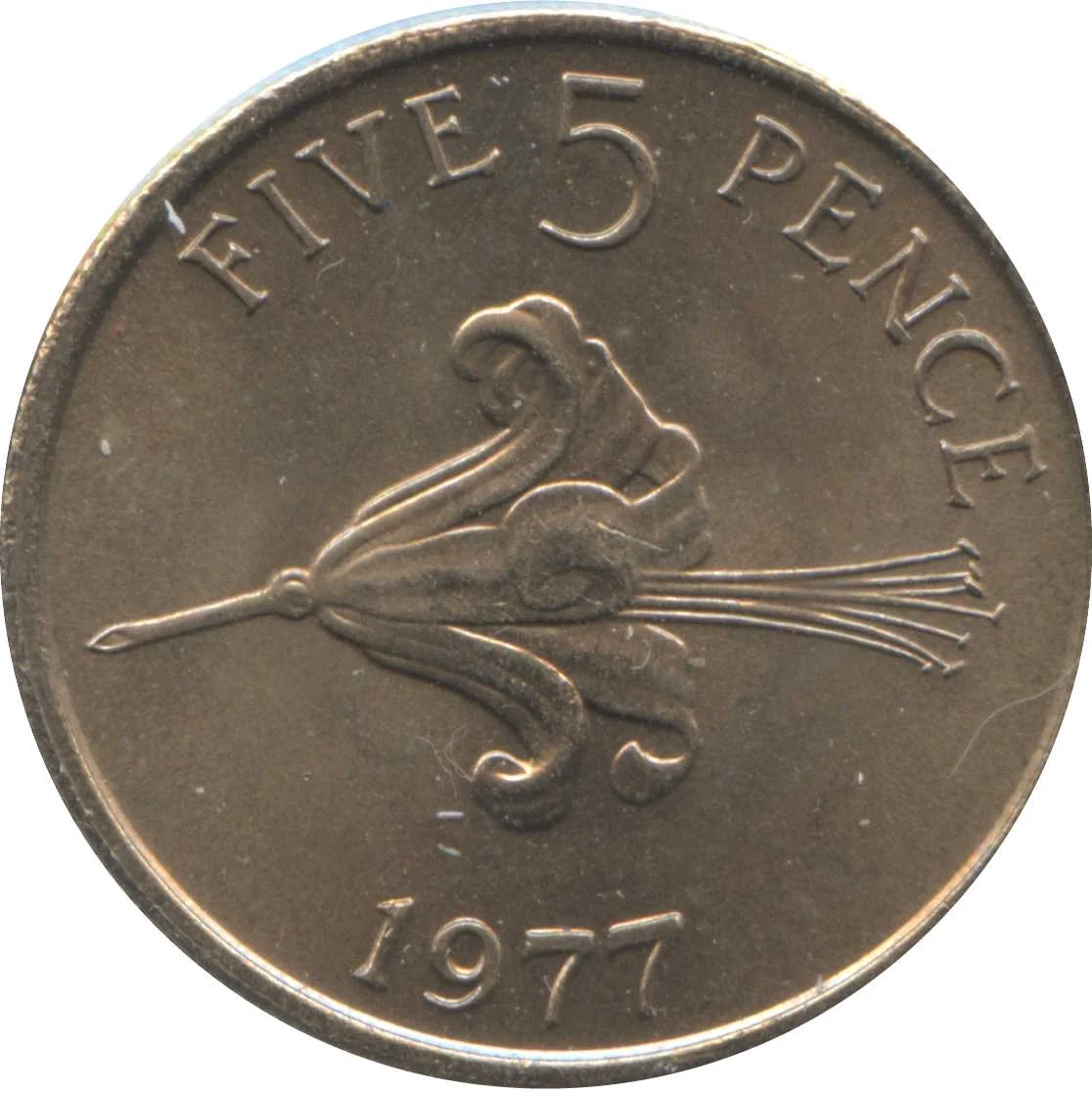
5 pence – Guernsey
Add to wishlist
Context
Years: 1977–1982
Country: British Crown dependencies
Issuer: Guernsey
Ruler: Elizabeth II
Currency:
(since 1971)
Demonetized: Yes
Total mintage: 675,500
Material
References
KM: #
Numista: #3466
Value
Exchange value: 0.05 GGP
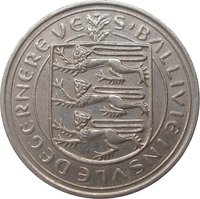
Obverse
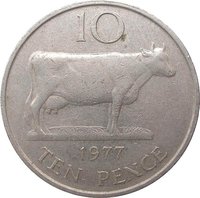
Reverse
Edge
Milled
Categories
| Plants> Flower |
| Symbols> Coat of Arms |
Mints
| Name | Mark |
|---|---|
| Royal Mint | — |
Mintings
| Year | Mint Mark | Mintage | Quality | Collection |
|---|---|---|---|---|
| 1977 | — | 250,000 | ||
| 1979 | — | 200,000 | ||
| 1979 | — | 20,000 | Proof | |
| 1981 | — | 5,500 | Proof | |
| 1982 | — | 200,000 |
Historical background
In 1977, Guernsey's currency situation was characterised by its long-standing and pragmatic reliance on British sterling, but with a distinctive local element. As a British Crown Dependency, the island did not issue an independent currency for general circulation. Instead, the official tender was Bank of England notes, supplemented by Guernsey's own pound-denominated notes and coins. These local issues, first introduced in the early 19th century, were not legal tender in the United Kingdom but were pegged at par with sterling and fully backed by equivalent reserves held in London, ensuring stability and confidence.
The system functioned seamlessly for everyday island life, with Guernsey notes and coins circulating alongside their UK counterparts. However, this arrangement meant Guernsey had no independent monetary policy; its financial conditions were entirely dictated by the Bank of England and the economic climate in mainland Britain. This was a period of economic challenge for the UK, grappling with inflation and seeking International Monetary Fund (IMF) loans, which indirectly influenced Guernsey's financial environment despite the island's healthier fiscal position.
By 1977, this dependency was being actively reconsidered. The previous decade had seen the rapid growth of Guernsey's finance sector, and there was a growing consciousness of the island's unique economic identity. Discussions were underway about establishing a more autonomous monetary authority, which would eventually lead to the creation of the Guernsey Banking Board in 1978. Therefore, 1977 represents a pivotal moment—a stable but entirely derivative currency system was in place, yet the groundwork was being laid for greater financial self-determination in response to the island's evolving economic profile.
The system functioned seamlessly for everyday island life, with Guernsey notes and coins circulating alongside their UK counterparts. However, this arrangement meant Guernsey had no independent monetary policy; its financial conditions were entirely dictated by the Bank of England and the economic climate in mainland Britain. This was a period of economic challenge for the UK, grappling with inflation and seeking International Monetary Fund (IMF) loans, which indirectly influenced Guernsey's financial environment despite the island's healthier fiscal position.
By 1977, this dependency was being actively reconsidered. The previous decade had seen the rapid growth of Guernsey's finance sector, and there was a growing consciousness of the island's unique economic identity. Discussions were underway about establishing a more autonomous monetary authority, which would eventually lead to the creation of the Guernsey Banking Board in 1978. Therefore, 1977 represents a pivotal moment—a stable but entirely derivative currency system was in place, yet the groundwork was being laid for greater financial self-determination in response to the island's evolving economic profile.
Series: 1977 Guernsey circulation coins
🌱 Common