

1 pound – United Kingdom
Add to wishlist
United Kingdom
Context
Year: 1994
Issuer: United Kingdom
Ruler: Elizabeth II
Currency:
(since 1971)
Demonetization: 15 October 2017
Total mintage: 29,997,216
Material
Diameter: 22.5 mm
Weight: 9.5 g
Thickness: 3.15 mm
Shape: Round
Composition: Nickel brass
Magnetic: No
Technique: Milled
Alignment: Medal alignment
flip
References
KM: #
Numista: #1391
Value
Exchange value: 1 GBP
Inflation-adjusted value: 2.60 GBP
Obverse
Description:
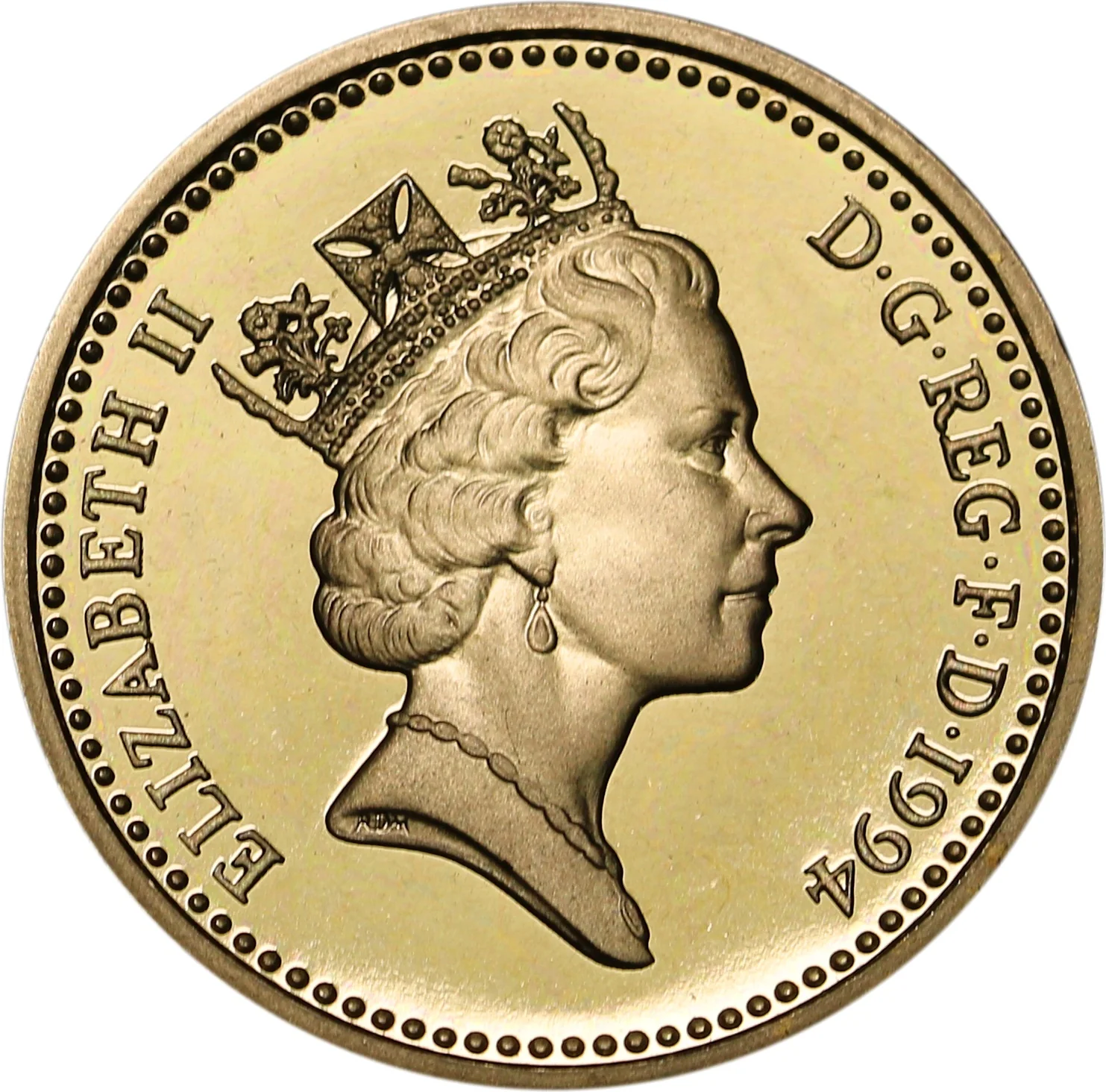
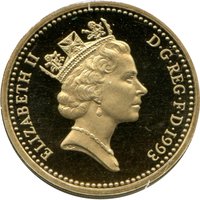
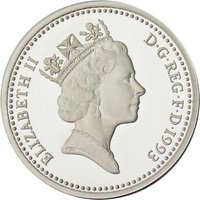
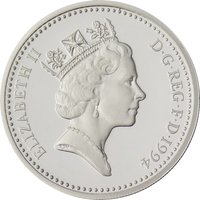
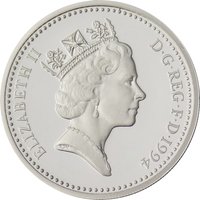
Queen Elizabeth III crowned right, wearing the George IV State Diadem.
Inscription:
ELIZABETH II D·G·REG·F·D·1994
RDM
RDM
Translation:
Elizabeth II, by the Grace of God, Queen, Defender of the Faith, 1994
Script: Latin
Engraver: Raphael David Maklouf
Reverse
Description:
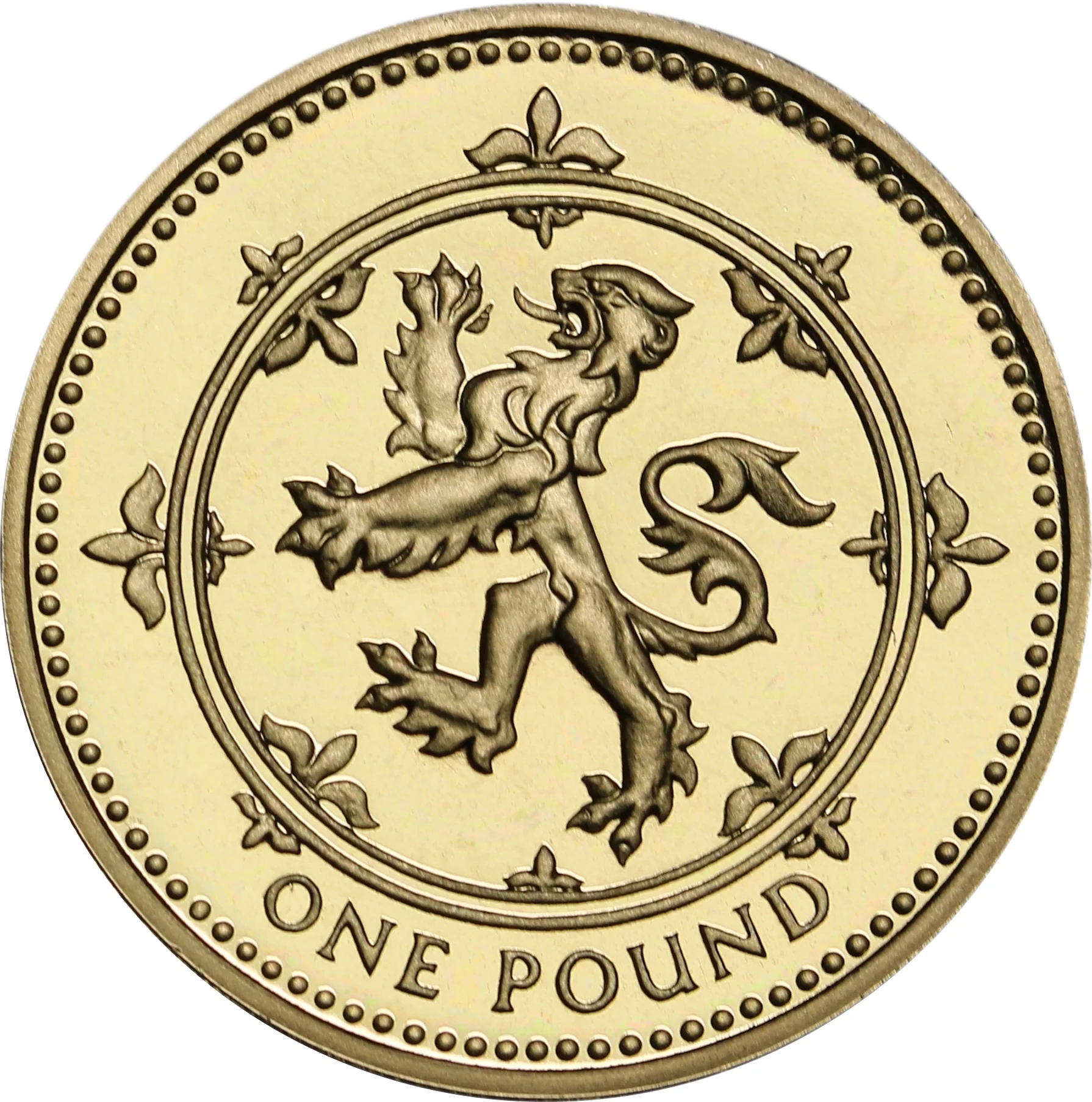
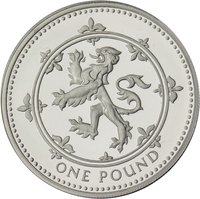
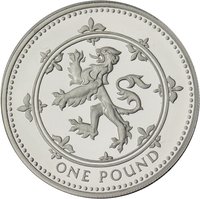
A lion rampant within a double tressure flory counter-flory.
Inscription:
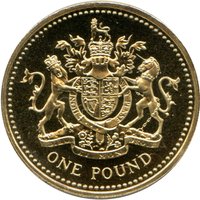
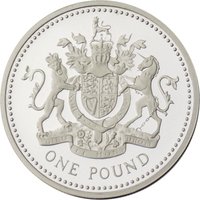
ONE POUND
Script: Latin
Engraver: Norman Sillman
Edge
Milled with incuse lettering
Legend:
NEMO ME IMPUNE LACESSIT
Translation:
No one attacks me with impunity.
Language: Latin
Mints
| Name | Mark |
|---|---|
| Royal Mint | — |
Mintings
| Year | Mint Mark | Mintage | Quality | Collection |
|---|---|---|---|---|
| 1994 | — | 29,752,525 | ||
| 1994 | — | 66,720 | Proof | |
| 1994 | — | 177,971 | BU |
Historical background
In 1994, the United Kingdom's currency situation was defined by a period of fragile stability and cautious optimism following the traumatic exit from the European Exchange Rate Mechanism (ERM) in September 1992. The event, known as "Black Wednesday," had forced a sterling devaluation and shattered the government's anti-inflationary credibility. By 1994, sterling was floating freely, and the Conservative government, under Prime Minister John Major and Chancellor Kenneth Clarke, had adopted a new monetary policy framework focused on explicit inflation targets, set at 1-4% with a goal of 2.5% or less. This marked a significant shift away from exchange rate targeting and towards domestic price stability as the primary anchor for economic policy.
The economy in 1994 was in a strong recovery phase from the early 1990s recession, which put upward pressure on sterling. The currency appreciated significantly through the year, buoyed by rising interest rates—the Bank of England's base rate increased from 5.25% in January to 6.25% by year-end—and strong inward investment flows. This strength was a double-edged sword: it helped keep import prices and inflation in check, but it also began to threaten the competitiveness of UK exporters. The government and the Treasury welcomed the strong pound as a sign of restored international confidence, yet remained wary of the speculative forces that had caused the ERM crisis.
Politically, the currency situation was less volatile than in preceding years, but the shadow of Black Wednesday loomed large. The government avoided any formal discussion of rejoining the ERM or preparing for a future single European currency, as the issue remained deeply divisive within the Conservative Party and the country. The focus was firmly on managing the domestic recovery and establishing the credibility of the new inflation-targeting regime, a policy evolution that would ultimately pave the way for the operational independence granted to the Bank of England in 1997. Thus, 1994 represented a transitional year where sterling stabilized, but the broader debate about the UK's place in the European monetary system was deliberately set aside.
The economy in 1994 was in a strong recovery phase from the early 1990s recession, which put upward pressure on sterling. The currency appreciated significantly through the year, buoyed by rising interest rates—the Bank of England's base rate increased from 5.25% in January to 6.25% by year-end—and strong inward investment flows. This strength was a double-edged sword: it helped keep import prices and inflation in check, but it also began to threaten the competitiveness of UK exporters. The government and the Treasury welcomed the strong pound as a sign of restored international confidence, yet remained wary of the speculative forces that had caused the ERM crisis.
Politically, the currency situation was less volatile than in preceding years, but the shadow of Black Wednesday loomed large. The government avoided any formal discussion of rejoining the ERM or preparing for a future single European currency, as the issue remained deeply divisive within the Conservative Party and the country. The focus was firmly on managing the domestic recovery and establishing the credibility of the new inflation-targeting regime, a policy evolution that would ultimately pave the way for the operational independence granted to the Bank of England in 1997. Thus, 1994 represented a transitional year where sterling stabilized, but the broader debate about the UK's place in the European monetary system was deliberately set aside.
Series: Heraldic Emblems series
🌱 Very Common