

ōban "tenpō ōban" – Japan
Add to wishlist
Japan
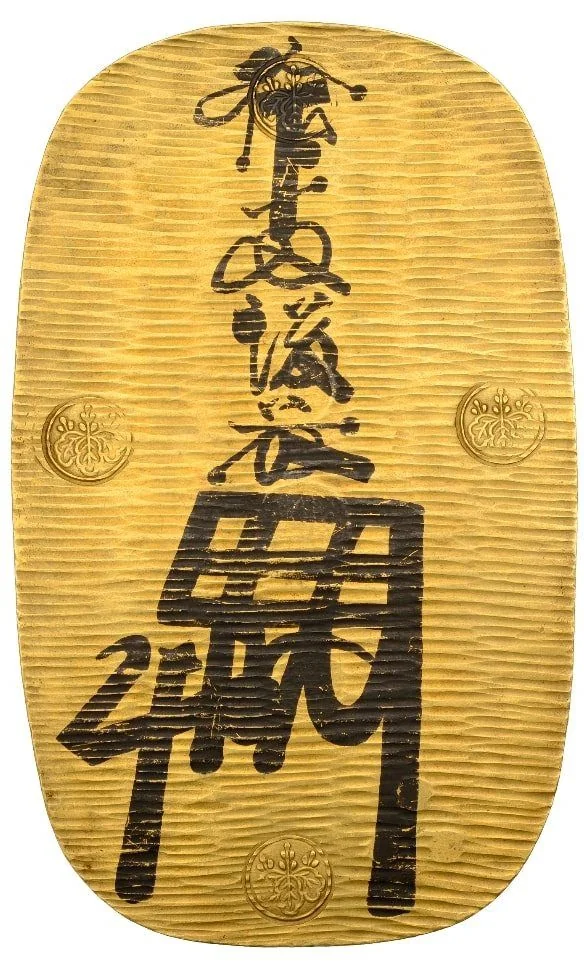
Obverse
Description:
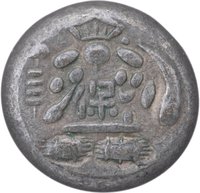
Handwritten vertical text with four Kiri crest stamps and handmade horizontal crenellation.
Inscription:
拾
両
後
藤
両
後
藤
Translation:
Ten Ryo
Goto
Goto
Scripts: Chinese (traditional, grass script)
Language: Japanese
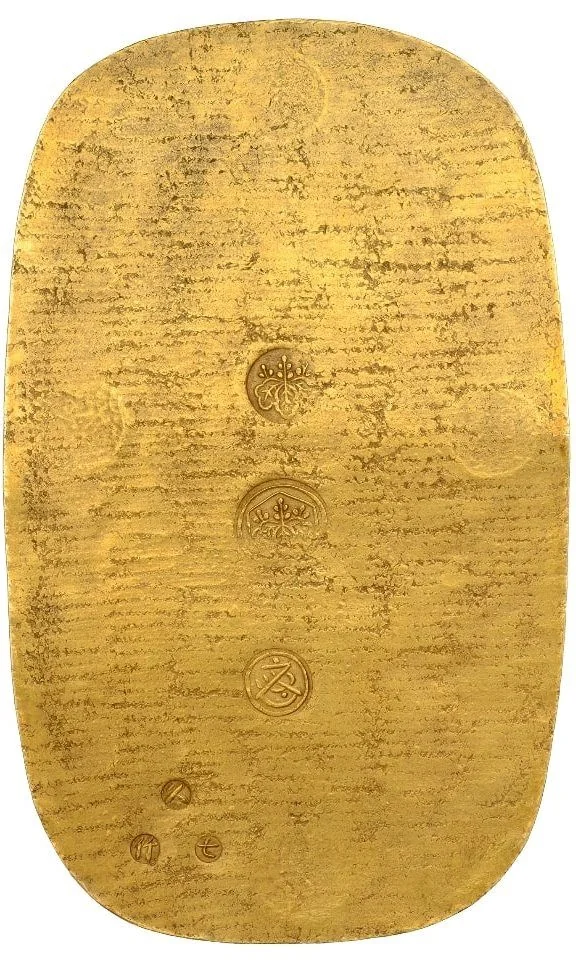
Reverse
Description:
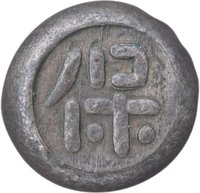
Three vertical stamps centered, three smaller ones lower left.
Edge
Mintings
| Year | Mint Mark | Mintage | Quality | Collection |
|---|---|---|---|---|
| 1838 | — | 243 | ||
| 1841 | — | — |
Historical background
In 1838, Japan operated under the Tokugawa shogunate's complex and strained monetary system, which was based on a tri-metallic standard of gold, silver, and copper coins. The official currency, the Koban (gold oval coin) and Ichibu-gin (silver rectangular coin), were minted by the shogunate. However, the system was fragmented: gold coins were dominant in the east (Edo), while silver was used by weight in the west (Osaka), and a vast array of local hansatsu (domainal paper notes) circulated alongside, creating a confusing and inefficient national economy.
This period fell within the Tenpō era (1830-1844), a time marked by severe financial crisis and social unrest. Decades of debasement by the shogunate to cover its deficits had severely eroded the value of official currency, leading to rampant inflation. The fixed exchange rates between gold and silver set by the government failed to reflect market realities, encouraging smuggling and arbitrage. Furthermore, widespread famine in the 1830s (the Tenpō famines) exacerbated economic hardship, causing sharp price increases for rice and basic commodities, which the unstable currency system could not mitigate.
Consequently, by 1838, the shogunate was under immense pressure to enact reform. The Tenpō Reforms, initiated in 1841-1843 under Mizuno Tadakuni, would attempt to address these monetary woes by recalling old debased coins, minting new ones with higher precious metal content, and attempting to suppress the proliferation of hansatsu. These efforts, however, proved largely unsuccessful in the long term, failing to restore fiscal stability or public confidence, and highlighting the deepening structural weaknesses of the Tokugawa regime on the eve of increased Western pressure.
This period fell within the Tenpō era (1830-1844), a time marked by severe financial crisis and social unrest. Decades of debasement by the shogunate to cover its deficits had severely eroded the value of official currency, leading to rampant inflation. The fixed exchange rates between gold and silver set by the government failed to reflect market realities, encouraging smuggling and arbitrage. Furthermore, widespread famine in the 1830s (the Tenpō famines) exacerbated economic hardship, causing sharp price increases for rice and basic commodities, which the unstable currency system could not mitigate.
Consequently, by 1838, the shogunate was under immense pressure to enact reform. The Tenpō Reforms, initiated in 1841-1843 under Mizuno Tadakuni, would attempt to address these monetary woes by recalling old debased coins, minting new ones with higher precious metal content, and attempting to suppress the proliferation of hansatsu. These efforts, however, proved largely unsuccessful in the long term, failing to restore fiscal stability or public confidence, and highlighting the deepening structural weaknesses of the Tokugawa regime on the eve of increased Western pressure.
✨ Legendary