

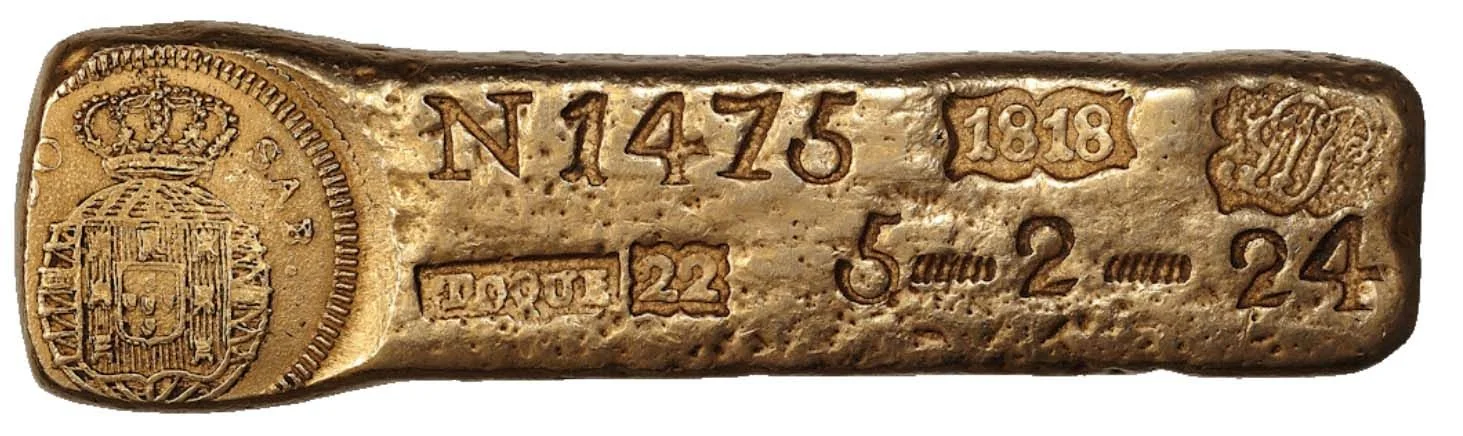
75000 Réis – Brazil
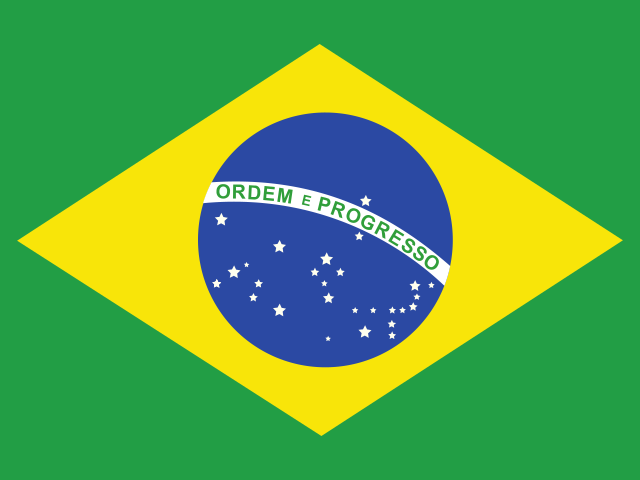
Brazil
Material
Weight: 151.73 g
Gold weight: 139.14 g
Thickness: 20 mm
Shape: Irregular rectangular
Composition: 91.7% Gold
Magnetic: No
Technique: Cast
References
Numista: #342047
Value
Bullion value: $23198.27
Obverse
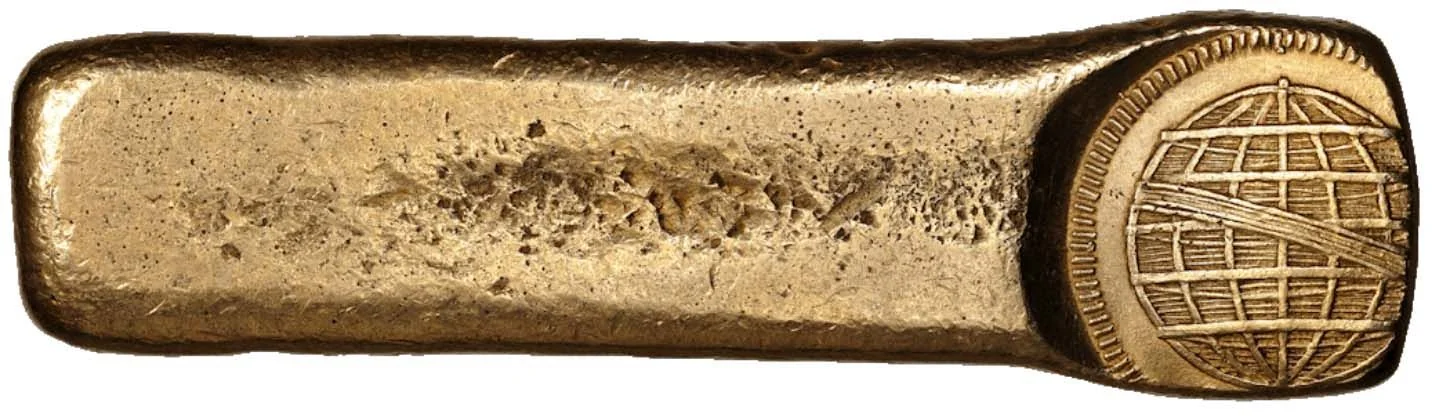
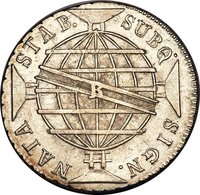
Reverse
Description:
Armillary sphere
Edge
Mintings
| Year | Mint Mark | Mintage | Quality | Collection |
|---|---|---|---|---|
| 1817 | — | — | ||
| 1818 | — | — | ||
| 1819 | — | — |
Historical background
In 1817, Brazil's currency situation was a complex reflection of its unique political status within the Portuguese Empire. Since 1808, the Portuguese court had been resident in Rio de Janeiro, making Brazil the seat of the monarchy. This led to the 1815 elevation of Brazil to a kingdom co-equal with Portugal in the "United Kingdom of Portugal, Brazil and the Algarves." Financially, this period was marked by significant strain. The costs of maintaining the royal court, funding wars along the southern border (such as the annexation of the Banda Oriental), and financing public works created a heavy fiscal burden. To meet these expenses, the government under King João VI heavily relied on loans from foreign, particularly British, bankers and the issuance of paper money.
The primary circulating medium was copper réis coins, but their value was unstable due to chronic shortages and widespread clipping and counterfeiting. More significantly, the first major issue of paper money in Brazil had begun in 1808 with the founding of the Banco do Brasil. This paper currency, intended to facilitate commerce and government finance, was not fully convertible to gold and began to depreciate almost immediately. By 1817, a growing disparity existed between the face value of these banknotes and their real value in metallic currency, leading to a deságio (discount). This effectively created a two-tiered monetary system where transactions often required a premium for payment in gold or silver.
This fragile monetary environment formed a critical backdrop to the political unrest of the year, most notably the Pernambuco Revolution of 1817. While rooted in republican and nationalist sentiment against Portuguese centralization, the rebellion's economic grievances were acute. The northern sugar-growing provinces, like Pernambuco, felt economically exploited to fund the court in Rio de Janeiro. The depreciating paper money and chaotic currency system exacerbated commercial difficulties and local resentment, contributing to the revolt's popular support. Thus, in 1817, Brazil's currency was not just an economic tool but a symbol of imperial strain and a catalyst for the first major secessionist movement in the kingdom's history.
The primary circulating medium was copper réis coins, but their value was unstable due to chronic shortages and widespread clipping and counterfeiting. More significantly, the first major issue of paper money in Brazil had begun in 1808 with the founding of the Banco do Brasil. This paper currency, intended to facilitate commerce and government finance, was not fully convertible to gold and began to depreciate almost immediately. By 1817, a growing disparity existed between the face value of these banknotes and their real value in metallic currency, leading to a deságio (discount). This effectively created a two-tiered monetary system where transactions often required a premium for payment in gold or silver.
This fragile monetary environment formed a critical backdrop to the political unrest of the year, most notably the Pernambuco Revolution of 1817. While rooted in republican and nationalist sentiment against Portuguese centralization, the rebellion's economic grievances were acute. The northern sugar-growing provinces, like Pernambuco, felt economically exploited to fund the court in Rio de Janeiro. The depreciating paper money and chaotic currency system exacerbated commercial difficulties and local resentment, contributing to the revolt's popular support. Thus, in 1817, Brazil's currency was not just an economic tool but a symbol of imperial strain and a catalyst for the first major secessionist movement in the kingdom's history.
✨ Legendary