

2 shillings – Southern Rhodesia
Add to wishlist
Zimbabwe
Context
Year: 1937
Country: Zimbabwe
Issuer: Southern Rhodesia
Ruler: George VI
Currency:
(1932—1955)
Demonetization: 1 June 1965
Material
References
KM: #
Numista: #34086
Value
Bullion value: $26.73
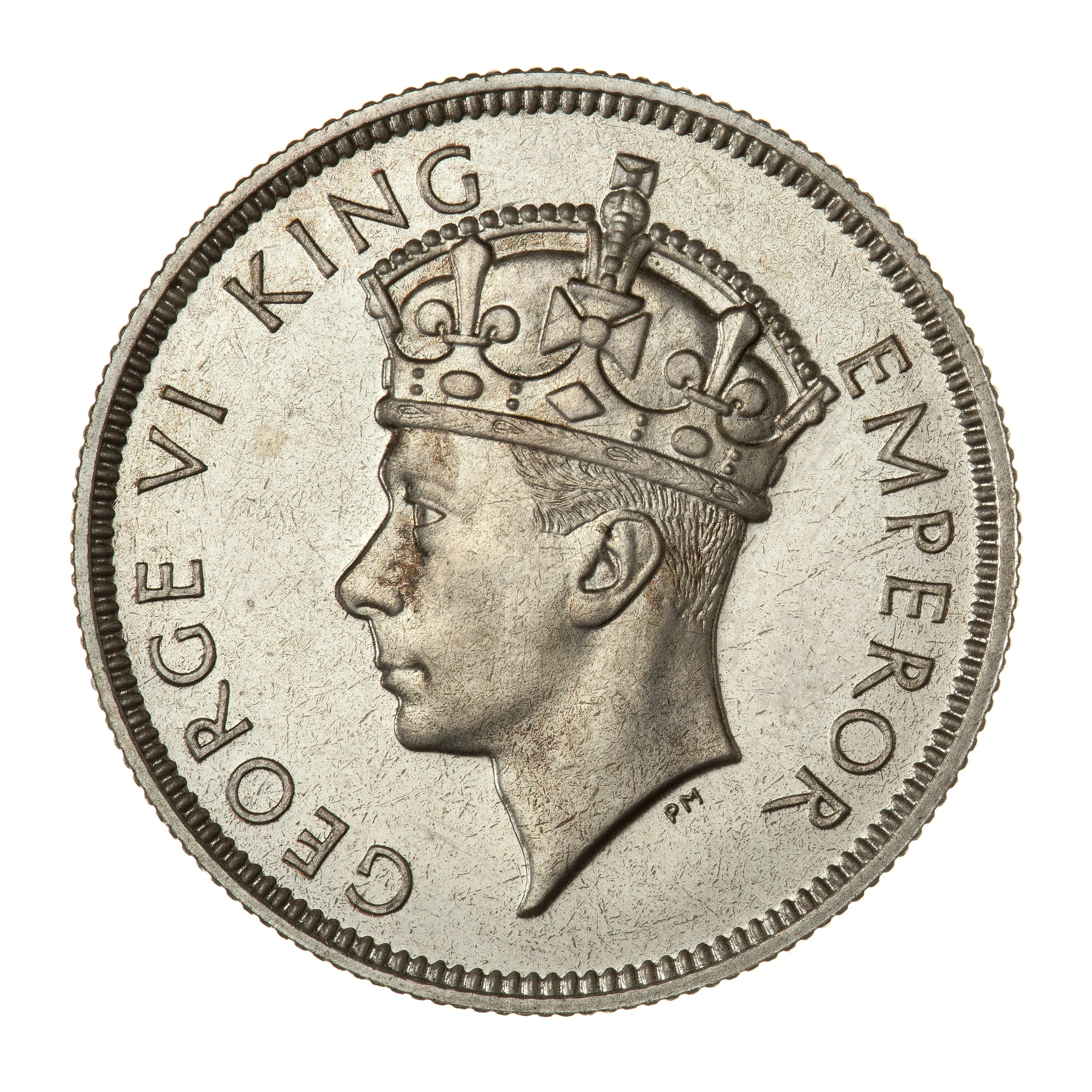
Obverse
Description:
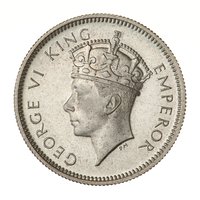
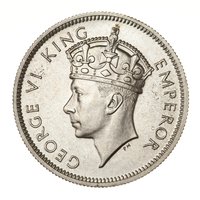
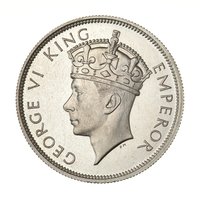
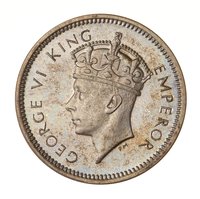
Portrait of George VI, King of the United Kingdom (1936–1952).
Inscription:
GEORGE VI KING EMPEROR
PM
PM
Translation:
GEORGE VI KING EMPEROR
PM
PM
Script: Latin
Language: English
Engraver: Percy Metcalfe
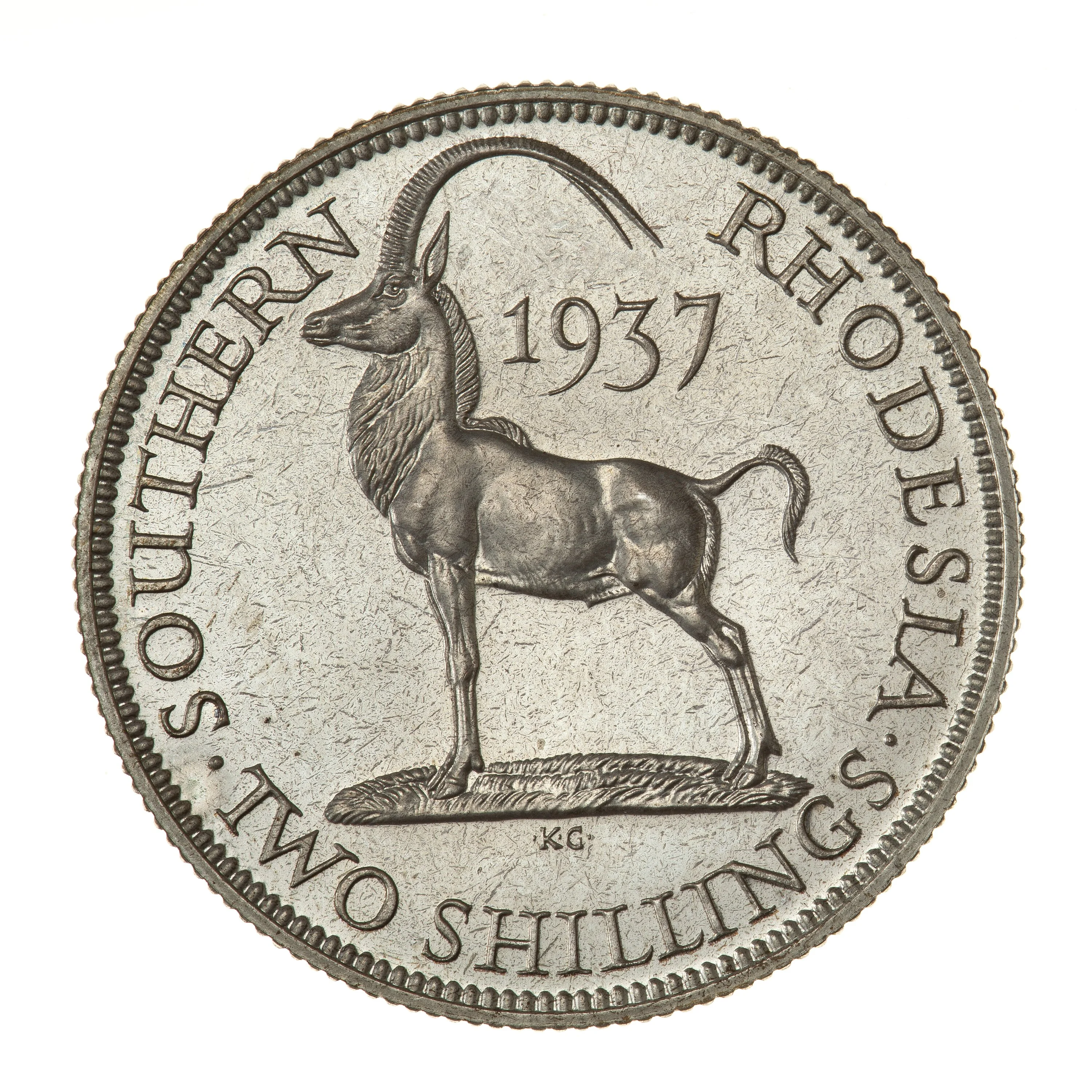
Reverse
Description:
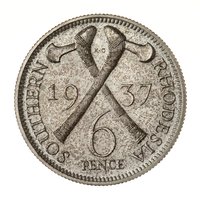
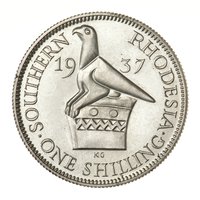
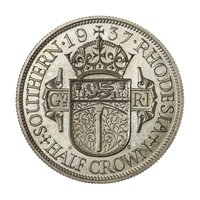
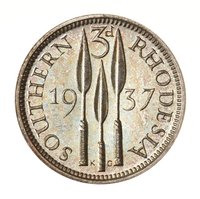
Sable Antelope (Hippotragus niger) facing left, with name and denomination.
Inscription:
· SOUTHERN RHODESIA ·
1937
KG
·TWO SHILLINGS·
1937
KG
·TWO SHILLINGS·
Script: Latin
Engraver: George Kruger Gray
Edge
Reeded
Mints
| Name | Mark |
|---|---|
| Royal Mint (Tower Hill) | — |
Mintings
| Year | Mint Mark | Mintage | Quality | Collection |
|---|---|---|---|---|
| 1937 | — | — | ||
| 1937 | — | — | Proof |
Historical background
In 1937, the currency situation in Southern Rhodesia was defined by its integration within the broader sterling area and the Southern African monetary system. The colony did not issue its own independent currency but used the Southern Rhodesian pound, which was at parity with, and fully backed by, the British pound sterling. This meant that local currency in circulation—notes issued by the Currency Board of Southern Rhodesia and coins from the Royal Mint—was directly convertible and held an equivalent value to sterling, ensuring monetary stability and facilitating trade with Britain, its dominant economic partner.
This currency regime was administratively linked with those of Northern Rhodesia and Nyasaland under the auspices of the Southern Rhodesia Currency Board, established in 1938 (succeeding earlier arrangements). While a practical step toward regional monetary coordination, the board's operations were fundamentally conservative; it acted as a passive currency board, issuing local notes only in exchange for sterling deposits and maintaining a 100% sterling reserve. This system prioritized stability over independent monetary policy, directly tying Southern Rhodesia's money supply to its balance of payments and sterling reserves.
Economically, this arrangement supported the colony's export-driven economy, which was heavily reliant on gold, tobacco, and other primary commodities sold on world markets for sterling. The fixed parity provided certainty for British investors and settlers. However, it also meant Southern Rhodesia had no mechanism to devalue its currency or adjust interest rates independently to address local economic conditions, effectively outsourcing its monetary policy to the Bank of England. This framework reflected the colony's political and economic alignment with Britain on the eve of World War II, a relationship that would later be formalized in the 1950s with the creation of a federal currency for the Central African Federation.
This currency regime was administratively linked with those of Northern Rhodesia and Nyasaland under the auspices of the Southern Rhodesia Currency Board, established in 1938 (succeeding earlier arrangements). While a practical step toward regional monetary coordination, the board's operations were fundamentally conservative; it acted as a passive currency board, issuing local notes only in exchange for sterling deposits and maintaining a 100% sterling reserve. This system prioritized stability over independent monetary policy, directly tying Southern Rhodesia's money supply to its balance of payments and sterling reserves.
Economically, this arrangement supported the colony's export-driven economy, which was heavily reliant on gold, tobacco, and other primary commodities sold on world markets for sterling. The fixed parity provided certainty for British investors and settlers. However, it also meant Southern Rhodesia had no mechanism to devalue its currency or adjust interest rates independently to address local economic conditions, effectively outsourcing its monetary policy to the Bank of England. This framework reflected the colony's political and economic alignment with Britain on the eve of World War II, a relationship that would later be formalized in the 1950s with the creation of a federal currency for the Central African Federation.
⭐ Somewhat Rare