

300 Dollars – Canada
Canada
Context

Material
Diameter: 30 mm
Weight: 31.1 g
Platinum weight: 31.08 g
Thickness: 2.6 mm
Shape: Round
Composition: 99.95% Platinum
Standard: Silver ounce
Technique: Milled
Alignment: Medal alignment
flip
References
KM: #Click to copy to clipboard281
Numista: #340523
Value
Exchange value: 300 CAD = $219.39
Bullion value: $0.00
Inflation-adjusted value: 554.60 CAD
Obverse
Description:
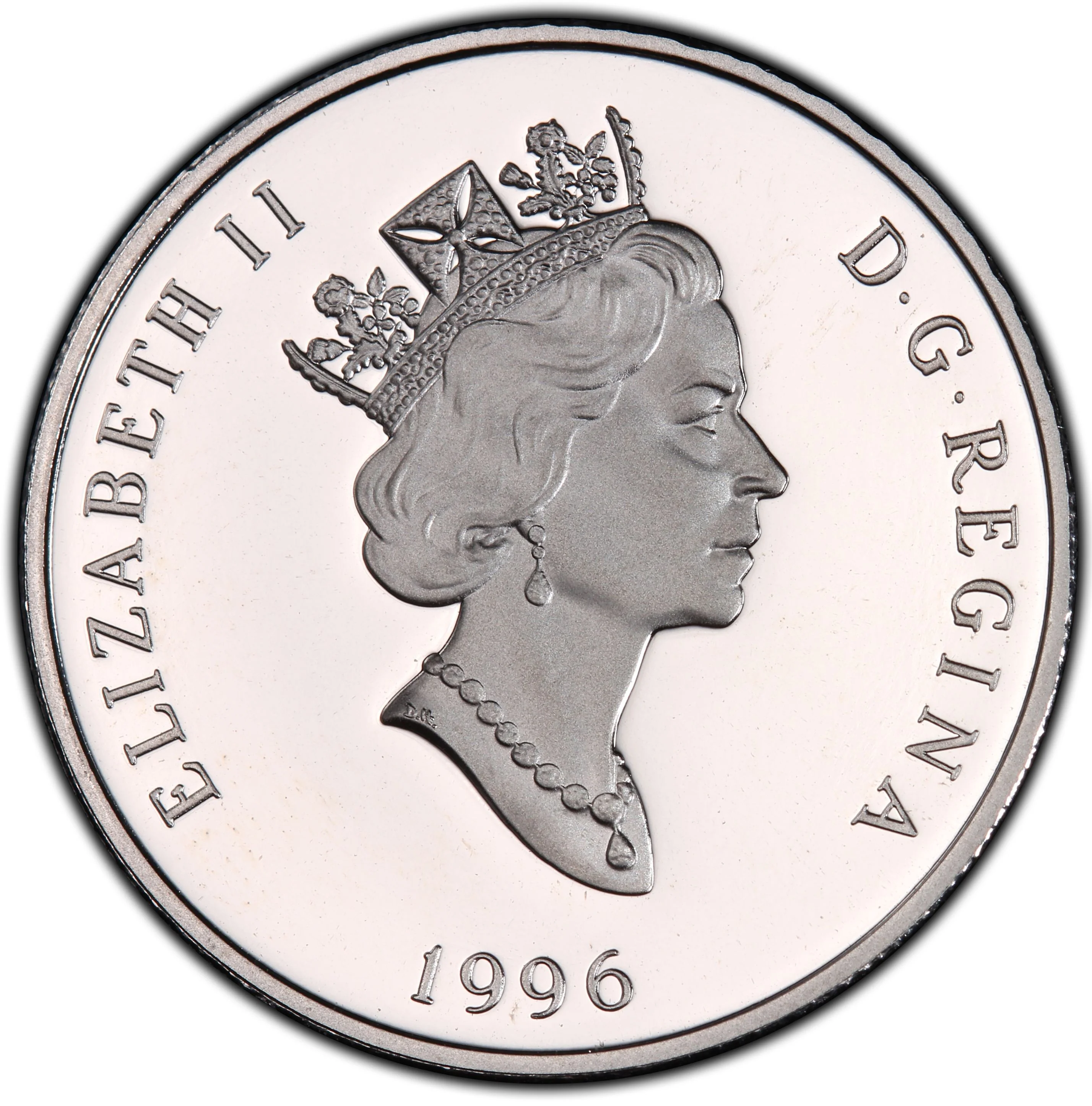
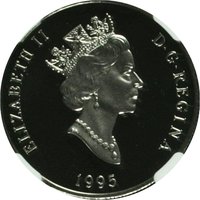
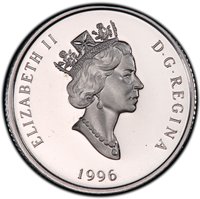
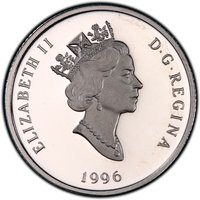
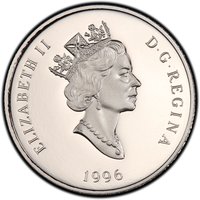
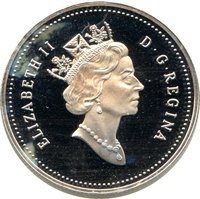
Queen Elizabeth II at 64, wearing the royal diadem and jewels, facing right.
Inscription:
ELIZABETH II D•G•REGINA
1996
1996
Translation:
Elizabeth II, by the Grace of God, Queen
1996
1996
Script: Latin
Language: Latin
Designer and engraver: Dora de Pédery-Hunt
Reverse
Description:
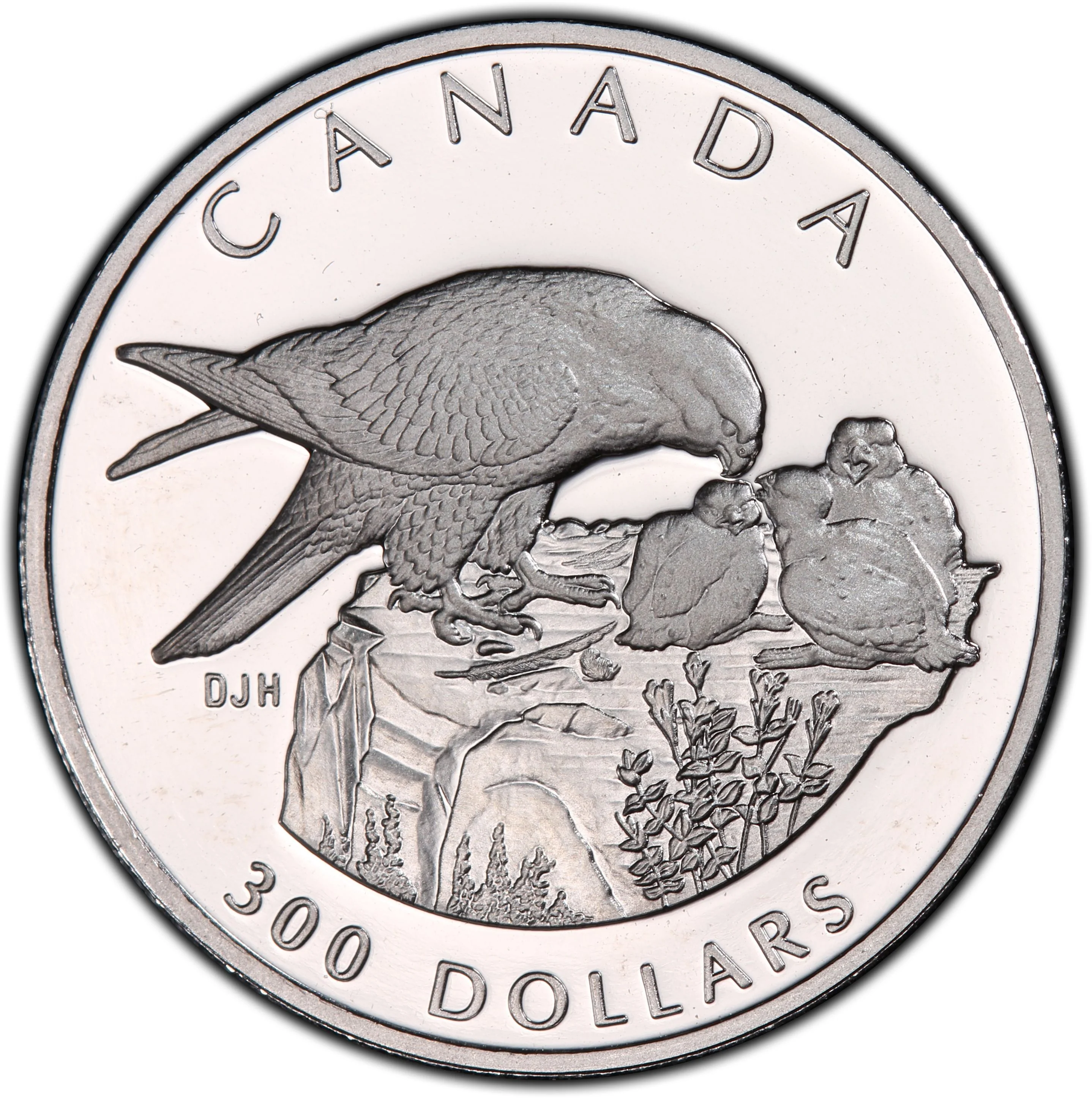
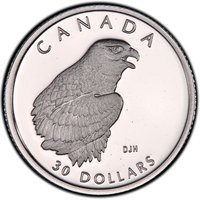
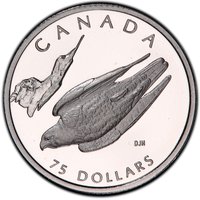
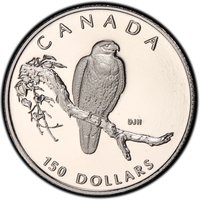
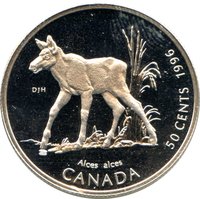
Peregrine falcon feeding its young.
Inscription:
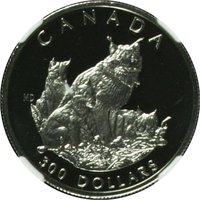
CANADA
300 DOLLARS
DJH
300 DOLLARS
DJH
Script: Latin
Engraver: Sheldon Beveridge
Designer: Dwayne Harty
Edge
Serrated
Mints
| Name | Mark |
|---|---|
| Royal Canadian Mint of Ottawa | — |
Mintings
| Year | Mint Mark | Mintage | Quality | Collection |
|---|---|---|---|---|
| 1996 | — | 675 | Proof |
Historical background
In 1996, the Canadian dollar was under significant pressure, trading near historic lows against the United States dollar. The currency, often called the "loonie" following the introduction of the one-dollar coin in 1987, spent much of the year fluctuating in a range between approximately 72 and 74 US cents. This weakness was driven by several structural factors, including high government debt levels, lingering concerns over Quebec sovereignty following the razor-thin defeat of the 1995 referendum, and relatively higher interest rates in the United States, which attracted capital flows south of the border.
The economic context was one of cautious recovery and fiscal consolidation. The Chrétien government, having taken office in 1993, was aggressively pursuing deficit reduction through spending cuts, aiming to restore confidence in Canada's public finances. While this austerity was seen as necessary for long-term stability, it also contributed to subdued domestic economic growth in the mid-1990s, which did little to bolster the currency. Furthermore, Canada's export sector remained heavily tied to commodities, and soft global prices for resources like lumber and minerals added to the bearish sentiment on the loonie.
By the end of 1996, the currency's persistent weakness was a central topic of economic discussion, viewed as a symptom of both a lack of international confidence and competitive challenges. However, the low dollar also provided a significant boost to exporters, making Canadian goods cheaper on the international market. This period set the stage for a pivotal shift; the federal deficit was finally eliminated in 1997-98, which, combined with a strengthening global economy and rising commodity prices, would soon catalyze a dramatic and sustained recovery in the Canadian dollar's value in the early 2000s.
The economic context was one of cautious recovery and fiscal consolidation. The Chrétien government, having taken office in 1993, was aggressively pursuing deficit reduction through spending cuts, aiming to restore confidence in Canada's public finances. While this austerity was seen as necessary for long-term stability, it also contributed to subdued domestic economic growth in the mid-1990s, which did little to bolster the currency. Furthermore, Canada's export sector remained heavily tied to commodities, and soft global prices for resources like lumber and minerals added to the bearish sentiment on the loonie.
By the end of 1996, the currency's persistent weakness was a central topic of economic discussion, viewed as a symptom of both a lack of international confidence and competitive challenges. However, the low dollar also provided a significant boost to exporters, making Canadian goods cheaper on the international market. This period set the stage for a pivotal shift; the federal deficit was finally eliminated in 1997-98, which, combined with a strengthening global economy and rising commodity prices, would soon catalyze a dramatic and sustained recovery in the Canadian dollar's value in the early 2000s.
Series: Canadian Wildlife platinum
✨ Legendary