

1 white shahi – Iran
Add to wishlist
Iran
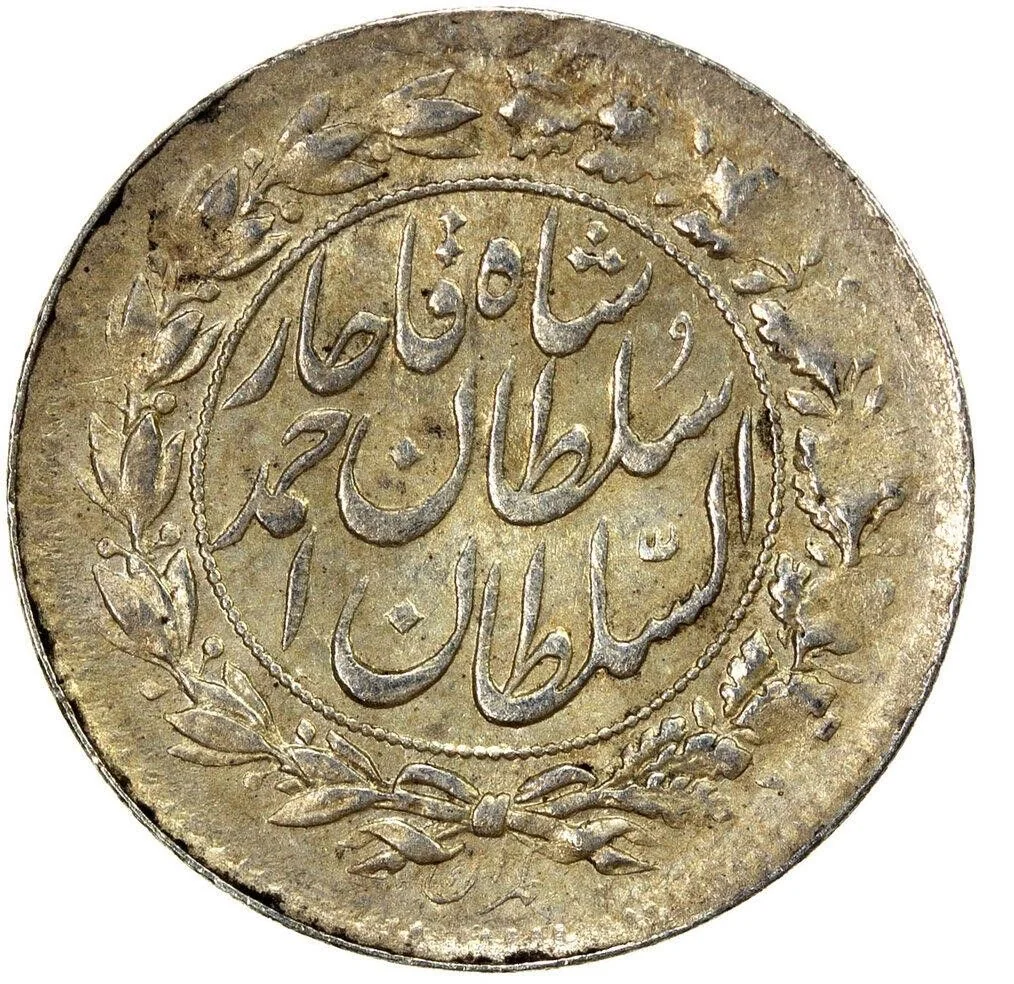
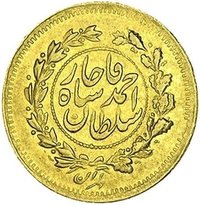
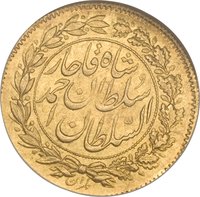
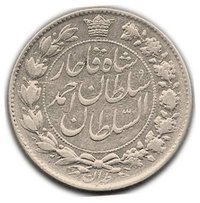
Obverse
Description:
Three-line inscription in circle, surrounded by wreath.
Script: Persian (nastaliq)
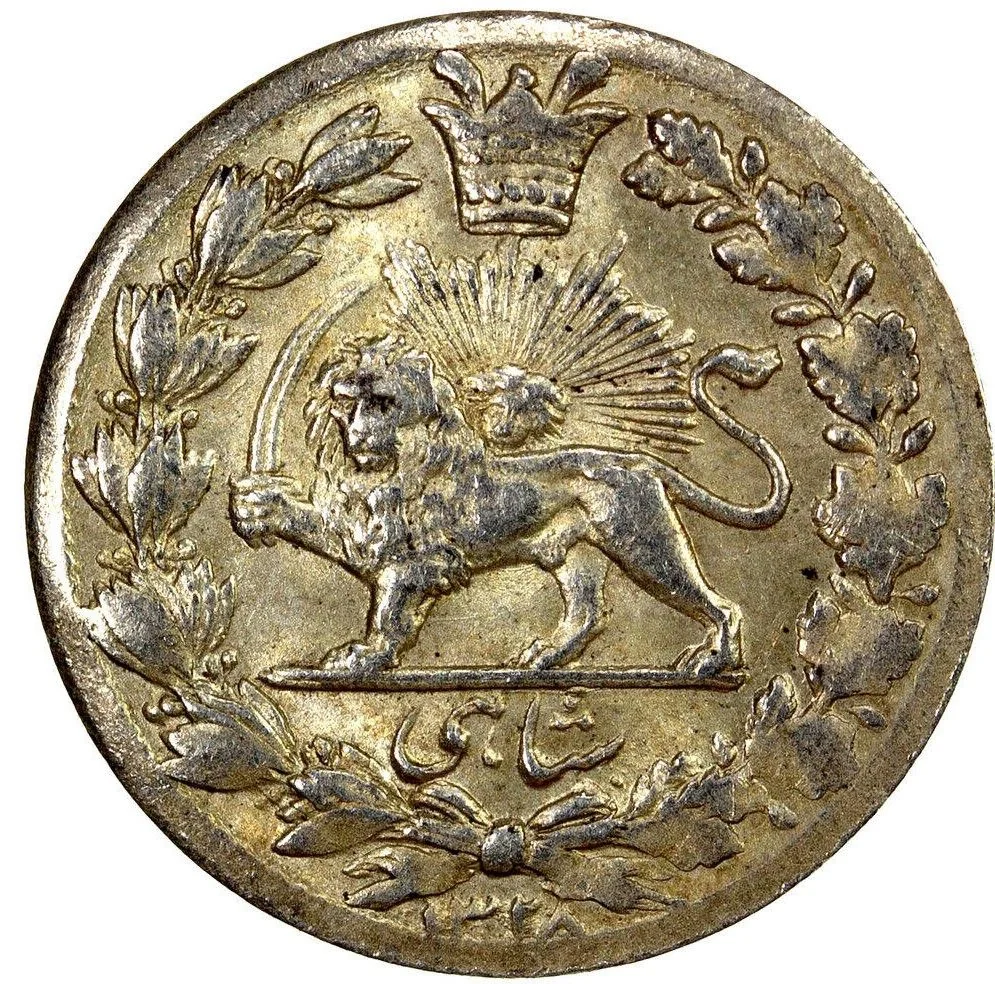
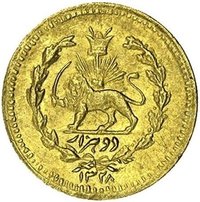
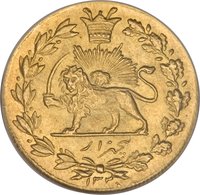
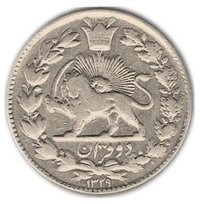
Reverse
Description:
Lion with sword, crowned, before a radiant sun.
Inscription:
شاهی
١٣٢٨
١٣٢٨
Translation:
Shah
1328
1328
Script: Persian (nastaliq)
Languages: Arabic numerals, Persian
Edge
Mintings
| Year | Mint Mark | Mintage | Quality | Collection |
|---|---|---|---|---|
| 1910 | — | — | ||
| 1911 | — | — | ||
| 1912 | — | — |
Historical background
In 1910, Iran’s currency system was in a state of profound crisis and chaotic fragmentation, a direct legacy of the Qajar dynasty’s economic mismanagement and foreign interference. The monetary landscape was a confusing patchwork of domestic and foreign coins. The primary unit was the qiran (sometimes kran), a silver coin, but its value and silver content had been severely debased over decades to finance state deficits. Alongside it circulated a multitude of gold tomans, Russian rubles, British sovereigns, and Ottoman coins, with exchange rates fluctuating wildly. The government had little control over the money supply, as provincial authorities, tribal leaders, and even private merchants issued their own copper and silver coins, leading to a complete lack of standardization.
This monetary anarchy was exacerbated by severe inflation and a dramatic fall in the international value of the currency. A key trigger was the global drop in the price of silver in the late 19th century, which collapsed the value of the silver-based qiran. By 1910, it took nearly 20 debased qirans to equal one gold toman, a drastic devaluation from earlier rates. This inflation devastated the economy, hurting wage-earners and creating widespread public distrust in the currency. Transactions became fraught with complexity, as merchants needed scales to weigh coins and constant references to exchange bulletins to conduct business.
The crisis was both a symptom and a cause of Iran’s political weakness. European powers, particularly Russia and Britain, exerted significant economic influence, and their banks further complicated the financial system. Attempts at reform, like the establishment of the Bank-i Melli-i Iran (National Bank of Iran) in 1928, lay in the future. Therefore, in 1910, the currency situation reflected a nation on the brink of transformation—financially paralyzed, socially strained, and underscoring the urgent need for the centralized economic and political reforms that would later characterize the rise of Reza Shah Pahlavi.
This monetary anarchy was exacerbated by severe inflation and a dramatic fall in the international value of the currency. A key trigger was the global drop in the price of silver in the late 19th century, which collapsed the value of the silver-based qiran. By 1910, it took nearly 20 debased qirans to equal one gold toman, a drastic devaluation from earlier rates. This inflation devastated the economy, hurting wage-earners and creating widespread public distrust in the currency. Transactions became fraught with complexity, as merchants needed scales to weigh coins and constant references to exchange bulletins to conduct business.
The crisis was both a symptom and a cause of Iran’s political weakness. European powers, particularly Russia and Britain, exerted significant economic influence, and their banks further complicated the financial system. Attempts at reform, like the establishment of the Bank-i Melli-i Iran (National Bank of Iran) in 1928, lay in the future. Therefore, in 1910, the currency situation reflected a nation on the brink of transformation—financially paralyzed, socially strained, and underscoring the urgent need for the centralized economic and political reforms that would later characterize the rise of Reza Shah Pahlavi.
✨ Legendary