

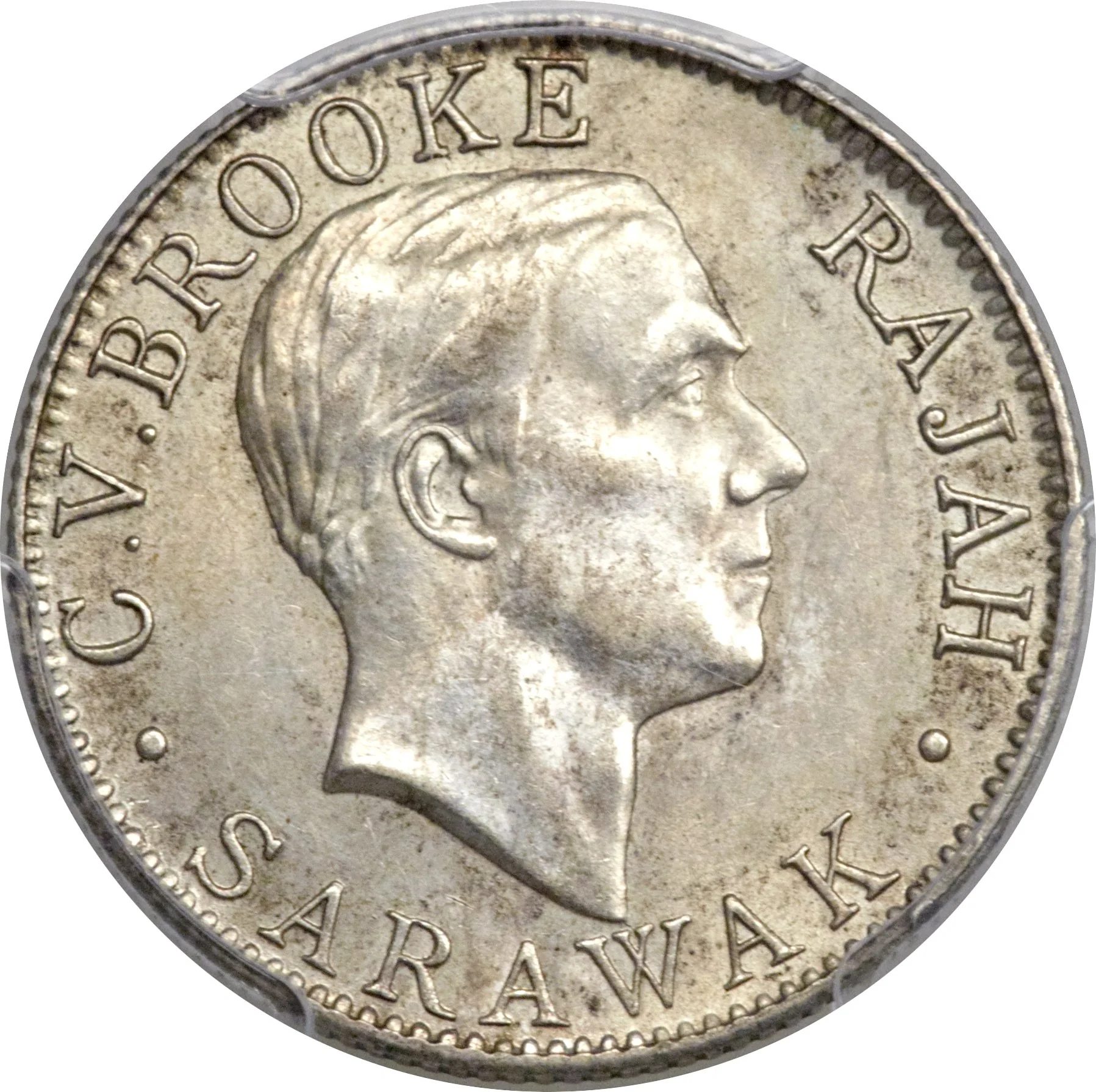
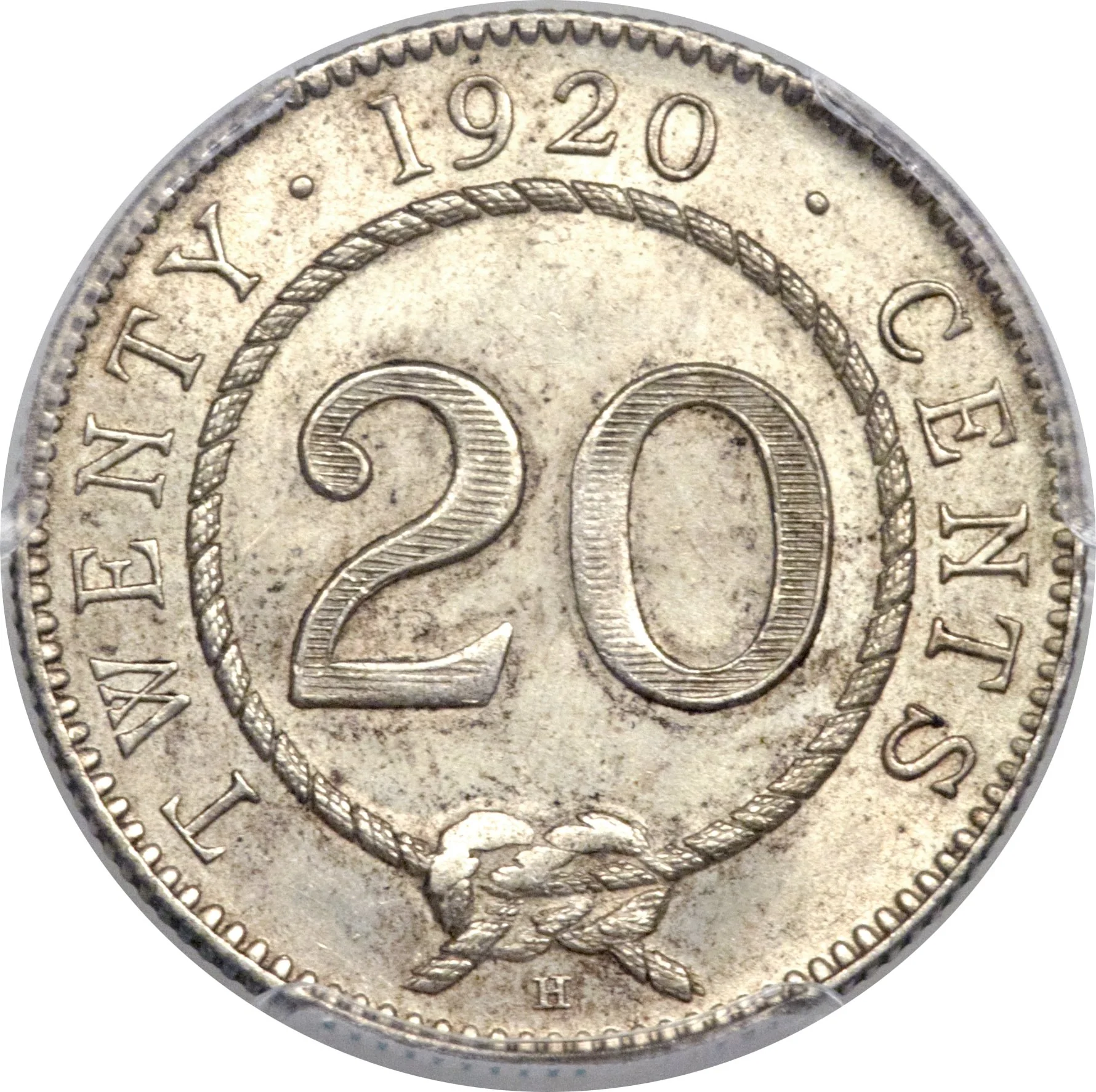
20 Cents – Sarawak
Malaysia
Context
Year: 1920
Country: Malaysia 
Issuer: Sarawak
Ruler: Charles Vyner Brooke
Currency:
(1868—1946)
Demonetized: Yes
Total mintage: 25,000
Material
References
KM: #Click to copy to clipboard17
Numista: #34031
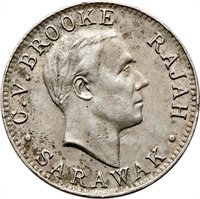
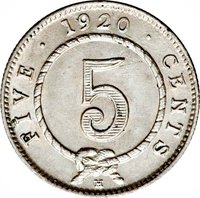
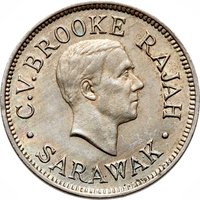
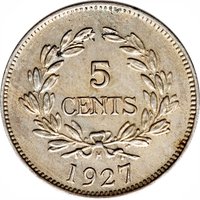
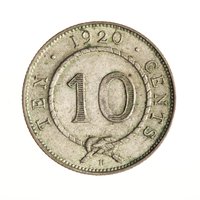
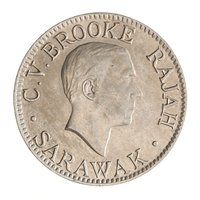
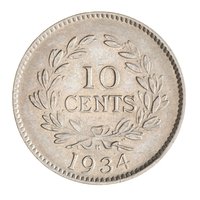
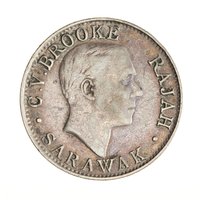
Obverse
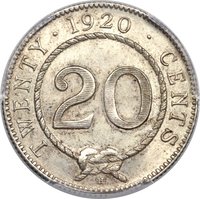
Reverse
Edge
Reeded
Mints
| Name | Mark |
|---|---|
| Heaton and Sons / The Mint Birmingham | H |
Historical background
In the 1920s, Sarawak operated under a unique and complex currency system, a legacy of its status as an independent kingdom ruled by the White Rajahs of the Brooke family. The state issued its own coinage, known as Sarawak coinage, which bore the profile of the reigning Rajah, Charles Brooke. These coins, denominated in cents and dollars, were the official legal tender and served as a symbol of Sarawak's distinct sovereignty. However, they circulated alongside a multitude of other currencies, creating a practical monetary bazaar.
The most significant of these parallel currencies was the Straits Settlements dollar, issued by the Board of Commissioners of Currency in Singapore. Due to Sarawak's close economic ties with British Malaya and Singapore, particularly in the trade of primary commodities like rubber and pepper, this stable and widely accepted currency was heavily used in commerce, especially for larger transactions. Additionally, the British sovereign and Indian rupee were present, a residual influence from earlier trade patterns and the use of Indian silver. The Dutch guilder also circulated in border regions near Dutch Borneo.
This multiplicity created occasional confusion and exchange complexities, but the system functioned because the various currencies were valued against a silver standard. The Sarawak government periodically fixed the exchange rates between its own coinage and the Straits dollar to maintain stability. Ultimately, the 1920s represented a period of transition, where Sarawak's own coinage affirmed its political identity, while the pervasive use of the Straits Settlements dollar foreshadowed the greater economic integration with British Malaya that would culminate in the adoption of the Malayan dollar in 1953.
The most significant of these parallel currencies was the Straits Settlements dollar, issued by the Board of Commissioners of Currency in Singapore. Due to Sarawak's close economic ties with British Malaya and Singapore, particularly in the trade of primary commodities like rubber and pepper, this stable and widely accepted currency was heavily used in commerce, especially for larger transactions. Additionally, the British sovereign and Indian rupee were present, a residual influence from earlier trade patterns and the use of Indian silver. The Dutch guilder also circulated in border regions near Dutch Borneo.
This multiplicity created occasional confusion and exchange complexities, but the system functioned because the various currencies were valued against a silver standard. The Sarawak government periodically fixed the exchange rates between its own coinage and the Straits dollar to maintain stability. Ultimately, the 1920s represented a period of transition, where Sarawak's own coinage affirmed its political identity, while the pervasive use of the Straits Settlements dollar foreshadowed the greater economic integration with British Malaya that would culminate in the adoption of the Malayan dollar in 1953.
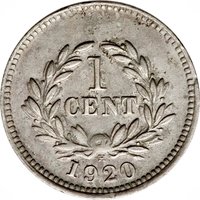
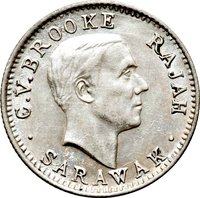
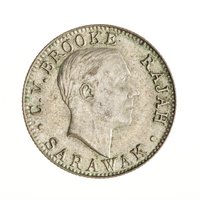
Series: 1920 Sarawak circulation coins
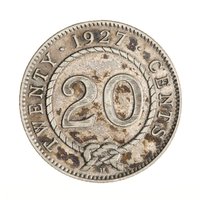
💎 Extremely Rare