

½ Cent – Sarawak
Malaysia
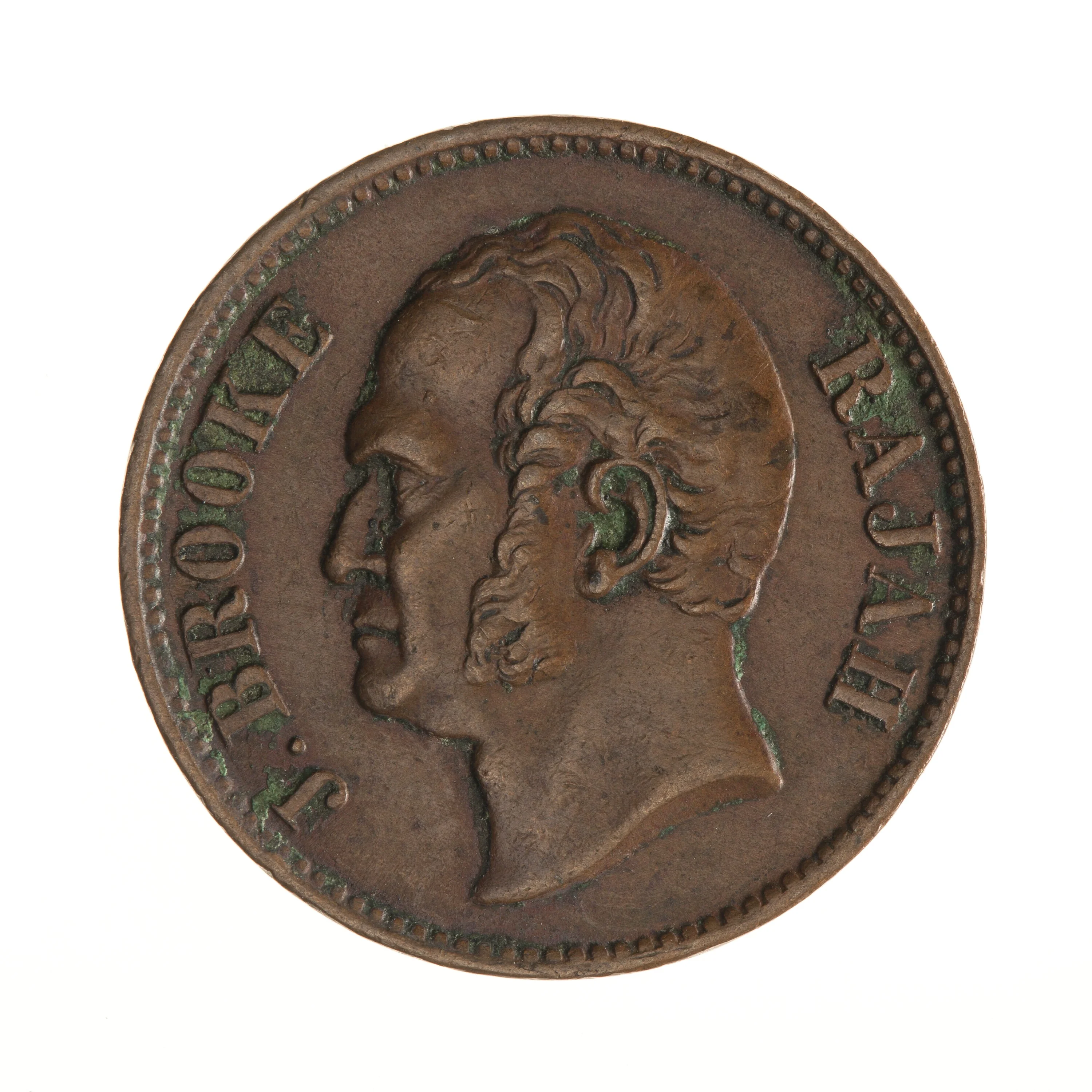
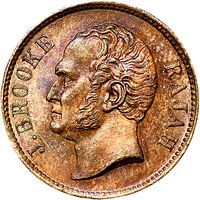
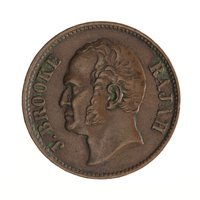
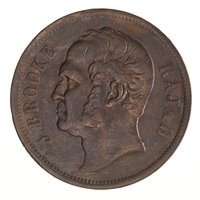
Obverse
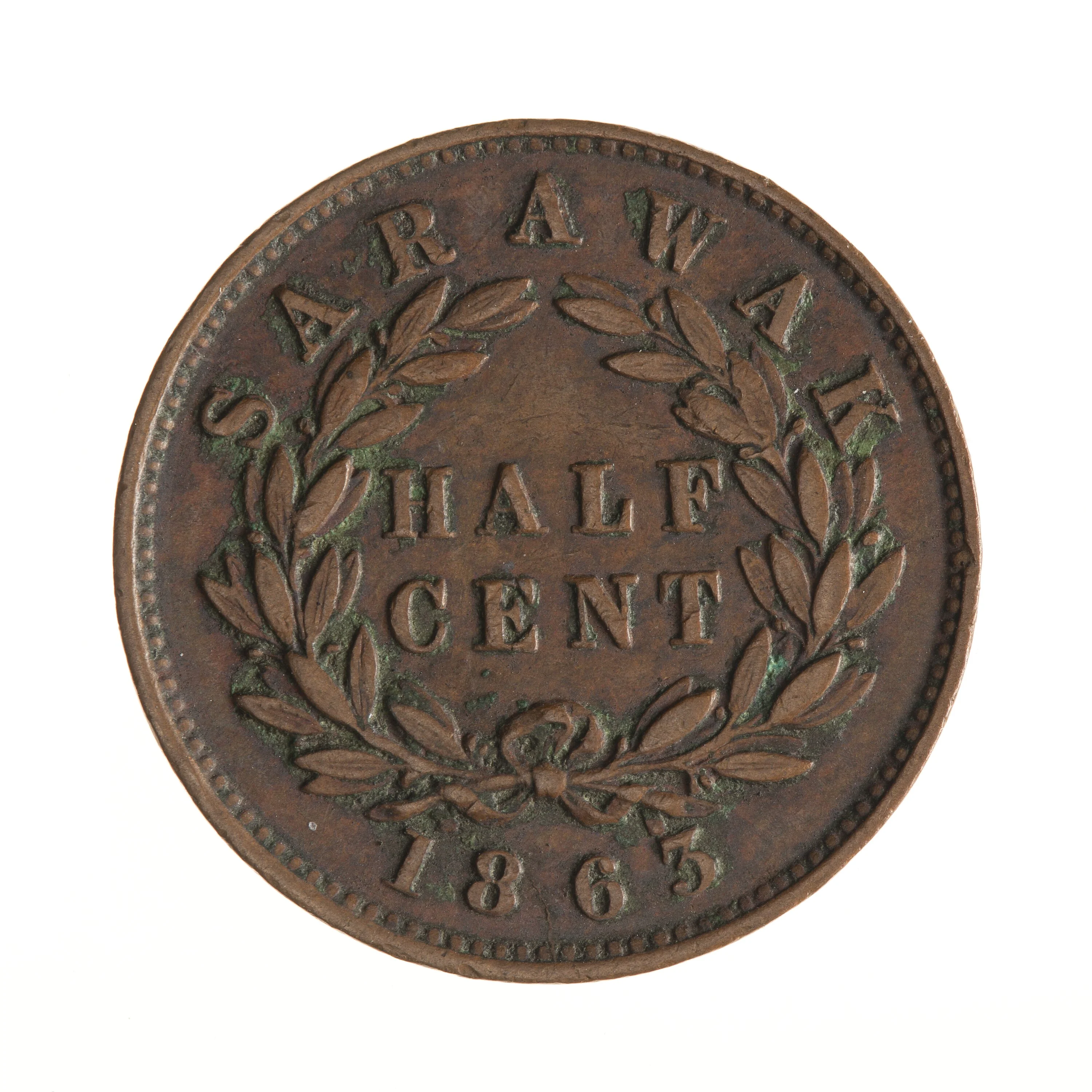
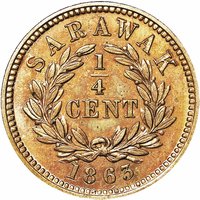
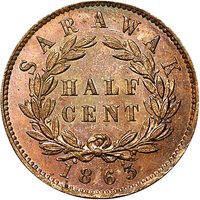
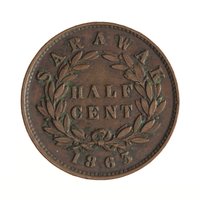
Reverse
Edge
Mintings
| Year | Mint Mark | Mintage | Quality | Collection |
|---|---|---|---|---|
| 1863 | — | — | Proof |
Historical background
In 1863, Sarawak was a unique and expanding independent state under the rule of the White Rajahs, the Brooke family. Its currency situation was complex and fragmented, reflecting its position outside the formal British colonial monetary system and the diverse trade networks of Northwest Borneo. The primary medium of exchange was the silver Spanish or Mexican dollar ("ringgit"), along with its fractional parts, which dominated regional trade. However, a chronic shortage of small change led to the widespread use of makeshift alternatives, including leaden tokens issued by local Chinese merchants and even barter in goods like opium or rice for everyday transactions.
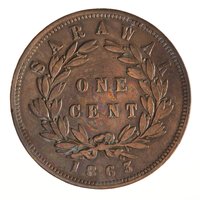
Recognizing the economic inefficiency and confusion this caused, the Second Rajah, Sir Charles Brooke, took decisive action in 1863 by introducing Sarawak’s first official coinage. These coins, minted in Birmingham, England, were denominated in the familiar cents and dollars, pegged to the Straits Settlements dollar. The first issues were the one-cent coin, minted in copper, and a silver ten-cent piece (or 'suku'), which literally means "a quarter" in Malay, referencing its value relative to the Spanish dollar. This move was a direct assertion of Brooke sovereignty, aiming to standardize value, simplify commerce, and displace the irregular private tokens.
The 1863 coinage was a foundational step, but it did not immediately resolve Sarawak's currency challenges. The new coins had to circulate alongside the entrenched Spanish dollars and merchant tokens for many years. Furthermore, the state's limited financial resources meant coinage issues were sporadic and small in quantity initially. Nevertheless, this initiative marked the beginning of a unified Sarawak monetary identity, establishing a decimal system that would endure and evolve under the Brooke administration for the next eight decades, gradually bringing order to the kingdom’s finances.
Recognizing the economic inefficiency and confusion this caused, the Second Rajah, Sir Charles Brooke, took decisive action in 1863 by introducing Sarawak’s first official coinage. These coins, minted in Birmingham, England, were denominated in the familiar cents and dollars, pegged to the Straits Settlements dollar. The first issues were the one-cent coin, minted in copper, and a silver ten-cent piece (or 'suku'), which literally means "a quarter" in Malay, referencing its value relative to the Spanish dollar. This move was a direct assertion of Brooke sovereignty, aiming to standardize value, simplify commerce, and displace the irregular private tokens.
The 1863 coinage was a foundational step, but it did not immediately resolve Sarawak's currency challenges. The new coins had to circulate alongside the entrenched Spanish dollars and merchant tokens for many years. Furthermore, the state's limited financial resources meant coinage issues were sporadic and small in quantity initially. Nevertheless, this initiative marked the beginning of a unified Sarawak monetary identity, establishing a decimal system that would endure and evolve under the Brooke administration for the next eight decades, gradually bringing order to the kingdom’s finances.

✨ Legendary