

Obverse
Description:
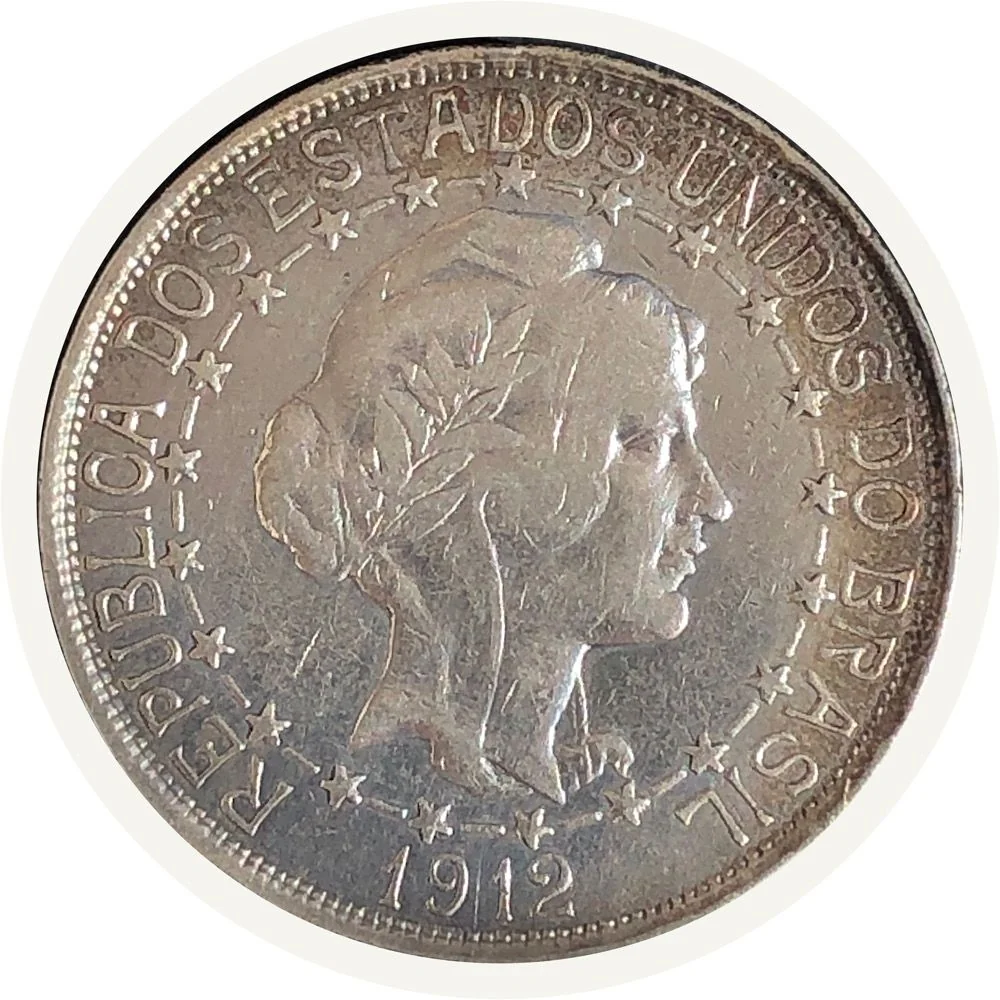
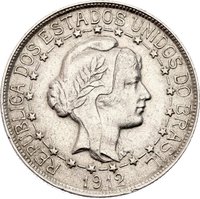
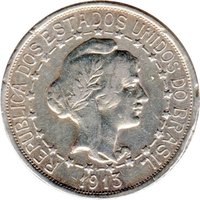
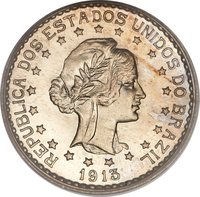
Liberty head laureate in circle, date beneath.
Inscription:
REPUBLICA DOS ESTADOS UNIDOS DO BRASIL
1912
1912
Translation:
REPUBLIC OF THE UNITED STATES OF BRAZIL
1912
1912
Script: Latin
Language: Portuguese
Reverse
Description:
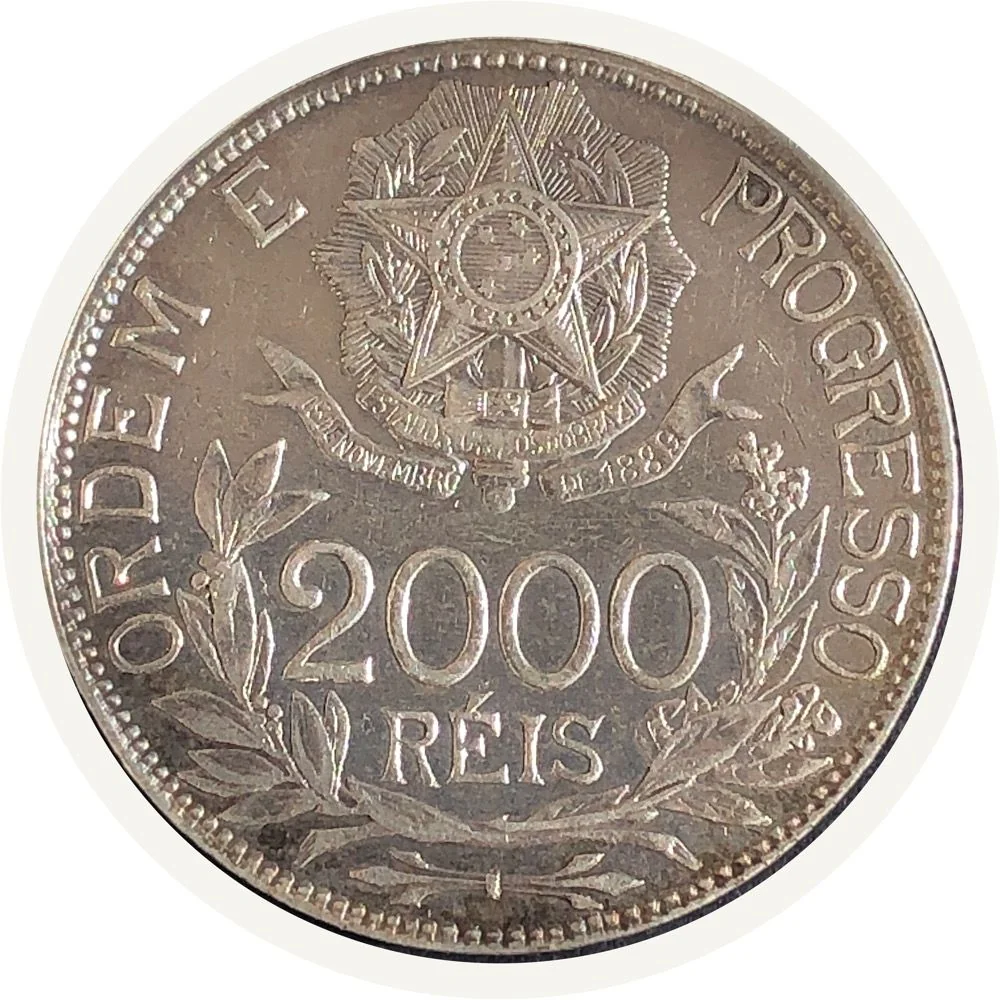
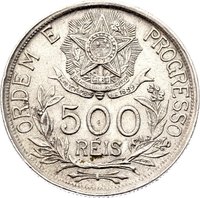
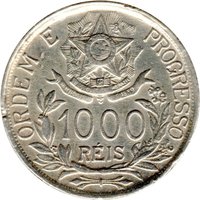
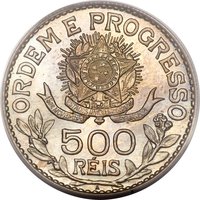
Denomination within wreath. National arms above. Divided legend.
Inscription:
ORDEM E PROGRESSO
2000 RÉIS
2000 RÉIS
Translation:
Order and Progress
2000 Réis
2000 Réis
Script: Latin
Language: Portuguese
Edge
Reeded
Categories
| Symbol> Wreath |
| Symbol> Allegory |
| Symbols> Coat of Arms |
| Symbol> Phrygian cap |
Mintings
| Year | Mint Mark | Mintage | Quality | Collection |
|---|---|---|---|---|
| 1912 | — | 380,000 | ||
| 1913 | — | 395,500 |
Historical background
In 1912, Brazil's currency situation was characterized by the ongoing dominance of the mil-réis and the persistent challenge of exchange rate instability. The country operated under a gold standard regime, but one that was frequently suspended in practice. The value of the mil-réis against foreign currencies, particularly the British pound sterling, was volatile and generally weak, driven by Brazil's heavy reliance on coffee exports. Fluctuations in global coffee prices directly impacted the nation's trade balance and its ability to maintain gold convertibility, leading to periods of inflation and making foreign debt repayments more expensive.
This instability was rooted in deeper structural issues. Government finances were often strained, leading to recurring budget deficits. To raise revenue, authorities frequently resorted to expanding the money supply through the issuance of paper currency, a practice known as "emissões" (issues). These emissions, not fully backed by gold reserves, further eroded confidence in the mil-réis and contributed to its depreciation. The cycle of coffee revenue, government spending, and currency creation created an environment where the formal gold standard was difficult to uphold consistently.
Consequently, the period was one of transition and debate. While the official policy aimed for stability through the gold standard, the reality was a "managed" or "tortuous" gold standard, with the government and the Banco do Brasil intervening to smooth out extreme fluctuations. This era set the stage for future reforms, as economists and policymakers increasingly recognized the need for a more centralized and disciplined monetary authority, a debate that would eventually lead to the creation of the Banco Central do Brasil decades later. The currency situation of 1912 thus reflected a young republic struggling to align its export-dependent economy with the financial orthodoxy of the international gold standard.
This instability was rooted in deeper structural issues. Government finances were often strained, leading to recurring budget deficits. To raise revenue, authorities frequently resorted to expanding the money supply through the issuance of paper currency, a practice known as "emissões" (issues). These emissions, not fully backed by gold reserves, further eroded confidence in the mil-réis and contributed to its depreciation. The cycle of coffee revenue, government spending, and currency creation created an environment where the formal gold standard was difficult to uphold consistently.
Consequently, the period was one of transition and debate. While the official policy aimed for stability through the gold standard, the reality was a "managed" or "tortuous" gold standard, with the government and the Banco do Brasil intervening to smooth out extreme fluctuations. This era set the stage for future reforms, as economists and policymakers increasingly recognized the need for a more centralized and disciplined monetary authority, a debate that would eventually lead to the creation of the Banco Central do Brasil decades later. The currency situation of 1912 thus reflected a young republic struggling to align its export-dependent economy with the financial orthodoxy of the international gold standard.
🌱 Fairly Common