

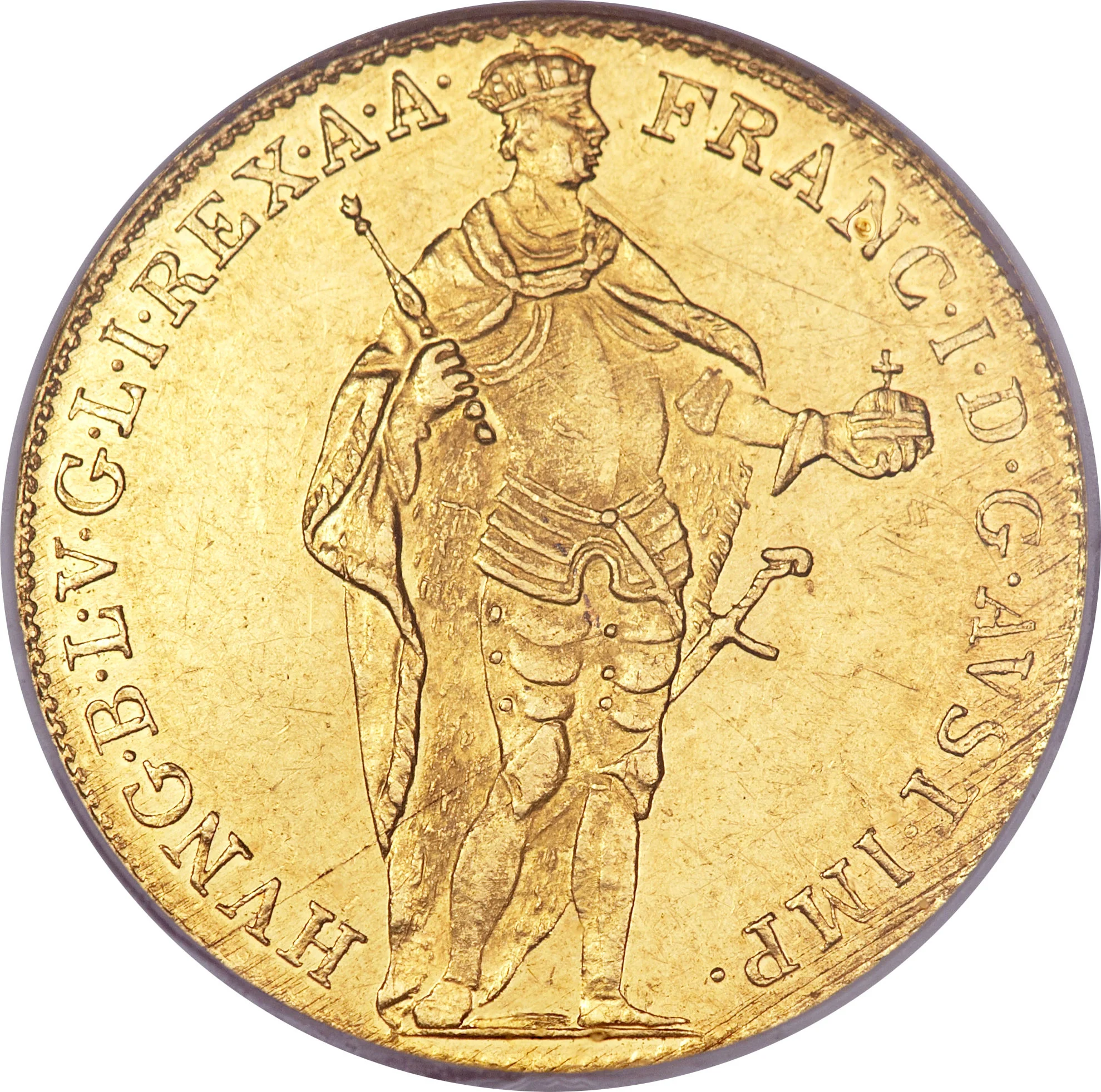
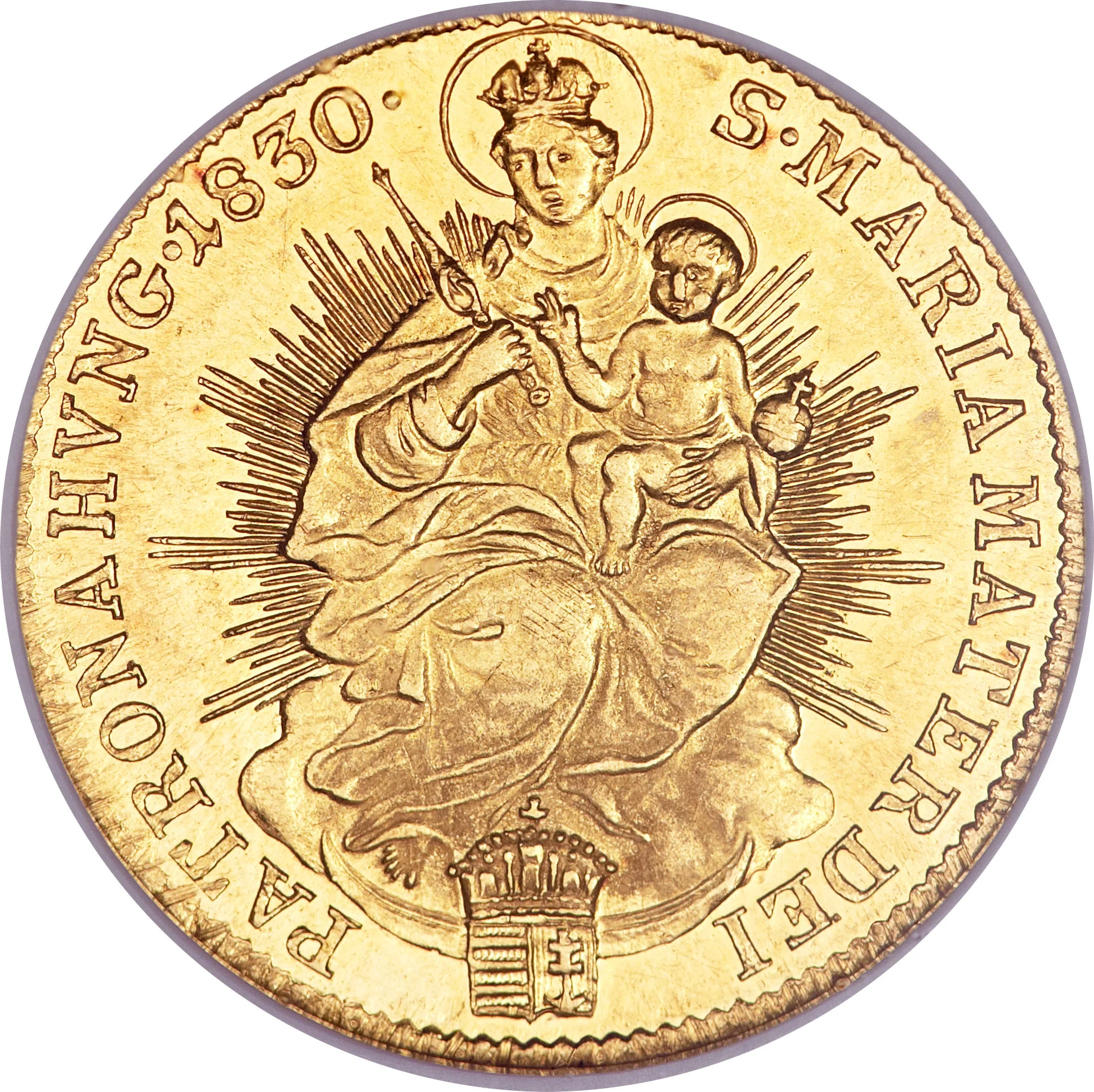

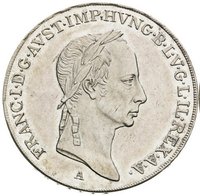
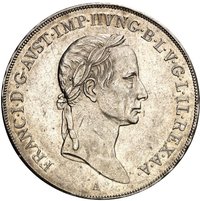
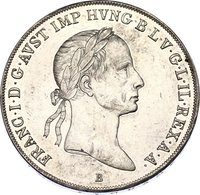
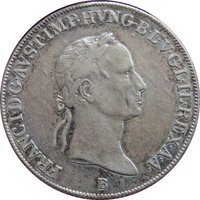
Obverse
Description:
Monarch standing right.
Inscription:
FRANC · I · D · G · AVST · IMP · HUNG · B · L · V · G · L · I · REX · A · A ·
Translation:
FRANCIS I BY THE GRACE OF GOD EMPEROR OF AUSTRIA, KING OF HUNGARY, BOHEMIA, LOMBARDY-VENETIA, GALICIA AND LODOMERIA, ILLYRIUM, ETC., ARCHDUKE OF AUSTRIA
Script: Latin
Language: Latin
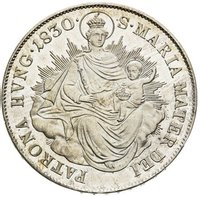
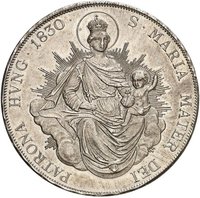
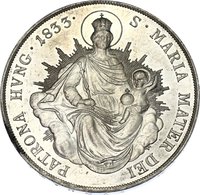
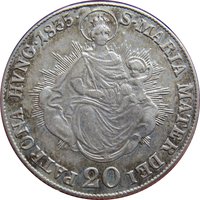
Reverse
Edge
Plain
Mints
| Name | Mark |
|---|---|
| Kremnica | - |
Mintings
| Year | Mint Mark | Mintage | Quality | Collection |
|---|---|---|---|---|
| 1830 | — | — | ||
| 1832 | — | — | ||
| 1833 | — | — | ||
| 1834 | — | — | ||
| 1835 | — | — |
Historical background
In 1830, the currency situation in the Kingdom of Hungary, part of the Habsburg Empire, was defined by the aftermath of the Napoleonic Wars and the subsequent state bankruptcy of 1811. The empire had financed its wars through massive paper money issuance, leading to severe inflation and the devaluation of the earlier paper currency, the Bankozettel. In response, the Vienna government introduced a new, stable silver-based currency, the Vereinsthaler (or Conventionsthaler), which became the official monetary standard. However, Hungary’s economy remained predominantly agrarian, and in daily rural life, barter and small-scale transactions using older, fractional coins like kreutzers were still widespread, creating a dual system of official high-value silver and practical small-change copper.
The monetary landscape was further complicated by Hungary's distinct political identity within the empire. While Vienna controlled central financial and monetary policy, Hungary retained its own traditional accounting system based on the forint (gulden) and krajcár. The Vereinsthaler was officially valued at 1.5 forints or 150 krajcár, but this fixed exchange often existed more on paper than in practice. Regional disparities, a lack of sufficient small coinage for everyday trade, and the lingering distrust of paper money after the earlier inflation caused persistent friction and inefficiency in commerce.
This currency environment reflected the broader tensions between Vienna and the Hungarian estates. The Diet of 1825-27 had begun a national revival movement, and economic grievances, including monetary policy dictated from Vienna, fueled growing Hungarian demands for greater autonomy. The rigid, centrally-imposed monetary system was seen as neglecting Hungary's specific economic needs, making the currency question a subtle but persistent element of the rising national consciousness that would culminate in the reforms and revolution of 1848.
The monetary landscape was further complicated by Hungary's distinct political identity within the empire. While Vienna controlled central financial and monetary policy, Hungary retained its own traditional accounting system based on the forint (gulden) and krajcár. The Vereinsthaler was officially valued at 1.5 forints or 150 krajcár, but this fixed exchange often existed more on paper than in practice. Regional disparities, a lack of sufficient small coinage for everyday trade, and the lingering distrust of paper money after the earlier inflation caused persistent friction and inefficiency in commerce.
This currency environment reflected the broader tensions between Vienna and the Hungarian estates. The Diet of 1825-27 had begun a national revival movement, and economic grievances, including monetary policy dictated from Vienna, fueled growing Hungarian demands for greater autonomy. The rigid, centrally-imposed monetary system was seen as neglecting Hungary's specific economic needs, making the currency question a subtle but persistent element of the rising national consciousness that would culminate in the reforms and revolution of 1848.
Series: 1830 Hungary circulation coins

💎 Extremely Rare