

1 ducat – Hungary
Add to wishlist
Hungary
Context
Years: 1868–1869
Issuer: Hungary
Ruler: Francis Joseph I
Currency:
(1526—1754)
Demonetized: Yes
Total mintage: 958,205
Material
References
KM: #
Numista: #33871
Value
Bullion value: $530.81
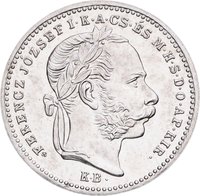
Obverse
Description:
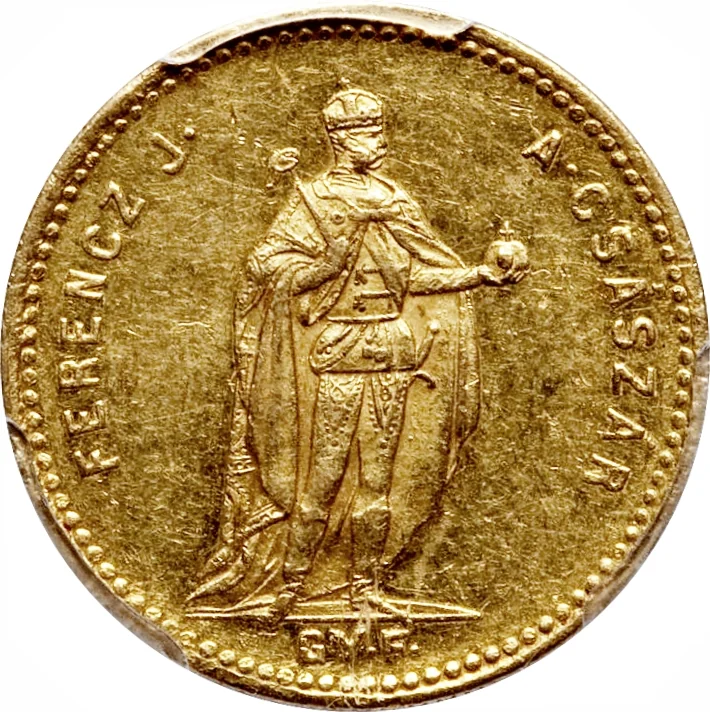
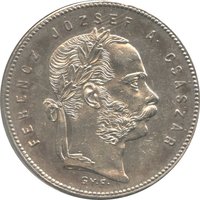
Monarch right, Hungarian text.
Inscription:
FERENCZ J. A. CSÁSZÁR
K.B.
K.B.
Translation:
Francis I, Emperor
Apostolic King of Hungary
Apostolic King of Hungary
Script: Latin
Engraver: Franz Gaul/Friedrich Leisek
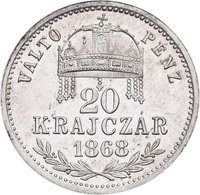
Reverse
Description:
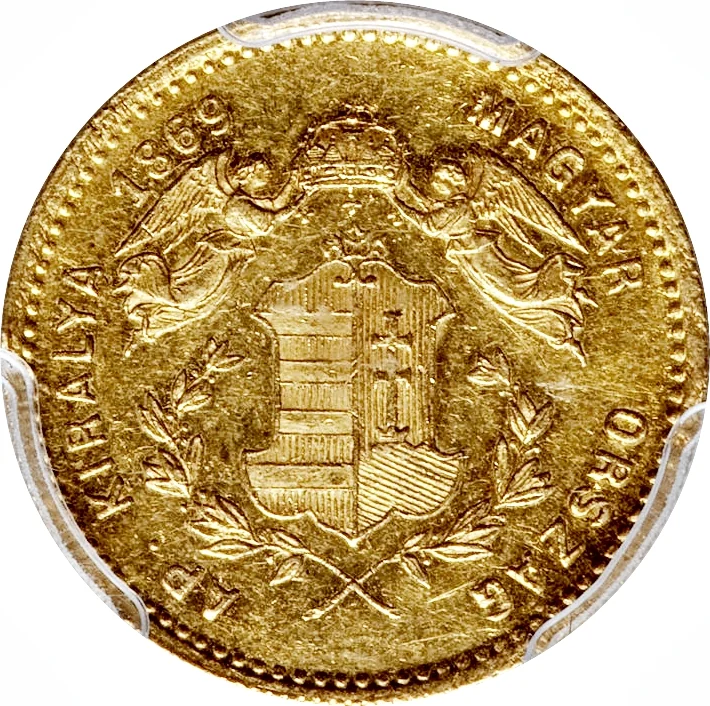
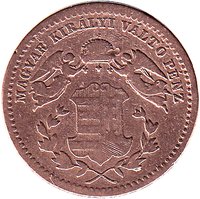
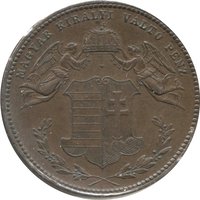
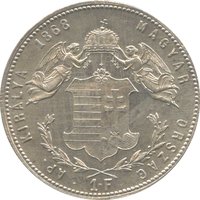
Small Hungarian curved shield, angels bearing St. Stephen's crown.
Inscription:
MAGYAR ORSZÁG AP. KIRÁLYA 1869
Translation:
Apostolic King of Hungary 1869
Script: Latin
Language: Hungarian
Engraver: Anton Scharff
Edge
Reeded
Mints
| Name | Mark |
|---|---|
| Alba Iulia | GY F |
| Kremnica | K B |
Mintings
| Year | Mint Mark | Mintage | Quality | Collection |
|---|---|---|---|---|
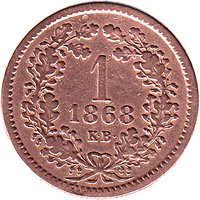
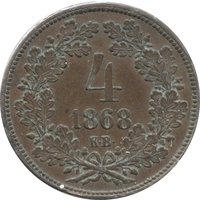
| 1868 | GY | 127,531 | ||
| 1868 | K | 399,914 | ||
| 1869 | GY | 106,614 | ||
| 1869 | K | 324,146 |
Historical background
Following the Austro-Hungarian Compromise of 1867, which created the Dual Monarchy, Hungary gained significant political and economic autonomy. A key task for the new Hungarian government was to establish a stable and distinct national monetary system, as the previous Austrian-dominated currency had been unstable and unpopular. The Forint was introduced as Hungary's official currency by the Law I of 1868, marking a symbolic step in the nation's financial independence.
However, this independence was constrained by the economic realities of the Dual Monarchy. While Hungary now minted its own forint coins, the currency remained part of a wider customs and monetary union with Austria, operating on a bimetallic (silver and gold) standard. Crucially, the forint was pegged at par value to the Austrian florin (or gulden), and both currencies were legal tender across the empire. This created a functionally unified currency area, ensuring economic cohesion but limiting Hungary's ability to set independent monetary policy.
Therefore, the 1868 currency situation represented a carefully negotiated compromise: Hungary possessed the formal institutions of a national currency—its own coins bearing Hungarian symbols—yet it was integrated into a larger Austro-Hungarian monetary framework. The system aimed to foster domestic pride and administrative control while maintaining the stability and seamless trade required by the dualist structure, laying the foundation for a period of economic growth and integration within the empire.
However, this independence was constrained by the economic realities of the Dual Monarchy. While Hungary now minted its own forint coins, the currency remained part of a wider customs and monetary union with Austria, operating on a bimetallic (silver and gold) standard. Crucially, the forint was pegged at par value to the Austrian florin (or gulden), and both currencies were legal tender across the empire. This created a functionally unified currency area, ensuring economic cohesion but limiting Hungary's ability to set independent monetary policy.
Therefore, the 1868 currency situation represented a carefully negotiated compromise: Hungary possessed the formal institutions of a national currency—its own coins bearing Hungarian symbols—yet it was integrated into a larger Austro-Hungarian monetary framework. The system aimed to foster domestic pride and administrative control while maintaining the stability and seamless trade required by the dualist structure, laying the foundation for a period of economic growth and integration within the empire.
Series: 1868 Hungary circulation coins

💎 Extremely Rare