

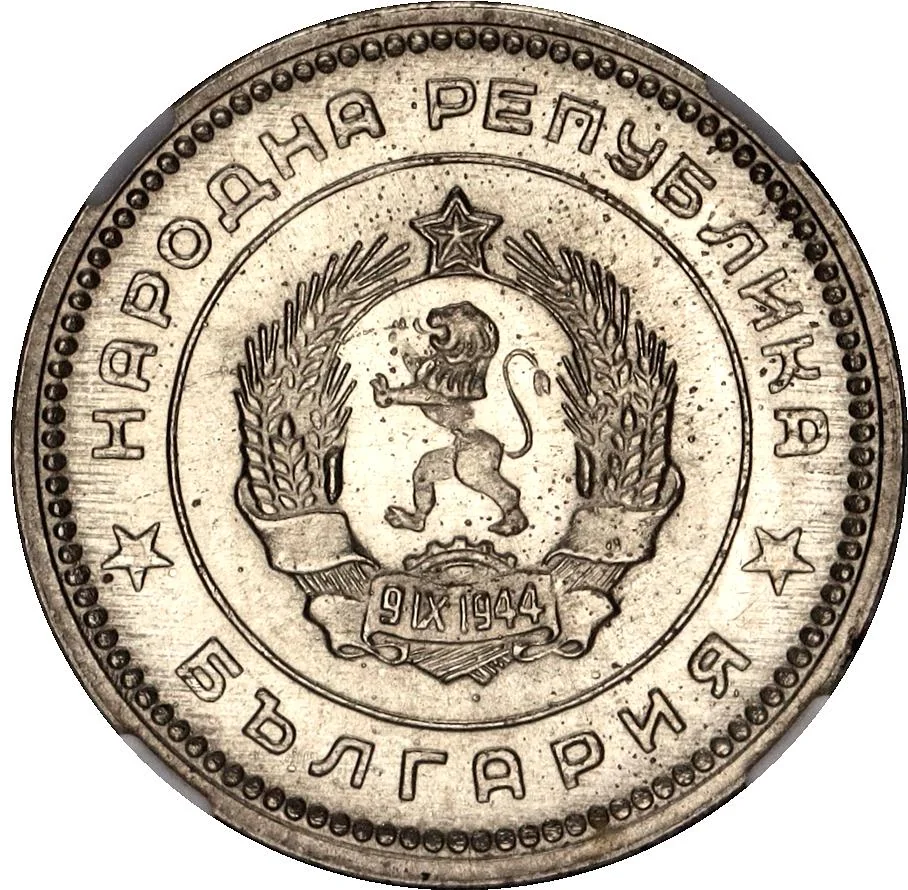
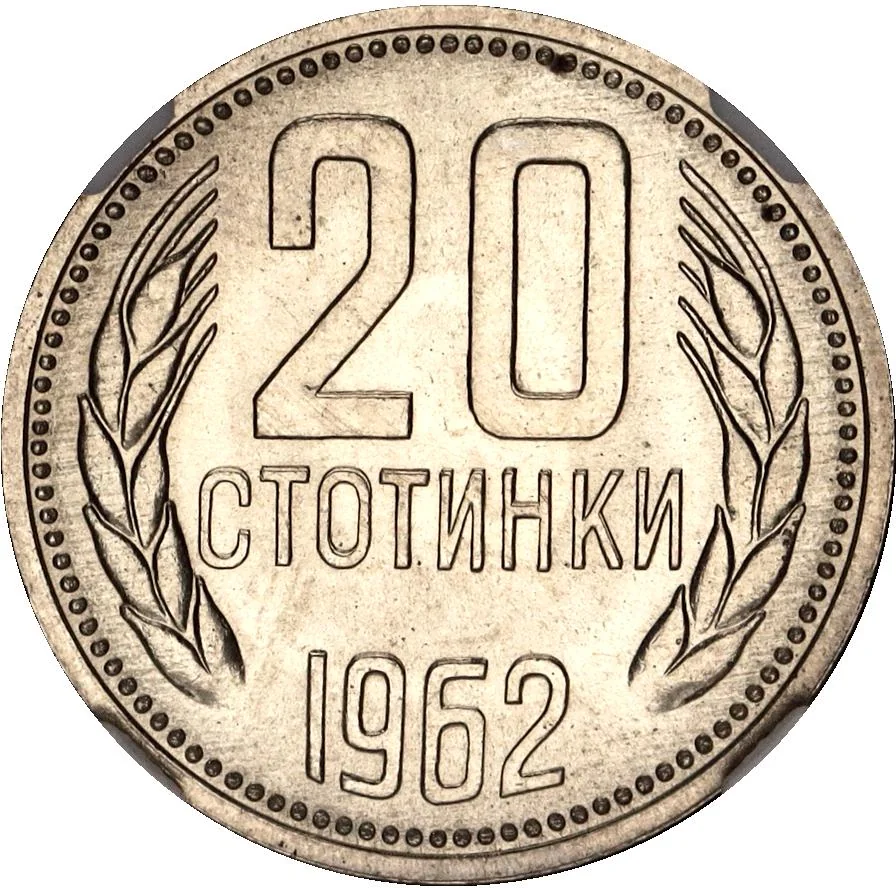
20 stotinki – Bulgaria
Add to wishlist
Bulgaria
Context
Material
Diameter: 21.2 mm
Weight: 2.85 g
Thickness: 1.15 mm
Shape: Round
Composition: Copper-nickel
Technique: Milled
Alignment: Medal alignment
flip
References
KM: #
Numista: #3381
Value
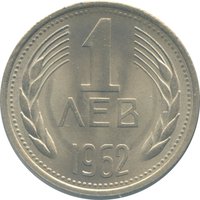
Exchange value: 0.20 BGL
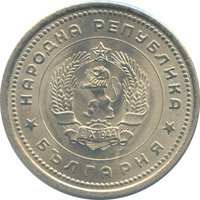
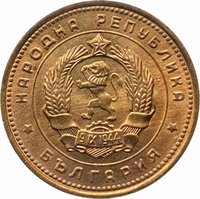
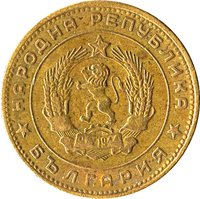
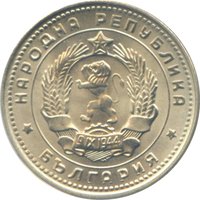
Obverse
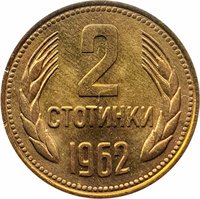
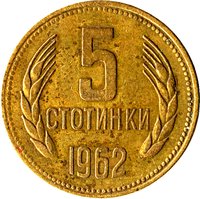
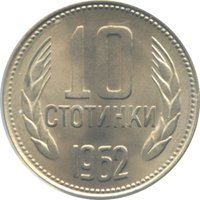
Reverse
Edge
Reeded
Categories
| Symbols> Coat of Arms |
Mints
| Name | Mark |
|---|---|
| Bulgarian Mint | — |
Mintings
| Year | Mint Mark | Mintage | Quality | Collection |
|---|---|---|---|---|
| 1962 | — | — |
Historical background
In 1962, Bulgaria operated under a strict, centrally planned economy as a loyal satellite state of the Soviet Union. The national currency was the Bulgarian Lev, but its function was fundamentally different from currencies in market economies. It served primarily as an internal accounting unit within the state plan, with its value and circulation tightly controlled by the Bulgarian National Bank and the communist government. The exchange rate was fixed artificially by decree, bearing no relation to market forces or the currency's actual purchasing power.
The currency situation was characterized by a complex system of multiple, non-convertible exchange rates and a deep separation between domestic and foreign trade. There was one official rate for international accounting within the Soviet bloc (via the Council for Mutual Economic Assistance, or Comecon), another for trade with Western "hard currency" areas, and a separate, highly restricted domestic rate for citizens. For the average Bulgarian, access to foreign currency, especially Western currencies like the US Dollar or Deutsche Mark, was virtually impossible through legal channels, giving rise to a pervasive black market where the Lev traded at a fraction of its official value.
This system was designed to isolate the Bulgarian economy from global financial fluctuations and maintain state control over all economic activity. It effectively trapped capital within the country, prevented imports outside the state plan, and limited international travel for citizens. The currency regime of 1962 was thus a key instrument of the planned economy, ensuring economic stability on the surface but at the cost of efficiency, innovation, and consumer choice, reflecting the broader realities of life behind the Iron Curtain.
The currency situation was characterized by a complex system of multiple, non-convertible exchange rates and a deep separation between domestic and foreign trade. There was one official rate for international accounting within the Soviet bloc (via the Council for Mutual Economic Assistance, or Comecon), another for trade with Western "hard currency" areas, and a separate, highly restricted domestic rate for citizens. For the average Bulgarian, access to foreign currency, especially Western currencies like the US Dollar or Deutsche Mark, was virtually impossible through legal channels, giving rise to a pervasive black market where the Lev traded at a fraction of its official value.
This system was designed to isolate the Bulgarian economy from global financial fluctuations and maintain state control over all economic activity. It effectively trapped capital within the country, prevented imports outside the state plan, and limited international travel for citizens. The currency regime of 1962 was thus a key instrument of the planned economy, ensuring economic stability on the surface but at the cost of efficiency, innovation, and consumer choice, reflecting the broader realities of life behind the Iron Curtain.
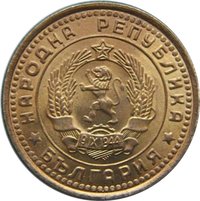
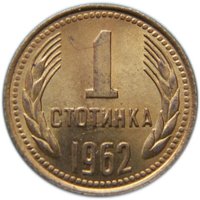
Series: 1962 Bulgaria circulation coins
🌱 Very Common