


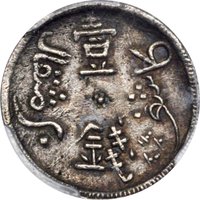
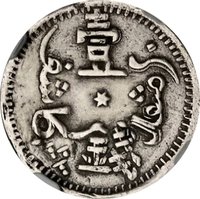
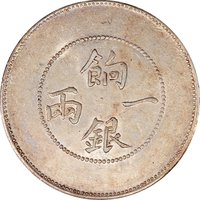
Obverse
Description:
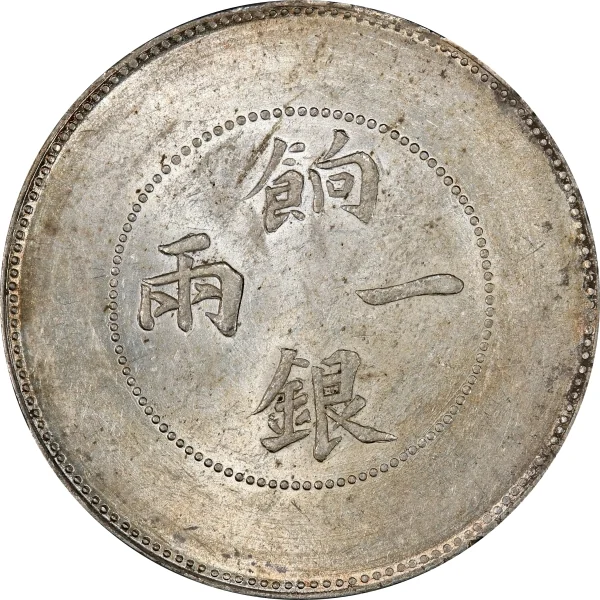
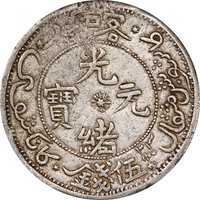
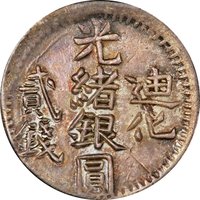
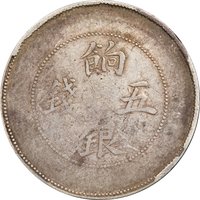
Four Chinese characters read vertically, right to left.
Inscription:
餉
兩 一
銀
兩 一
銀
Translation:
Pay
One Tael
Silver
One Tael
Silver
Language: Chinese
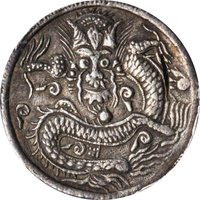
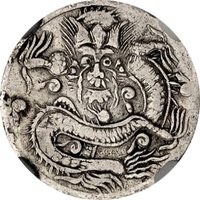
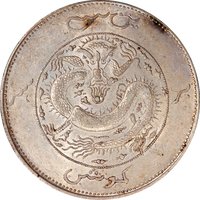
Reverse
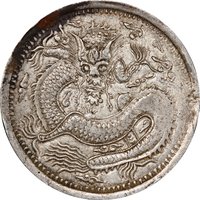
Description:
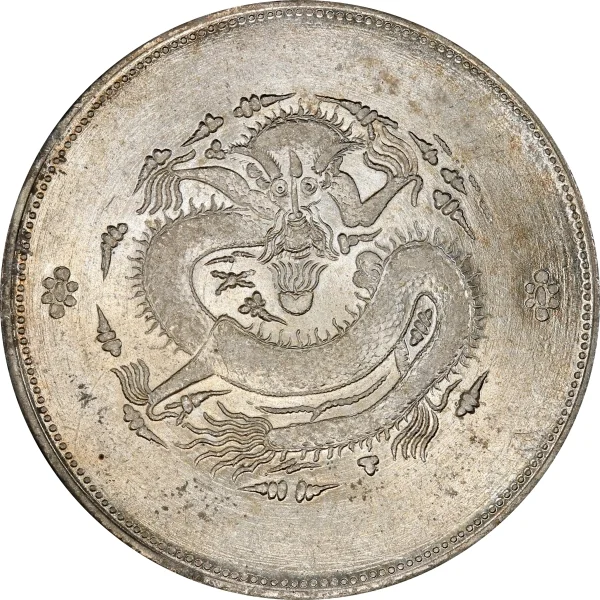
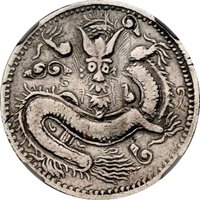
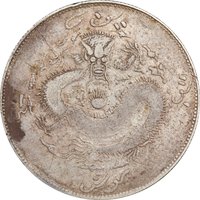
Dragon encircling a pearl.
Edge
Categories
| Mythology> Fantastic animal |
Mintings
| Year | Mint Mark | Mintage | Quality | Collection |
|---|---|---|---|---|
| 1905 | — | — |
Historical background
In 1905, the currency situation in Sinkiang (Xinjiang) Province was a complex and fragmented reflection of its unique geopolitical position at the crossroads of Central Asia. The official currency was the Xinjiang Tael (Xinjiang liang), a silver ingot-based system inherited from the Qing dynasty. However, the province's vast territory and diverse trade networks meant that a multitude of other currencies circulated simultaneously. These included Chinese copper cash coins, Russian Rubles (both paper and silver, known locally as Yangk'a), and even British Indian Rupees from Kashmir, each valued by weight and purity in major trading hubs like Kashgar and Yining (Ghulja).
This monetary plurality arose from Sinkiang's economic dependence on overland trade with the Russian Empire and British India, which often overshadowed its weaker commercial links with China proper. The Russian Ruble, in particular, was dominant in northern and western Sinkiang due to the establishment of Russian consulates and trading houses, creating a de facto dual-currency zone. The Qing authorities, represented by the Governor in Ürümqi, struggled to impose a unified currency system. Locally minted copper and silver coins, such as the pul and tenga, were often crude, of inconsistent weight and alloy, leading to widespread counterfeiting and deep public distrust in official coinage.
Consequently, the year 1905 fell within a period of chronic monetary instability for Sinkiang. Exchange rates between the various metals and currencies fluctuated with market conditions and the journeys of trade caravans, complicating taxation and administration. This chaotic environment not only hampered internal economic development but also symbolized the weakening grip of the late Qing state, as external economic influences from St. Petersburg and Calcutta effectively carved out spheres of monetary influence, setting the stage for the financial struggles that would continue into the republican era.
This monetary plurality arose from Sinkiang's economic dependence on overland trade with the Russian Empire and British India, which often overshadowed its weaker commercial links with China proper. The Russian Ruble, in particular, was dominant in northern and western Sinkiang due to the establishment of Russian consulates and trading houses, creating a de facto dual-currency zone. The Qing authorities, represented by the Governor in Ürümqi, struggled to impose a unified currency system. Locally minted copper and silver coins, such as the pul and tenga, were often crude, of inconsistent weight and alloy, leading to widespread counterfeiting and deep public distrust in official coinage.
Consequently, the year 1905 fell within a period of chronic monetary instability for Sinkiang. Exchange rates between the various metals and currencies fluctuated with market conditions and the journeys of trade caravans, complicating taxation and administration. This chaotic environment not only hampered internal economic development but also symbolized the weakening grip of the late Qing state, as external economic influences from St. Petersburg and Calcutta effectively carved out spheres of monetary influence, setting the stage for the financial struggles that would continue into the republican era.

✨ Legendary