

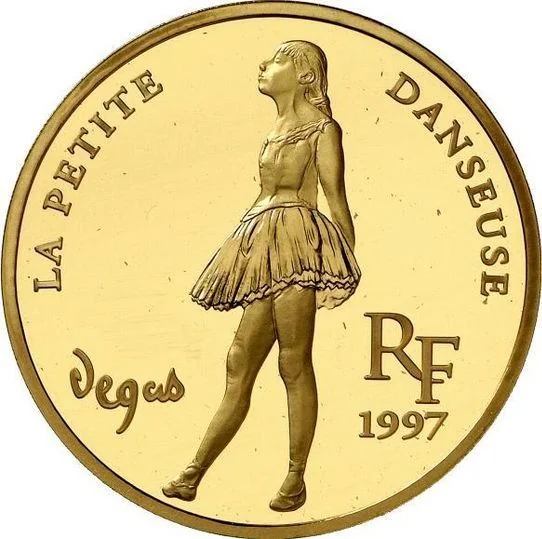
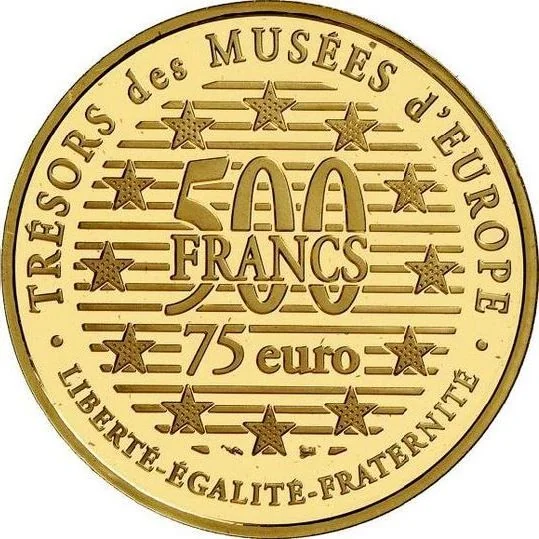
500 francs – France
Add to wishlist
France
Context
Year: 1997
Issuer: France
Period:
(since 1958)
Currency:
(1960—2001)
Demonetized: Yes
Total mintage: 5,000
Material
Diameter: 50 mm
Weight: 31.1 g
Gold Weight:: 31.07 g
Shape: Round
Composition: 99.9% Gold
Standard: Silver ounce
Magnetic: No
Technique: Milled
Alignment: Coin alignment
flip
References
KM: #
Numista: #336874
Value
Exchange value: 500 FRF
Bullion value: $4773.08
Inflation-adjusted value: 801.96 FRF
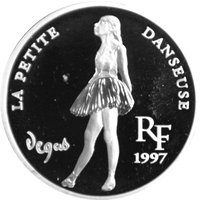
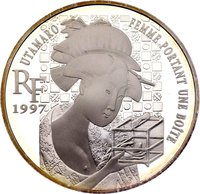
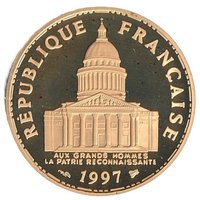
Obverse
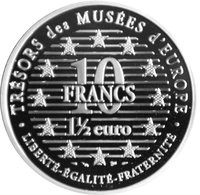
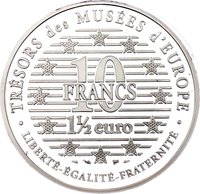
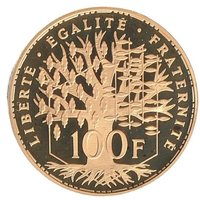
Reverse
Edge
Mints
| Name | Mark |
|---|---|
| Monnaie de Paris | — |
Mintings
| Year | Mint Mark | Mintage | Quality | Collection |
|---|---|---|---|---|
| 1997 | — | 5,000 | Proof |
Historical background
In 1997, France found itself at a pivotal moment in European monetary history, operating under the constraints of the European Exchange Rate Mechanism (ERM). The French franc was pegged to the newly established Deutsche Mark, a system designed to ensure monetary stability and low inflation in the run-up to Economic and Monetary Union (EMU). This policy, known as the franc fort (strong franc), was a cornerstone of French economic strategy, prioritizing price stability and alignment with German monetary policy to secure France's place as a founding member of the upcoming single currency, the euro.
However, this commitment came at a significant economic cost. Throughout the mid-1990s, France grappled with persistently high unemployment, which hovered around 12.5%, and sluggish growth. The tight monetary policy required to maintain the franc's parity with the Deutsche Mark limited the government's ability to use interest rates to stimulate the domestic economy. This tension created a difficult political and social climate, with public frustration over "austerity for the euro" contrasting with the government's unwavering political commitment to European integration.
The year 1997 was crucial as it preceded the final, irreversible locking of exchange rates in May 1998. France, under the newly elected left-wing government of Lionel Jospin, had to rigorously meet the Maastricht Treaty convergence criteria on budget deficits, debt, inflation, and interest rates. Despite domestic pressures, France successfully reduced its budget deficit to 3.0% of GDP that year, meeting the critical criterion and cementing its path toward abandoning the franc. Thus, 1997 was a year of successful but socially costly consolidation, ensuring France's entry into the eurozone on January 1, 1999.
However, this commitment came at a significant economic cost. Throughout the mid-1990s, France grappled with persistently high unemployment, which hovered around 12.5%, and sluggish growth. The tight monetary policy required to maintain the franc's parity with the Deutsche Mark limited the government's ability to use interest rates to stimulate the domestic economy. This tension created a difficult political and social climate, with public frustration over "austerity for the euro" contrasting with the government's unwavering political commitment to European integration.
The year 1997 was crucial as it preceded the final, irreversible locking of exchange rates in May 1998. France, under the newly elected left-wing government of Lionel Jospin, had to rigorously meet the Maastricht Treaty convergence criteria on budget deficits, debt, inflation, and interest rates. Despite domestic pressures, France successfully reduced its budget deficit to 3.0% of GDP that year, meeting the critical criterion and cementing its path toward abandoning the franc. Thus, 1997 was a year of successful but socially costly consolidation, ensuring France's entry into the eurozone on January 1, 1999.
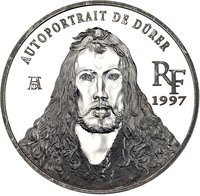
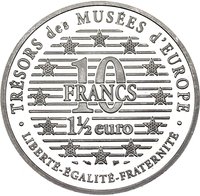
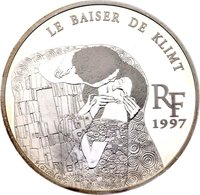
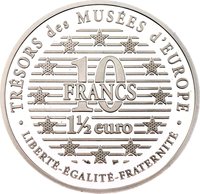
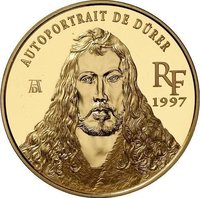
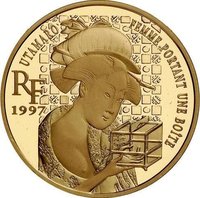
Series: Trésors des musées d'Europe
✨ Legendary