

2 vereinsthaler – Austrian Empire
Add to wishlist
Austria
Context
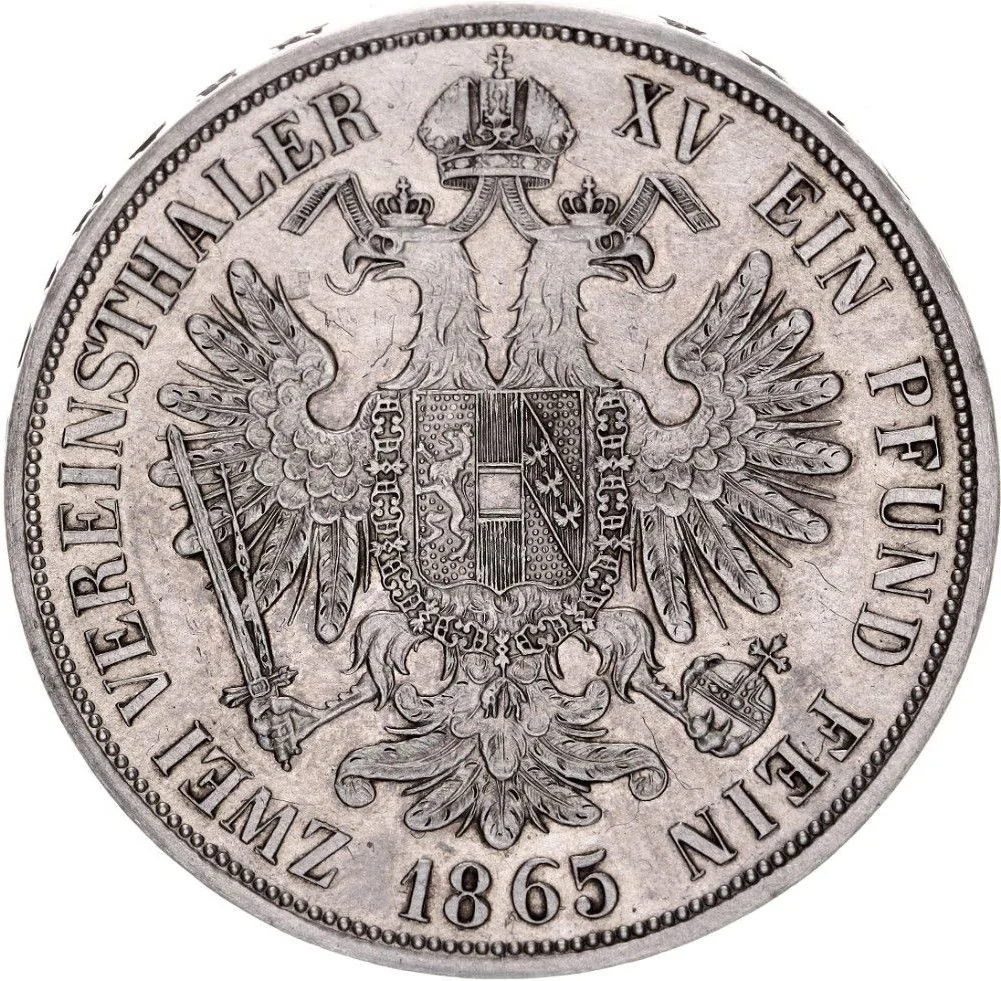
Year: 1865
Country: Austria
Issuer: Austrian Empire
Ruler: Francis Joseph I
Currency:
(1857—1892)
Demonetized: Yes
Total mintage: 7,425
Material
References
KM: #
Numista: #33643
Value
Bullion value: $83.68
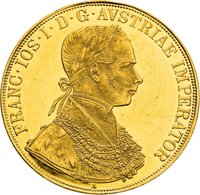
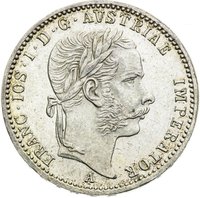
Obverse
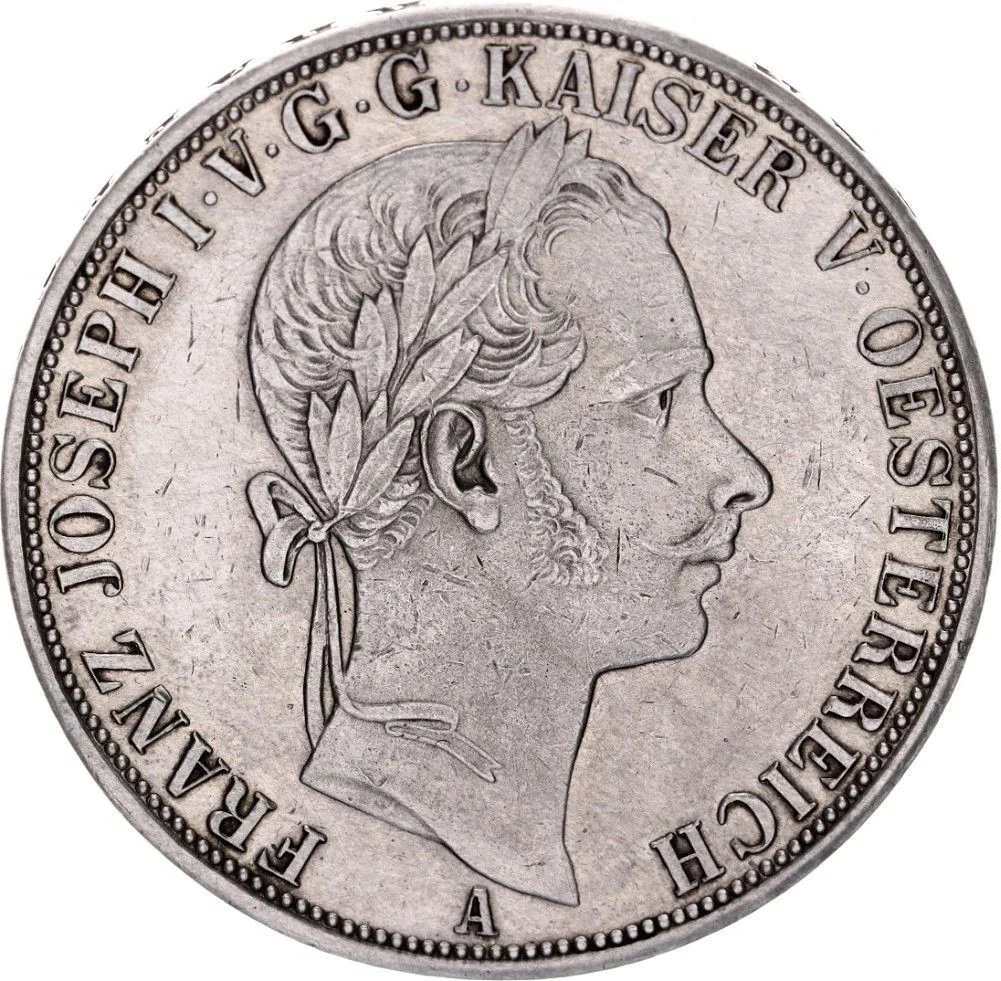
Inscription:
FRANZ JOSEPH I.V.G.G.KAISER V.OESTERREICH
A
A
Translation:
FRANZ JOSEPH THE FIRST, BY THE GRACE OF GOD EMPEROR OF AUSTRIA
Script: Latin
Languages: German, Latin abbreviations
Engraver: Josef Daniel Böhm
Reverse
Edge
Inscribed text
Mints
| Name | Mark |
|---|---|
| Münze Österreich | A |
Mintings
| Year | Mint Mark | Mintage | Quality | Collection |
|---|---|---|---|---|
| 1865 | A | 7,425 |
Historical background
By 1865, the currency situation in the Austrian Empire was one of profound instability and complexity, a direct legacy of the costly wars and fiscal mismanagement of the 1850s, particularly the war against Piedmont-Sardinia and France in 1859. The state had financed these conflicts not through taxes but by authorizing the Austrian National Bank to print vast quantities of paper money, known as uncovered banknotes. This led to a severe devaluation of the paper Gulden (or Florin) against silver, creating a chaotic system where two parallel currencies existed: the silver Conventionsmünze (CM) and the depreciated paper Wiener Währung (WW). In practice, most daily transactions were conducted in the fluctuating paper currency, while international trade and state debts were often calculated in silver, causing confusion and economic friction across the multi-ethnic empire.
The government recognized the crippling effects of this monetary duality—which hampered trade, investment, and state credit—and had already taken a major step toward reform with the Coinage Act of 1857. This law introduced the Vereinsthaler as a common silver coin for most German states, including Austria, and aimed to establish a new standard, the Österreichische Währung (Austrian Currency), defined as 45 Gulden per pound of silver. However, by 1865, this transition was incomplete. The old paper Gulden continued to circulate at a significant discount to the new theoretical standard, and the empire's chronic budget deficits prevented a return to full convertibility. The National Bank's notes remained inconvertible "flat money," their value dictated more by government necessity and public confidence than by metallic reserves.
Thus, in 1865, the Empire found itself at a precarious midpoint between a discredited past system and an unattainable reform. The urgent need to restore international financial credibility and unify the domestic economy was clear, but the political will to implement austere fiscal discipline was lacking. This unresolved currency crisis added significant strain to the Habsburg state, compounding the nationalist political pressures that would culminate in the Austro-Hungarian Compromise of 1867. The subsequent post-Compromise government would finally address the issue decisively with the Currency Reform of 1892, introducing the stable Gold Crown (Krone), but in 1865, monetary uncertainty remained a persistent feature of economic life.
The government recognized the crippling effects of this monetary duality—which hampered trade, investment, and state credit—and had already taken a major step toward reform with the Coinage Act of 1857. This law introduced the Vereinsthaler as a common silver coin for most German states, including Austria, and aimed to establish a new standard, the Österreichische Währung (Austrian Currency), defined as 45 Gulden per pound of silver. However, by 1865, this transition was incomplete. The old paper Gulden continued to circulate at a significant discount to the new theoretical standard, and the empire's chronic budget deficits prevented a return to full convertibility. The National Bank's notes remained inconvertible "flat money," their value dictated more by government necessity and public confidence than by metallic reserves.
Thus, in 1865, the Empire found itself at a precarious midpoint between a discredited past system and an unattainable reform. The urgent need to restore international financial credibility and unify the domestic economy was clear, but the political will to implement austere fiscal discipline was lacking. This unresolved currency crisis added significant strain to the Habsburg state, compounding the nationalist political pressures that would culminate in the Austro-Hungarian Compromise of 1867. The subsequent post-Compromise government would finally address the issue decisively with the Currency Reform of 1892, introducing the stable Gold Crown (Krone), but in 1865, monetary uncertainty remained a persistent feature of economic life.
✨ Legendary