

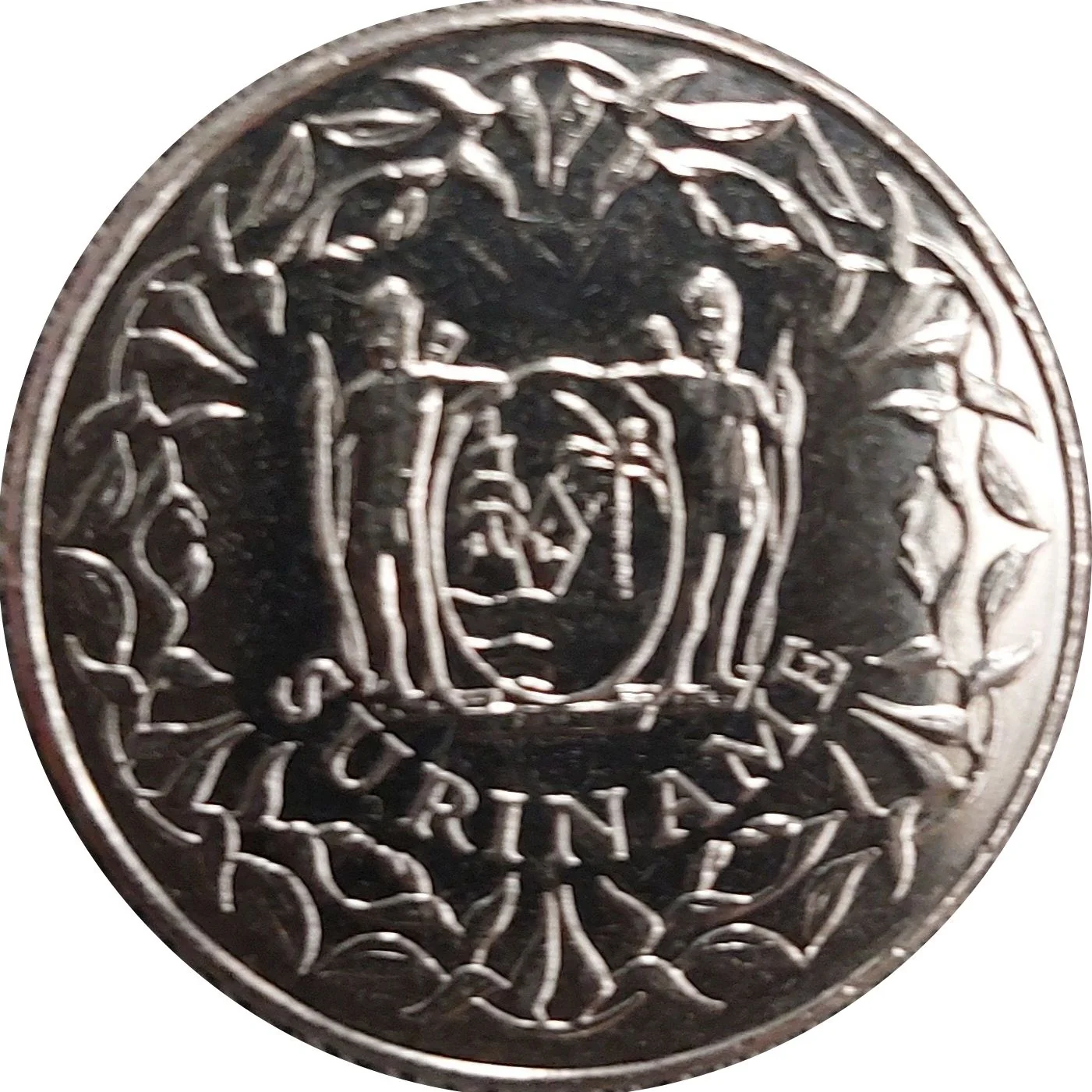
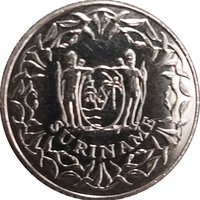
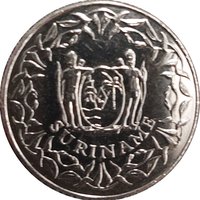
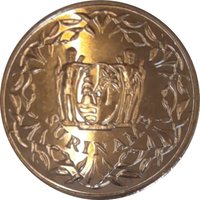
Obverse
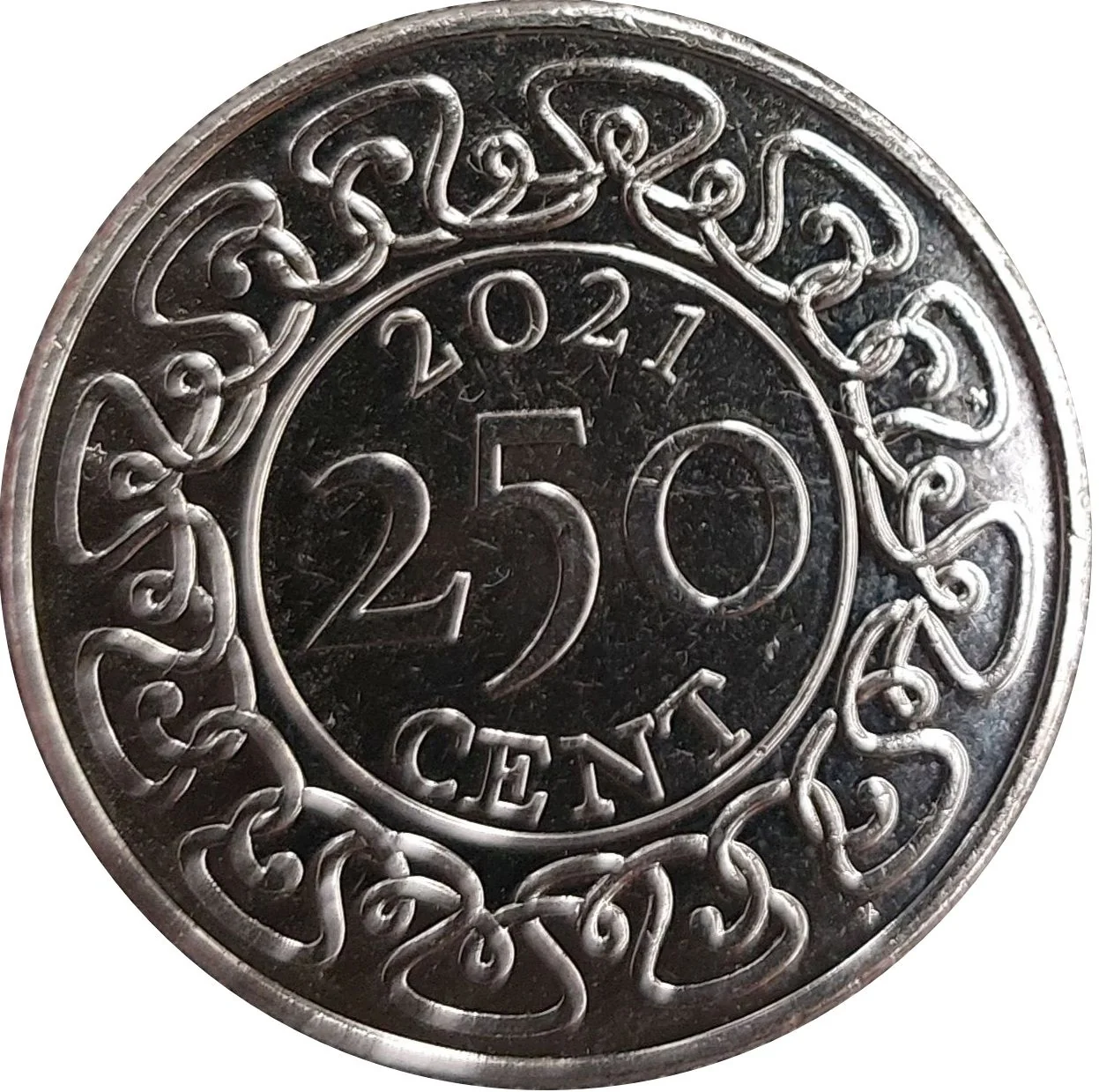
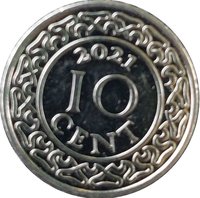
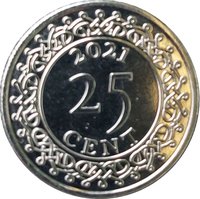
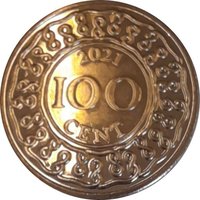
Reverse
Description:
Year above, mint and privy marks flanking it, all encircled.
Inscription:
2021
250
CENT
250
CENT
Script: Latin
Edge
Plain
Categories
| Symbols> Coat of Arms |
| Symbol> Wreath |
Mintings
| Year | Mint Mark | Mintage | Quality | Collection |
|---|---|---|---|---|
| 2021 | — | — | ||
| 2023 | — | — |
Historical background
In 2021, Suriname faced a severe currency and economic crisis, marked by a dramatic depreciation of the Surinamese dollar (SRD) and a critical shortage of foreign exchange. The situation was the culmination of years of economic mismanagement, chronic fiscal deficits, and the collapse of international confidence following the government's debt default in 2020. With foreign reserves nearly depleted, the Central Bank of Suriname (CBvS) could no longer defend the official exchange rate, leading to a widening gap between the official rate and a thriving black market where the SRD had lost over half its value. This currency instability fueled rampant inflation, which soared to nearly 60% by the end of the year, severely eroding purchasing power and living standards.
The crisis was fundamentally rooted in structural weaknesses and policy failures. The economy remained heavily dependent on volatile gold and oil exports, while a bloated public sector and costly fuel and electricity subsidies created unsustainable fiscal pressures. The government's monetization of deficits—effectively printing money to finance spending—directly devalued the currency. International factors, including the COVID-19 pandemic's impact on global trade and commodity prices, exacerbated these domestic vulnerabilities. Furthermore, the loss of correspondent banking relationships isolated Suriname from the global financial system, making international transactions exceedingly difficult and stifling import-dependent businesses.
In response, the government under President Chan Santokhi, elected in 2020, embarked on a difficult reform program negotiated with the International Monetary Fund (IMF). A key step in 2021 was the unification of the exchange rate regime in June, devaluing the official rate by over 30% to move toward a single, market-driven rate. This painful but necessary adjustment, part of a broader $690 million IMF Extended Fund Facility, aimed to restore macroeconomic stability, rebuild reserves, and curb inflation. However, these measures imposed immediate hardship on the population through higher prices for imported essentials like food and medicine, making 2021 a year of profound economic contraction and social strain as Suriname sought a path to recovery.
The crisis was fundamentally rooted in structural weaknesses and policy failures. The economy remained heavily dependent on volatile gold and oil exports, while a bloated public sector and costly fuel and electricity subsidies created unsustainable fiscal pressures. The government's monetization of deficits—effectively printing money to finance spending—directly devalued the currency. International factors, including the COVID-19 pandemic's impact on global trade and commodity prices, exacerbated these domestic vulnerabilities. Furthermore, the loss of correspondent banking relationships isolated Suriname from the global financial system, making international transactions exceedingly difficult and stifling import-dependent businesses.
In response, the government under President Chan Santokhi, elected in 2020, embarked on a difficult reform program negotiated with the International Monetary Fund (IMF). A key step in 2021 was the unification of the exchange rate regime in June, devaluing the official rate by over 30% to move toward a single, market-driven rate. This painful but necessary adjustment, part of a broader $690 million IMF Extended Fund Facility, aimed to restore macroeconomic stability, rebuild reserves, and curb inflation. However, these measures imposed immediate hardship on the population through higher prices for imported essentials like food and medicine, making 2021 a year of profound economic contraction and social strain as Suriname sought a path to recovery.
Series: 2021 Suriname circulation coins
⭐ Rare