

10 Drachmai – Greece
Greece
Context
Material
References
KM: #Click to copy to clipboard84
Numista: #3364
Value
Exchange value: 10 GRD
Inflation-adjusted value: 1106.50 GRD
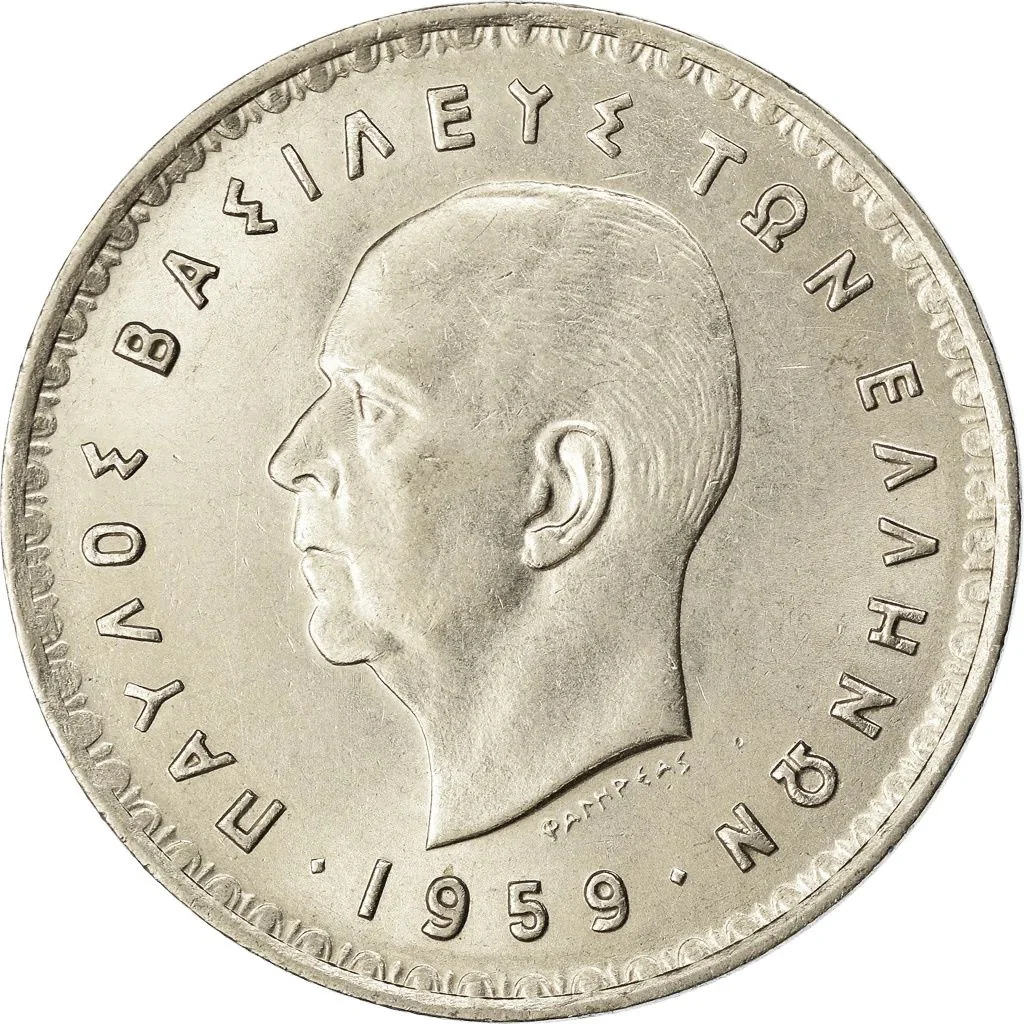
Obverse
Description:
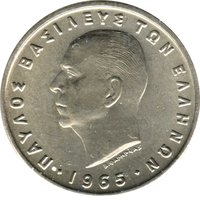
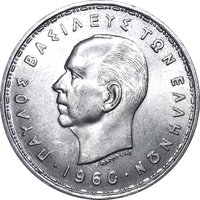
Portrait of King Paul I facing left, dated below.
Inscription:
ΠΑΥΛΟΣ ΒΑΣΙΛΕΥΣ ΤΩΝ ΕΛΛΗΝΩΝ
·1959·
·1959·
Translation:
PAUL KING OF THE HELLENES
·1959·
·1959·
Script: Greek
Language: Greek
Engraver: V. Phalireas
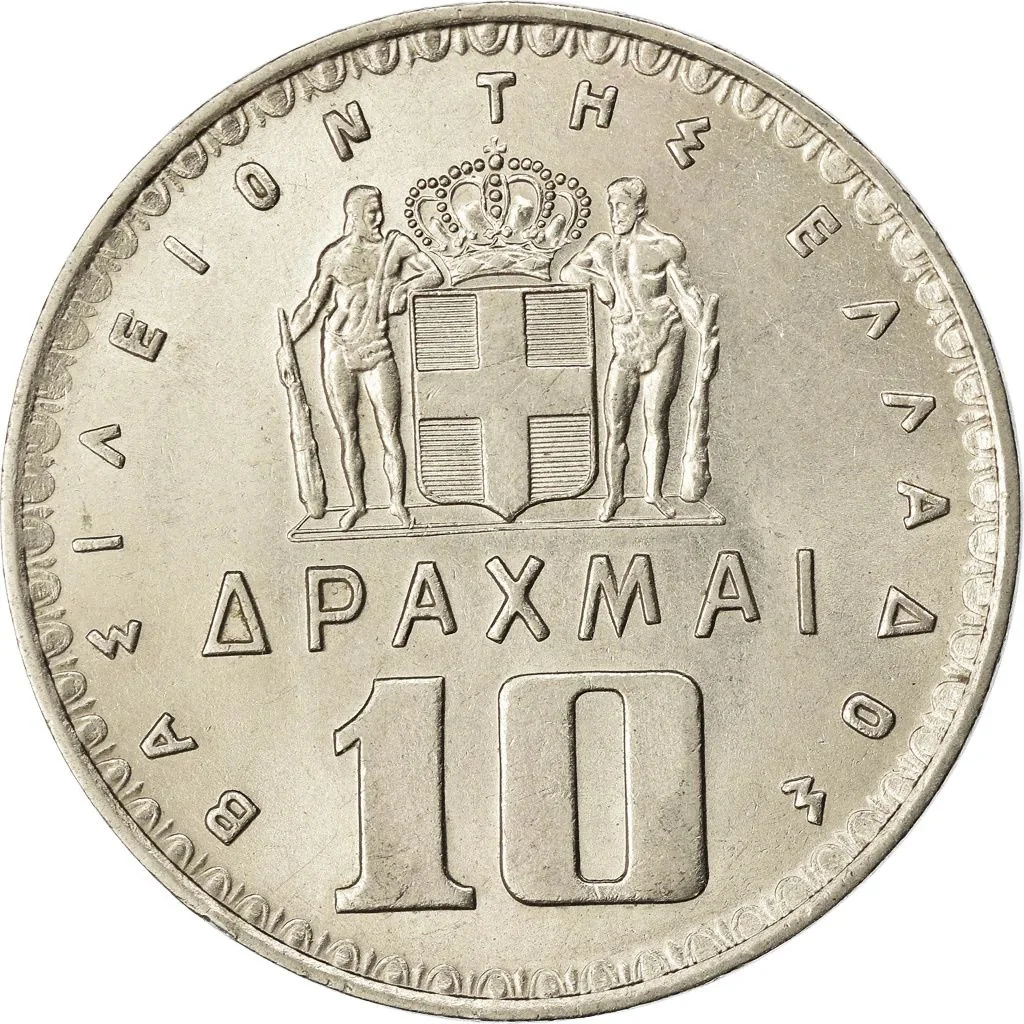
Reverse
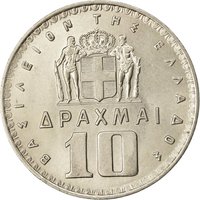
Description:
Greek coat of arms (cross shield) with crown defenders; denomination below.
Inscription:
ΒΑΣΙΛΕΙΟΝ ΤΗΣ ΕΛΛΑΔΟΣ
10 ΔΡΑΧΜΑΙ
10 ΔΡΑΧΜΑΙ
Translation:
Kingdom of Greece
10 Drachmai
10 Drachmai
Script: Greek
Language: Greek
Engraver: V. Phalireas
Edge
Plain
Mints
| Name | Mark |
|---|---|
| Monnaie de Paris | — |
Mintings
| Year | Mint Mark | Mintage | Quality | Collection |
|---|---|---|---|---|
| 1959 | — | 20,000,000 | ||
| 1959 | — | — | Proof | |
| 1965 | — | — | In sets | |
| 1965 | — | 4,987 | Proof |
Historical background
In 1959, Greece’s currency situation was defined by its membership in the Bretton Woods system and a period of relative monetary stability following a decade of severe economic turmoil. The national currency, the drachma, had a fixed exchange rate pegged to the US dollar at 30 drachmae to 1 dollar, a parity established in 1953 as part of a sweeping devaluation and stabilization program. This reform, orchestrated by Prime Minister Alexandros Papagos and his influential Currency Committee chairman, Spyros Markezinis, had successfully halted hyperinflation and laid the groundwork for economic recovery.
This stability was underpinned by strict capital controls and a managed foreign exchange regime administered by the Bank of Greece. The country operated with a dual-exchange system: an official rate for essential imports and a more flexible "free" rate for other transactions, a mechanism designed to conserve scarce foreign reserves and direct capital toward prioritized reconstruction efforts. These controls were necessary because, despite growing industrial output and a nascent tourism boom, Greece’s economy remained vulnerable, with a persistent trade deficit and reliance on external assistance.
The context of 1959 was one of cautious optimism, positioned between the post-civil war reconstruction of the 1950s and the rapid economic growth of the 1960s. Currency stability was a hard-won achievement and a prerequisite for the inflow of foreign investment and the development plans that would soon follow. However, the system’s rigidity and controls also highlighted the underlying structural weaknesses and the economy’s continued dependence on remittances and invisible exports, setting the stage for future challenges within the fixed-exchange rate framework.
This stability was underpinned by strict capital controls and a managed foreign exchange regime administered by the Bank of Greece. The country operated with a dual-exchange system: an official rate for essential imports and a more flexible "free" rate for other transactions, a mechanism designed to conserve scarce foreign reserves and direct capital toward prioritized reconstruction efforts. These controls were necessary because, despite growing industrial output and a nascent tourism boom, Greece’s economy remained vulnerable, with a persistent trade deficit and reliance on external assistance.
The context of 1959 was one of cautious optimism, positioned between the post-civil war reconstruction of the 1950s and the rapid economic growth of the 1960s. Currency stability was a hard-won achievement and a prerequisite for the inflow of foreign investment and the development plans that would soon follow. However, the system’s rigidity and controls also highlighted the underlying structural weaknesses and the economy’s continued dependence on remittances and invisible exports, setting the stage for future challenges within the fixed-exchange rate framework.
🌱 Very Common