

1 Toea – Papua New Guinea
Papua New Guinea
Context
Years: 1975–2004
Issuer: Papua New Guinea 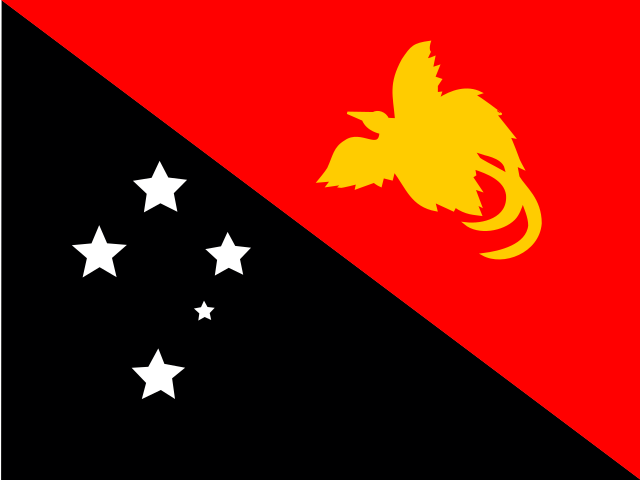
Ruler: Elizabeth II
Currency:
(since 1975)
Demonetization: 19 April 2007
Total mintage: 40,113,490
Material
References
KM: #Click to copy to clipboard1
Numista: #3361
Value
Exchange value: 0.01 PGK
Obverse
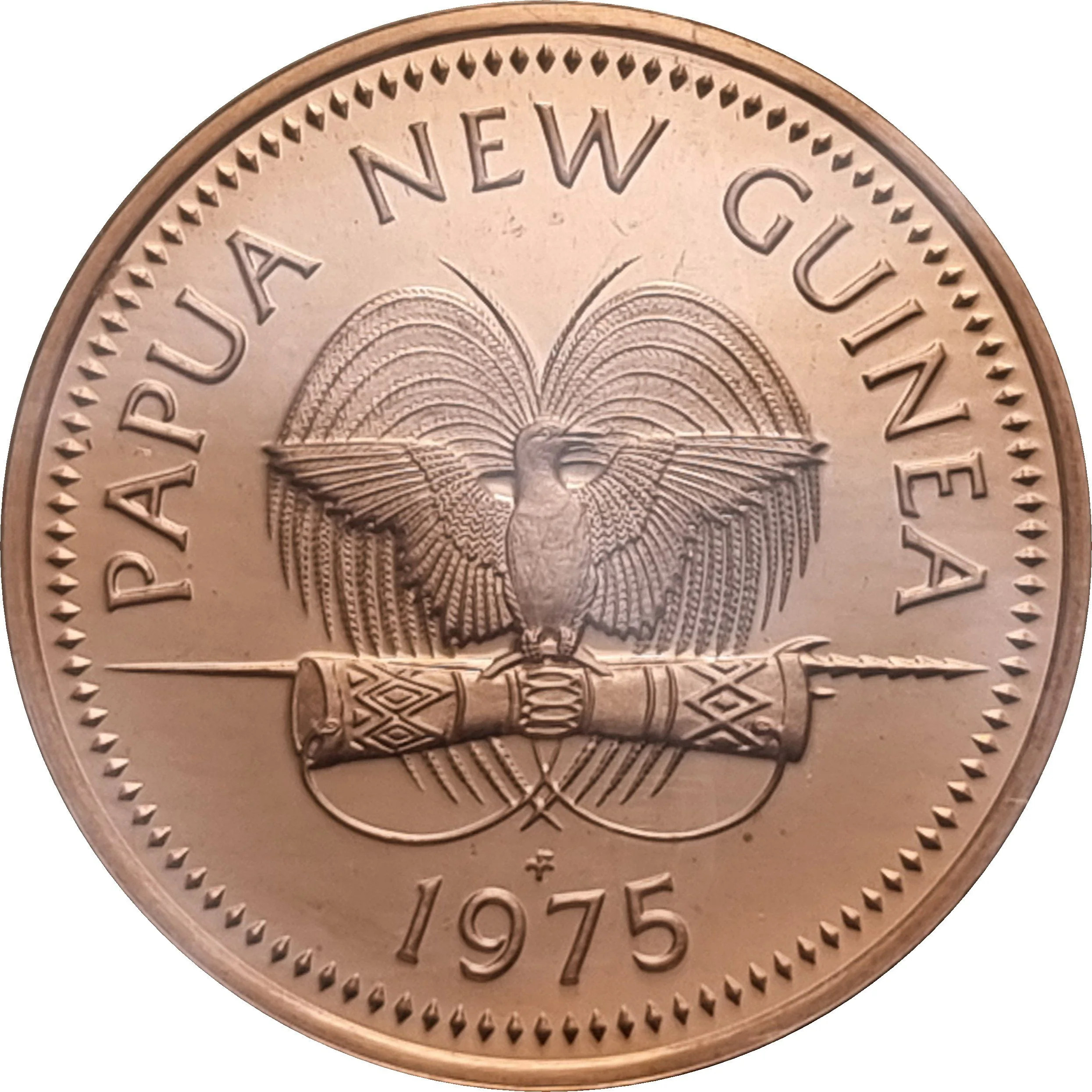
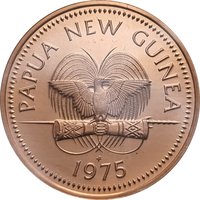
Description:
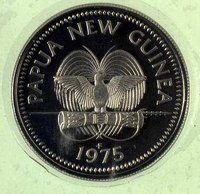
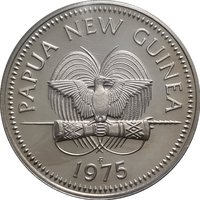
A bird-of-paradise above a spear and kundu drum.
Inscription:
PAPUA NEW GUINEA
FM
1975
FM
1975
Script: Latin
Designer: Richard Renninger
Reverse
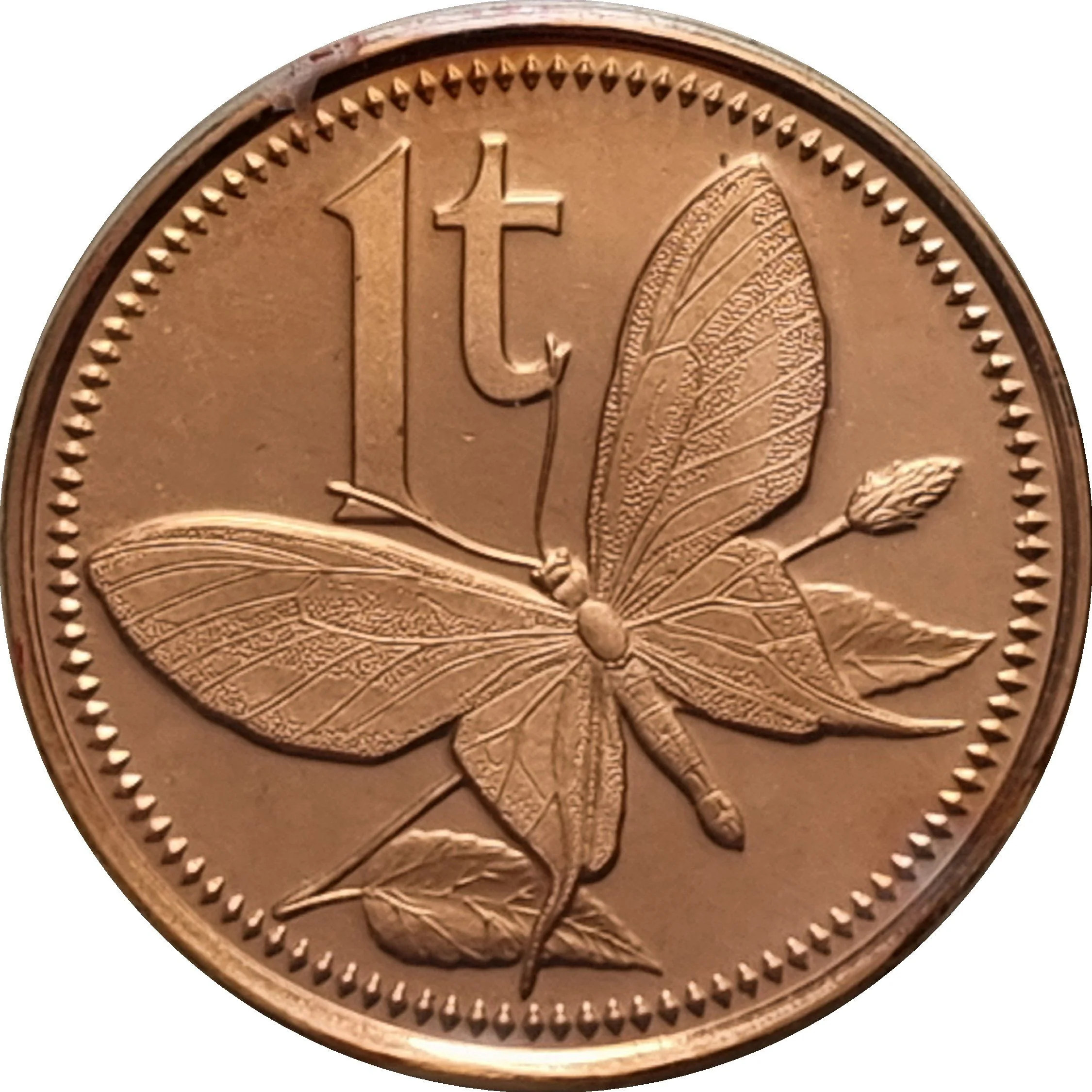
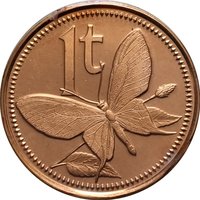
Description:
Paradise Birdwing (Ornithoptera paradisea).
Inscription:
1t
Script: Latin
Designer: J. Herman DeRoos
Edge
Plain
Categories
| Animal> Bird |
| Animal> Insect |
| Art> Music |
| Symbols> Coat of Arms |
| Object> Cold weapons |
Mints
| Name | Mark |
|---|---|
| Royal Canadian Mint of Winnipeg | — |
| Royal Mint | — |
| Franklin Mint | (FM) |
Mintings
| Year | Mint Mark | Mintage | Quality | Collection |
|---|---|---|---|---|
| 1975 | — | 14,400,000 | ||
| 1975 | FM | 83,000 | Matte | |
| 1975 | FM | 67,000 | Proof | |
| 1975 | FM | 4,134 | Special Uncirculated | |
| 1976 | — | 25,175,000 | ||
| 1976 | FM | 84,000 | Matte | |
| 1976 | FM | 16,000 | Proof | |
| 1976 | FM | 976 | Special Uncirculated | |
| 1977 | FM | 84,000 | Matte | |
| 1977 | FM | 7,721 | Proof | |
| 1977 | FM | 603 | Special Uncirculated | |
| 1978 | FM | 83,000 | Matte | |
| 1978 | — | — | ||
| 1978 | FM | 5,540 | Proof | |
| 1978 | FM | 777 | Special Uncirculated | |
| 1979 | FM | 84,000 | Matte | |
| 1979 | FM | 2,728 | Proof | |
| 1979 | FM | 1,366 | Special Uncirculated | |
| 1980 | FM | 1,160 | Special Uncirculated | |
| 1980 | FM | 2,125 | Proof | |
| 1981 | — | — | ||
| 1981 | — | 10,000 | Proof | |
| 1981 | FM | — | Matte | |
| 1982 | FM | — | Matte | |
| 1982 | FM | — | Proof | |
| 1983 | FM | — | Proof | |
| 1983 | FM | 360 | Special Uncirculated | |
| 1983 | — | — | ||
| 1984 | — | — | ||
| 1984 | FM | — | Proof | |
| 1987 | — | — | ||
| 1990 | — | — | ||
| 1995 | — | — | ||
| 1995 | — | — | BU | |
| 1996 | — | — | ||
| 2001 | — | — | ||
| 2002 | — | — | ||
| 2004 | — | — |
Historical background
Upon gaining independence from Australia on 16 September 1975, Papua New Guinea (PNG) faced the immediate monetary task of establishing its own sovereign currency. The nation inherited the Australian monetary system, using the Australian dollar, which provided initial stability but was a clear symbol of its colonial past. A key priority for the new government, led by Prime Minister Michael Somare, was to introduce a national currency as a concrete expression of economic sovereignty and national identity.
This transition was carefully planned and executed. The new currency, the Papua New Guinean kina (named after a traditional shell valuable) and its subsidiary unit, the toea, was introduced on 19 April 1975, several months before formal independence. The initial exchange rate was set at a one-to-one parity with the Australian dollar (A$1 = K1), ensuring a smooth and non-disruptive changeover for both domestic commerce and international trade. The designs featured distinctive Papua New Guinean birds, cultural artifacts, and national symbols, physically embedding the nation's heritage into its financial system.
The broader currency situation in 1975 was therefore one of successful and deliberate transition, managed with a focus on continuity to avoid economic shock. While the new kina was initially pegged to and interchangeable with the Australian dollar, its establishment marked the first crucial step in PNG's journey toward independent monetary policy. The foundational stability of this changeover allowed the Bank of Papua New Guinea, established in 1973, to begin its work of managing the new currency within the context of the nation's developing and resource-dependent economy.
This transition was carefully planned and executed. The new currency, the Papua New Guinean kina (named after a traditional shell valuable) and its subsidiary unit, the toea, was introduced on 19 April 1975, several months before formal independence. The initial exchange rate was set at a one-to-one parity with the Australian dollar (A$1 = K1), ensuring a smooth and non-disruptive changeover for both domestic commerce and international trade. The designs featured distinctive Papua New Guinean birds, cultural artifacts, and national symbols, physically embedding the nation's heritage into its financial system.
The broader currency situation in 1975 was therefore one of successful and deliberate transition, managed with a focus on continuity to avoid economic shock. While the new kina was initially pegged to and interchangeable with the Australian dollar, its establishment marked the first crucial step in PNG's journey toward independent monetary policy. The foundational stability of this changeover allowed the Bank of Papua New Guinea, established in 1973, to begin its work of managing the new currency within the context of the nation's developing and resource-dependent economy.
🌱 Very Common