

20 kreuzers – Austrian Empire
Add to wishlist
Austria
Context
Year: 1852
Country: Austria
Issuer: Austrian Empire
Ruler: Francis Joseph I
Currency:
(1754—1857)
Demonetization: 31 December 1892
Total mintage: 114,000
Material
References
KM: #
Numista: #33515
Value
Bullion value: $9.95
Obverse
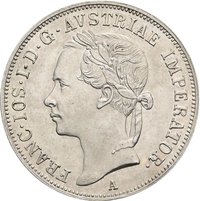
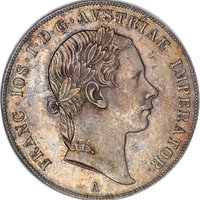
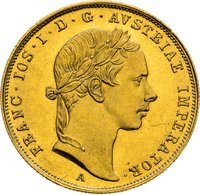
Description:
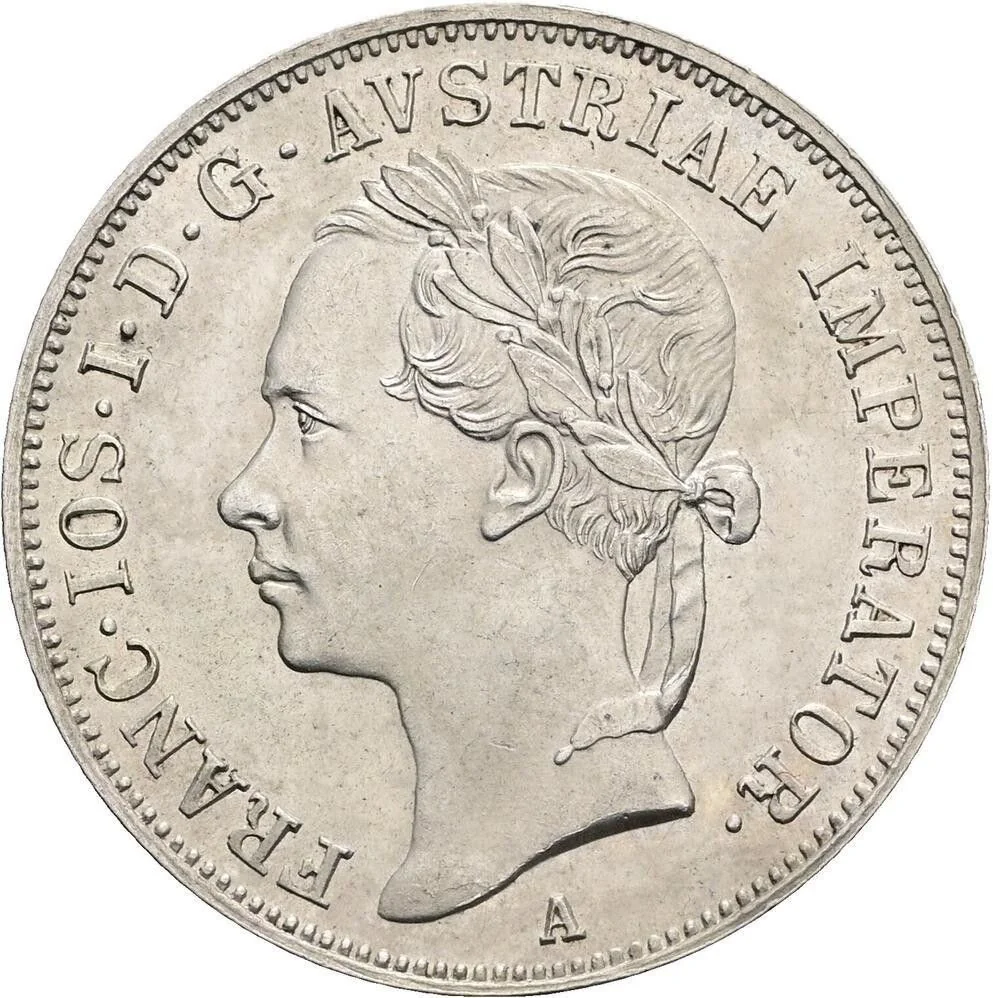
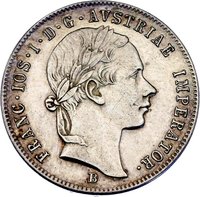
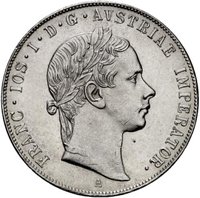
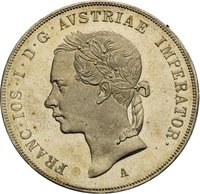
Young Franz Joseph facing left, legend around (starts at 7 o'clock).
Inscription:
FRANC IOS I D G AVSTRIAE IMPERATOR
Translation:
Francis I, by the Grace of God, Emperor of Austria
Script: Latin
Language: Latin
Engraver: Konrad Lange
Reverse
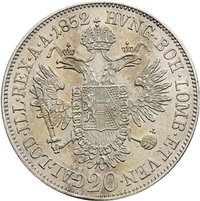
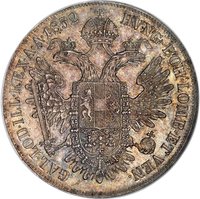
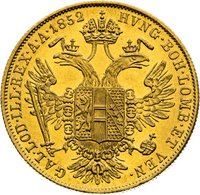
Description:
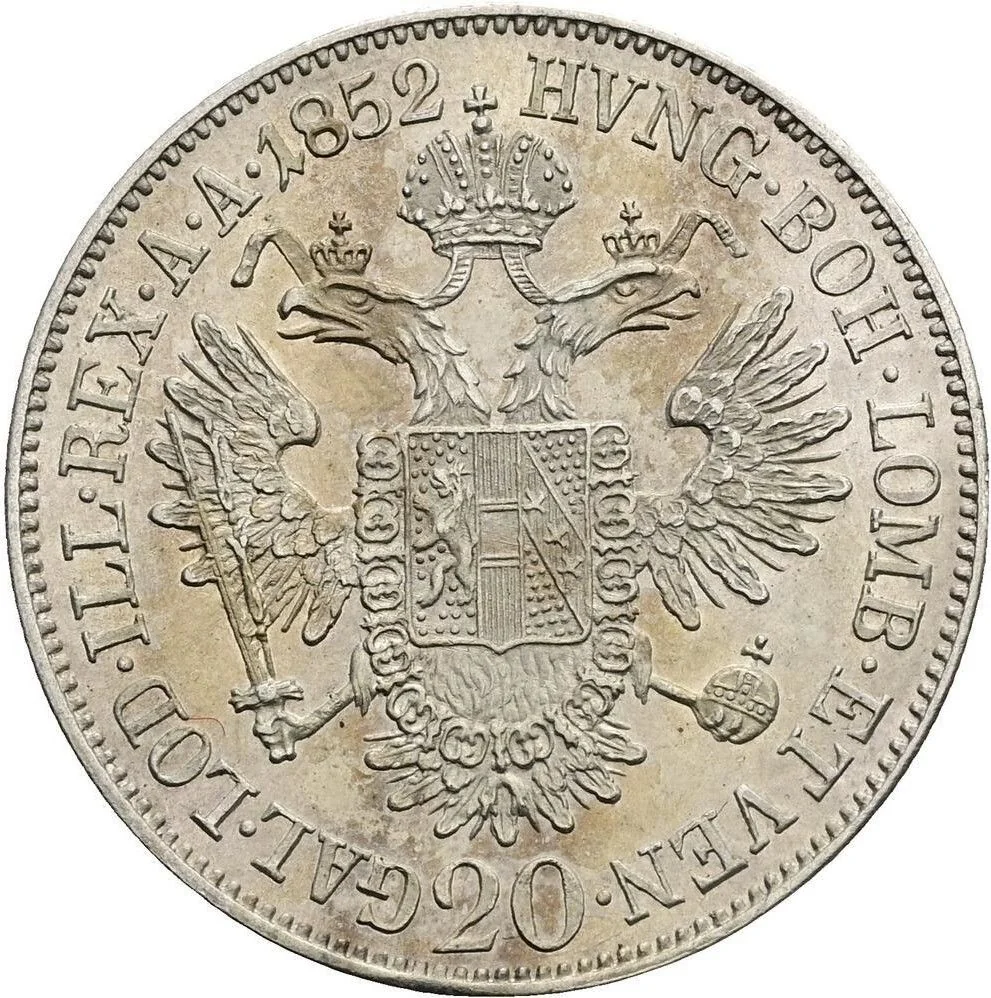
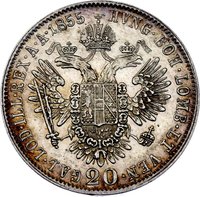
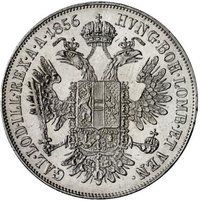
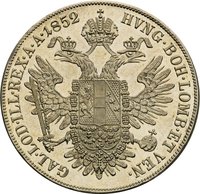
Imperial double-headed eagle. Legend: "Hungariae Bohemiae...Archidux Austriae."
Inscription:
HVNG·BOH·LOMB·ET VEN· GAL·LOD·ILL·REX·A·A·1852
Translation:
Hungarian, Bohemian, Lombard and Venetian, Galician, Lodomerian, Illyrian King, Archduke of Austria, 1852.
Script: Latin
Language: Latin
Engraver: Konrad Lange
Edge
Mints
| Name | Mark |
|---|---|
| Münze Österreich | A |
| Prague | C |
Historical background
By 1852, the Austrian Empire was in the midst of a profound currency crisis, a direct legacy of the Revolutions of 1848. The enormous cost of suppressing uprisings across its vast territories and fighting wars in Italy and Hungary had been financed not through taxes but through the unrestrained printing of paper money by the state-owned Wiener Stadtbank. This led to a severe devaluation of the paper gulden (Banknoten), which circulated alongside (but at a steep discount to) the theoretical silver gulden (Conventionsmünze). The result was a chaotic dual-currency system, where prices in paper currency skyrocketed, public credit evaporated, and international trade was severely hampered by the unstable exchange rates.
Recognizing that monetary chaos threatened the empire's economic and political stability, the Habsburg government, under Minister of Finance Karl Ludwig von Bruck, embarked on a radical stabilization plan. The key legislation was the Currency Patent of 1852, which aimed to restore confidence by making paper money convertible again, but not into silver. Instead, it introduced a new unit of account, the Vereinsgulden, and pledged future convertibility into a new silver currency, the Vereinsthaler, based on the Prussian monetary standard. This was a strategic move to align Austria with the German Customs Union (Zollverein) economically. The patent effectively devalued the old paper gulden, setting a fixed exchange rate of 100 paper gulden to 85 in the new silver-based Vereinsgulden.
The immediate impact was a necessary but painful restoration of order. The 1852 patent ended the wild fluctuations and established a clear, if reduced, value for the currency, allowing commerce and state budgeting to proceed with greater predictability. However, the promise of full silver convertibility remained just that—a promise for the future. The state lacked the substantial silver reserves needed to back the currency fully, meaning the system rested largely on public faith in government decree rather than on a true metallic standard. Thus, while the crisis of the immediate post-1848 years was contained, the Austrian Empire entered the 1850s with a managed, fiduciary currency that was stable domestically but remained weak and complex in international finance, setting the stage for further monetary reforms in the following decades.
Recognizing that monetary chaos threatened the empire's economic and political stability, the Habsburg government, under Minister of Finance Karl Ludwig von Bruck, embarked on a radical stabilization plan. The key legislation was the Currency Patent of 1852, which aimed to restore confidence by making paper money convertible again, but not into silver. Instead, it introduced a new unit of account, the Vereinsgulden, and pledged future convertibility into a new silver currency, the Vereinsthaler, based on the Prussian monetary standard. This was a strategic move to align Austria with the German Customs Union (Zollverein) economically. The patent effectively devalued the old paper gulden, setting a fixed exchange rate of 100 paper gulden to 85 in the new silver-based Vereinsgulden.
The immediate impact was a necessary but painful restoration of order. The 1852 patent ended the wild fluctuations and established a clear, if reduced, value for the currency, allowing commerce and state budgeting to proceed with greater predictability. However, the promise of full silver convertibility remained just that—a promise for the future. The state lacked the substantial silver reserves needed to back the currency fully, meaning the system rested largely on public faith in government decree rather than on a true metallic standard. Thus, while the crisis of the immediate post-1848 years was contained, the Austrian Empire entered the 1850s with a managed, fiduciary currency that was stable domestically but remained weak and complex in international finance, setting the stage for further monetary reforms in the following decades.
💎 Extremely Rare